
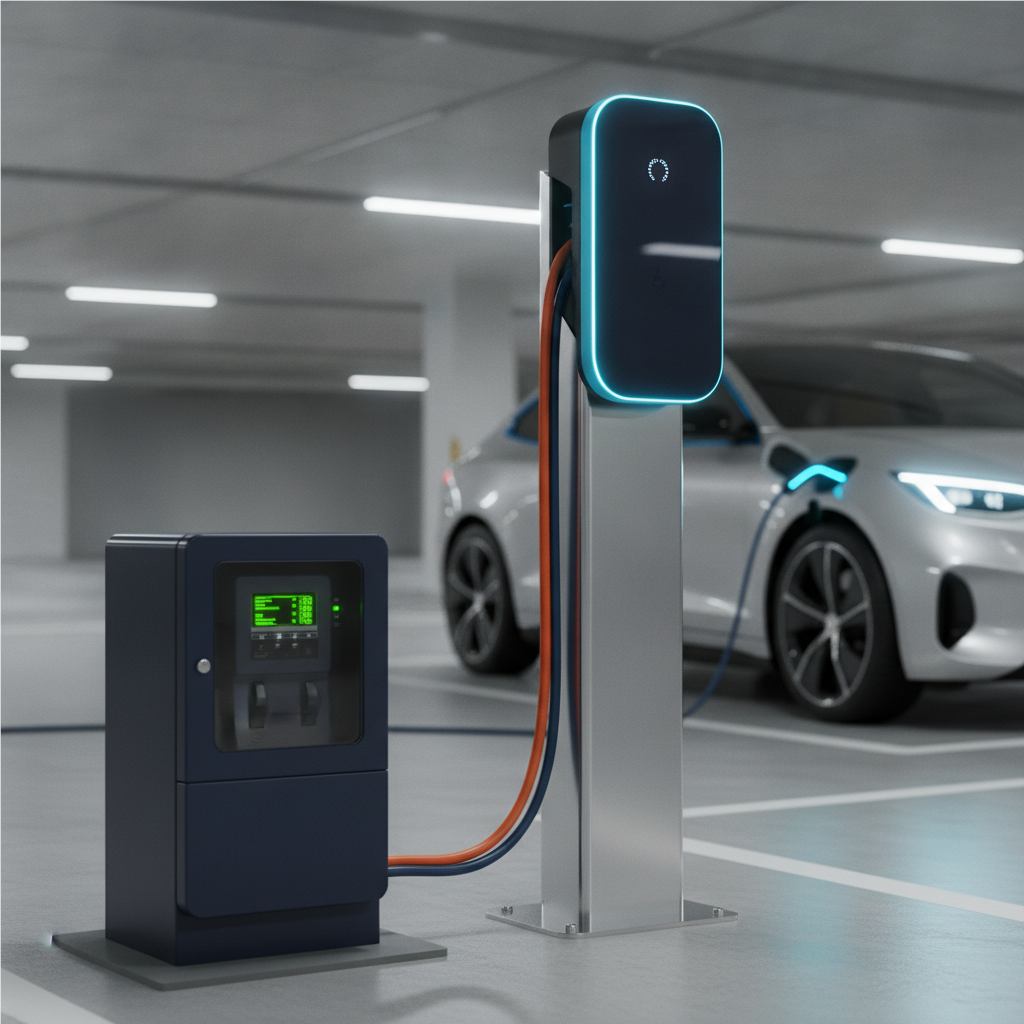
A separate electricity meter for a charging station: when you need one, how to connect it and what it costs
Updated: November 2026
In short: A home charging station doesn't require a separate electricity meter. In most homes, it is supplied from the electrical panel on a dedicated circuit, and the consumption goes on the regular bill. In an apartment building, it is usually connected by splitting from the apartment's Israel Electric Corporation (IEC) meter (DSG-9907, ₪2,790), or through a managed system that measures and bills each resident (₪35 per month + 20 agorot per kWh). As of November 2026.
“Separate meter” is one of the most confusing terms when planning EV charging station installation. Sometimes it means a new connection from the IEC, sometimes splitting from the existing meter, and sometimes just measuring consumption inside the station. In this guide, we'll separate the options, explain when each one fits and show prices from the store.
DSGCharge is one of Israel's leading companies in EV charging solutions: managed charging systems for buildings, public charging networks and parking facilities, fleet management, stations and accessories, and installations. DSGCharge is the importer of its charging stations – the brand is DSGCharge's own. The company has been active since 2021, about 20,000 chargers and charging stations have been sold and installed, and installation and service are provided nationwide.
What is the difference between a separate meter, splitting from the meter and a dedicated circuit?
The three terms describe different things. A dedicated circuit is an electrical line from the electrical panel that supplies only the station, and every fixed station is installed this way. Splitting from the meter means a small panel next to the IEC meter, from which a line runs to the station. A separate meter is a new connection from the IEC with its own bill.
- Dedicated circuit: a separate line in the home panel with suitable protections. This is the basis of every installation, and the protection details appear in theCharging station installation guidelines.
- Splitting from the IEC meter: suitable when the apartment's meter is in a meter room or lobby, far from the apartment panel, and the station's consumption needs to go on the apartment's bill.
- A separate meter or connection: a new connection with the IEC. Usually not needed for a single home charging station, and considered mainly for businesses and parking facilities.
- Measurement in the station (sub-meter): a managed charging station measures the kWh of each charging session. This makes it possible to bill by consumption even without an IEC meter for each parking space.
Is a separate electricity meter mandatory for a home charging station?
No. In a private home, the station is usually connected to the home's electrical panel on a dedicated circuit, and the consumption goes on the regular electricity bill. What you do need to check is the connection size: single-phase or three-phase, and how many amps.
A 22kW station requires a three-phase connection of 32A per phase, and a 7.4kW station also works on a single-phase connection. If the connection is small, there are two options: increase the connection or limit the station's power with load management. A full comparison: Single-phase or three-phase for a charging station andIncreasing the connection or a load management system.
How do you connect a charging station to the electricity meter in an apartment building?
In an apartment building, the apartment's meter is usually in the meter room, and the parking space is in the parking garage. The common method is splitting from the apartment's IEC meter: a split panel is installed next to the meter, and a dedicated line is run from it to the parking space. This way, the station's consumption goes on the apartment's bill, without charging the building committee.
The DSG-9907 splitting service includes the payment to the IEC for the disconnection, setting up the split panel, approval by an electrical inspector and reconnection. The timeline is set by the IEC. When several residents want stations, it is more cost-effective to plan one system for the whole building: Managed charging stations in apartment buildings.
What are the options, and how much do they cost?
The table summarizes the four ways to supply a charging station and measure its consumption. Prices from the DSGCharge store, as of November 2026.
| Option | When it fits | What's included | Price (as of November 2026) |
|---|---|---|---|
| Supply from the home panel on a dedicated circuit | Private home, panel close to the parking space | Dedicated line, protections, station installation | DSG-9903 Up to 20 m: ₪2,590 · DSG-9904 Up to 30 m: ₪2,990 |
| Separate connection from the IEC meter | Apartment building, meter far from the apartment panel | Split panel next to the meter, payment to the IEC, electrical inspector | DSG-9907: ₪2,790 (in addition to station installation) |
| Managed system for the building | Several residents, shared connection | Load management, measurement per resident, billing and transfer to the building committee | DSG-6012: ₪3,290 + service fee of ₪35 per month + 20 agorot per kWh |
| A new, separate connection from the IEC | Business, parking facility, many stations | Planning, coordination with the IEC | By quote |
To estimate the cost based on the distance and infrastructure at your site: Charging station installation cost calculator.
How do you bill each resident for charging without a separate meter for each parking space?
In a managed system, each station measures the kWh of each charging session and reports to the cloud using the OCPP protocol (an open communication language between a station and a management system). DSGCharge reads the TOU meter, bills each resident according to their consumption and transfers the payment to the building committee. This way, there is no need for an IEC meter for each parking space.
The investment model: if the building invests in the infrastructure, there is no commitment. If DSGCharge invests in the infrastructure, the commitment is for 10 years. What the monthly billing report looks like: Monthly charging report and billing by TOU meter, and what OCPP is, simply put: OCPP managed charging station.
Is a home charging station with a built-in consumption meter for billing per kWh worth it?
It depends on whether there is someone to bill. If the station serves a resident in a building, an employee who gets reimbursed for charging expenses or a business that charges customers, an OCPP managed charging station like the DSG-6012, which records every charging session in the cloud, is worth it. For private use at home, a smart charging station with an app is enough.
| Model | Power | Type | Suitable for | Store price |
|---|---|---|---|---|
| DSG-1061 | 11kW | Smart | Private house | ₪1,590 (instead of ₪2,190) |
| DSG-1062 | 22kW | Smart | Private home with a three-phase connection | ₪1,790 (instead of ₪2,390) |
| DSG-6012 | 22kW | OCPP managed | Buildings, parking facilities, businesses, expense reimbursement | ₪3,290 |
Prices for the station only, without installation, as of November 2026. For companies with assigned company cars: EV fleet management, including measuring charging at the employee's home for expense reimbursement.
Does a home charging station need a Type B RCD?
DSGCharge stations have built-in leakage current protection: AC 30mA and DC 6mA. Built-in DC leakage detection makes it possible in many cases to use a simpler RCD in the panel. The type of protection in the panel is determined by the installer according to the installation guidelines and the station's data. The products hold Standards Institution of Israel (SII) approvals.
Does a separate meter affect the TOU tariff?
The TOU tariff is determined by the IEC meter (smart meter), not by the station. Peak hours apply only Sunday–Thursday (17:00-22:00 in winter and the transition seasons, 17:00-23:00 in summer), and weekends are off-peak in all seasons. Prices vary by season. A smart charging station lets you schedule charging for off-peak hours, and in a large building, smart Energy management distributes the power among the stations. What you'll actually pay: Charging cost calculator.
Why plan the connection with DSGCharge?
DSGCharge plans the connection according to the conditions on site: the meter location, the connection size, the distance to the parking space and the number of stations. In a private home, this is usually a dedicated circuit from the panel. In an apartment building, it is splitting from the apartment's meter or a managed system for the whole building. Installation and service are provided across the country. The range of stations and accessories: EV charging stations. For advice: 077-9920350.
Frequently asked questions about electricity meters for charging stations
Is a separate electricity meter mandatory for a home charging station?
No. In most private homes, the station is supplied from the home's electrical panel on a dedicated circuit, and the consumption goes on the regular electricity bill. Splitting from the meter or a separate connection is needed mainly when you want the consumption to go on a specific apartment's bill in an apartment building, when the parking space is far from the panel, or when billing needs to be separated.
How much does splitting from the IEC meter for a charging station cost?
The DSG-9907 service costs ₪2,790 (as of November 2026). The price includes the payment to the IEC for the disconnection, setting up a split panel next to the meter, approval by an electrical inspector and reconnecting the power to the home. Installing the station itself is priced separately (DSG-9903 up to 20 meters: ₪2,590; DSG-9904 up to 30 meters: ₪2,990). The timeline is set by the IEC.
How do you bill a resident for charging in an apartment building without a separate meter for each parking space?
With a managed charging system: each station measures the kWh of each charging session, and DSGCharge reads the TOU meter, bills each resident according to their consumption and transfers the payment to the building committee. The service fee for a managed charging station: ₪35 per month + 20 agorot per kWh.
Is it worth buying a home charging station with built-in consumption measurement for billing per kWh?
If you need to bill someone by consumption (a resident, an employee who gets expense reimbursement, a business), an OCPP managed charging station like the DSG-6012, which reports every charging session to the cloud, is worth it. For private use at home where there is no one to bill, a smart charging station like the DSG-1061 or DSG-1062 is enough.
Does a home charging station need a Type B RCD?
DSGCharge stations have built-in leakage current protection: AC 30mA and DC 6mA. Built-in DC leakage detection makes it possible in many cases to use a simpler RCD in the panel. The type of protection in the panel is determined by the installer according to the installation guidelines and the station's data.
Does a separate meter let you charge on the TOU tariff?
The TOU tariff is determined by the IEC meter (smart meter), not by the station. Peak hours apply only Sunday–Thursday (17:00-22:00 in winter and the transition seasons, 17:00-23:00 in summer), and weekends are off-peak in all seasons. A smart charging station lets you schedule charging for off-peak hours.