
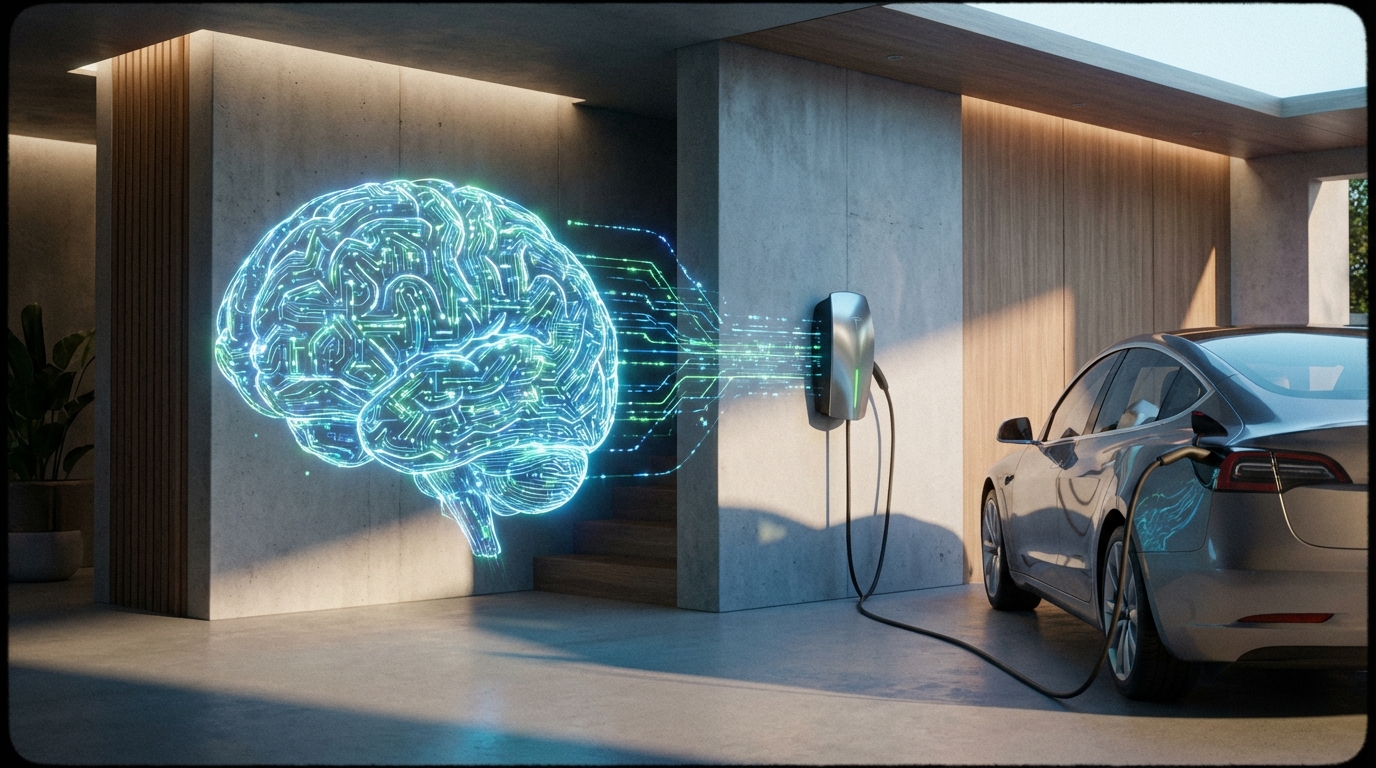
Energy management systems (EMS): the smart brain that saves thousands of shekels on the electricity bill
In short: An energy management system (EMS) measures electricity consumption in your home, building or business in real time and automatically regulates large loads – mainly EV charging stations – so they don't exceed the connection size. This lets you charge more vehicles without upgrading the connection, shift charging to off-peak hours on the TOU tariff and make use of solar power.
Updated: October 2026
Switching to an electric vehicle is a true revolution. It promises a quiet ride, an advanced driving experience and, above all, significant savings on fuel costs. But alongside this promise, many EV owners discover a more complicated reality: ballooning electricity bills, sudden power outages at home while charging, and uncertainty about whether the electrical infrastructure can handle the load. EV charging is nothing like charging a cell phone; it is a heavy electrical load, sometimes the heaviest in the home. Without smart management, “dumb” charging turns the promise of savings into a financial and operational nightmare. This is exactly where a game-changing technology comes in: Energy management system (EMS), the smart brain that turns the charging challenge into an opportunity for unprecedented savings.
You can compare the charging stations themselves – from smart home charging stations to managed charging stations for buildings and parking facilities – in one place on the EV charging stations from DSGCharge.
The less glamorous side of EVs: the electricity bill and overloaded infrastructure
You bought an electric vehicle with green and economic goals in mind. You come home after a day at work, plug the car into the charging station and, at the same time, turn on the air conditioner, the electric water heater and the dishwasher. Suddenly, the power trips. The main circuit breaker has tripped under the load. This scenario, familiar to many EV owners, is just the tip of the iceberg of a much broader and deeper problem. Unmanaged charging, or “dumb charging,” is a sure recipe for trouble.
The reason is simple: standard residential electrical infrastructure, especially in older apartment buildings, was not designed to handle the loads created by a powerful home charging station (11kW or 22kW) running alongside the other heavy electrical appliances in the home. The result is not just the inconvenience of tripped breakers but also a real safety risk, accelerated wear of the components in the electrical panel and even damage to expensive appliances. The problem is even worse in apartment buildings, where installing several charging stations on shared, limited infrastructure can lead to a total system failure and endless disputes between neighbors. And all this before we even get to the financial side: charging the car in the evening, during peak consumption hours, means high electricity rates (TOU tariff), which makes the hoped-for savings on fuel costs negligible, if there are any at all.
What is an energy management system (EMS), and how does it become the brain of your home electrical network?
To continue the traffic analogy, an energy management system (Energy Management System – EMS) works like a smart traffic light or an air traffic controller for the electrical network in your home or apartment building. Instead of letting every “vehicle” (electrical appliance) drive whenever it wants and cause a traffic jam (overload), the system manages the flow of energy dynamically, smartly and efficiently. It makes sure the infrastructure doesn't collapse, that essential appliances get priority, and that every load gets the energy it needs, exactly when it needs it, in the safest and most economical way.
The beating heart of this technology is a mechanism called dynamic load management (Dynamic Load Management – DLM). It is not a simple “on” or “off” switch, but a sophisticated algorithm that runs in the background and performs several critical actions in real time:
- Real-time consumption monitoring: The system is connected to a current sensor (CT) installed in the main electrical panel. At any given moment, this sensor “reads” the total electricity consumption of the property – from the air conditioner and the oven to the small night light.
- Smart prioritization: The system is programmed to understand which appliances are essential to running the home. For example, it knows that in the evening, the air conditioner, the water heater and the electric stovetop take higher priority. Charging the car, which can be done throughout the night, takes lower priority during peak-load hours.
- Dynamic charging regulation: This is where the real magic lies. When the system detects that total consumption is approaching the maximum threshold of the electrical connection, it doesn't stop charging abruptly. Instead, it dynamically regulates the vehicle's charging rate. For example, if you have a 25-amp connection and a 16-amp charging station, and at peak time the rest of the house is drawing 15 amps, the system will automatically reduce the charging rate so total consumption doesn't exceed the limit. As soon as the load in the house drops (for example, because the air conditioner stopped running), the system will return charging to the maximum possible rate. This way, it ensures continuous, safe and optimal charging at all times.

The economic and operational benefits: how to save thousands of shekels a year
Installing a smart energy management system is not just an impressive technology upgrade; it is a sound financial decision that quickly pays for itself and provides peace of mind for years. The benefits come as direct monetary savings, avoided future expenses and a significant improvement in quality of life. Let's go over the key benefits that make an EMS a must-have for every EV owner.
1. Direct savings on your electricity bill
The most immediate and tangible benefit is a dramatic reduction in your electricity bill. A smart EMS lets you schedule charging for the late night hours, when electricity rates (TOU tariff) are lowest. Instead of charging the car during expensive peak hours (usually between 17:00 and 23:00), the system defers most of the charging to off-peak hours. The cost difference can reach tens of percent, and on an annual basis this adds up to savings of thousands of shekels. The system does this automatically, with no user intervention, and ensures the car is always charged and ready to drive in the morning – at minimal cost.
2. Avoiding expensive electrical infrastructure upgrades
This is a critical benefit, especially for residents of apartment buildings or homeowners with older electrical infrastructure. Without a load management system, adding one or more charging stations almost always requires increasing the connection size (for example, from a three-phase 25-amp connection to 40 amps). This process involves high costs of tens of thousands of shekels, red tape with the Israel Electric Corporation (IEC) and sometimes even complex infrastructure work. An EMS bypasses this need entirely. It allows several charging stations to be installed on existing infrastructure while regulating the load among them and between them and the other electrical loads. The savings here are not only financial but also in time and hassle, making it much simpler and more accessible to install charging stations in the building.
The need for such solutions is in line with the goals of the Ministry of Energy and Infrastructure to promote electric vehicles while maintaining the stability of the power grid. Smart consumption management is the key to achieving these goals, and solutions like those offered by DSG Charging Solutions are at the forefront of implementing this policy.
3. Maximizing the use of solar energy
For private homeowners who have invested in a photovoltaic (solar) system, adding an EMS is a force multiplier. The system can identify the hours of peak solar panel production during the day and schedules vehicle charging for exactly that time. Instead of “selling” surplus electricity to the grid at a low price and buying it back at night at a high price, the system routes the free green energy directly into the car's battery. The result is charging at virtually zero cost, maximum return on your solar investment and less dependence on the general power grid – a step that is also encouraged bythe IEC's energy efficiency program .
4. Peace of mind and grid stability
Beyond the financial savings, an energy management system provides the most important thing of all: peace of mind. Knowing that your home electrical system is protected from overloads, that there is no risk of power surges damaging your refrigerator or computer, and that you can run any appliance in the house without worry while the car charges – that is a priceless benefit. The system ensures the stability, safety and proper operation of all the systems in your home, making EV ownership smooth and worry-free.
Tailored solutions: energy management for private homes, apartment buildings and businesses
The beauty of modern energy management systems is their flexibility and the ability to adapt them to each user's specific needs. Whether you live in a private home with a solar roof, sit on the building committee of an apartment building or manage a business vehicle fleet, there is an EMS solution designed to address exactly your challenges. At DSG Charging Solutions, we specialize in specifying and tailoring such solutions for every customer.
For private homeowners
For a private homeowner, an energy management system is the control center of the smart home. It enables not only safe and economical charging but also optimization of the home's overall electricity consumption. The system can prioritize appliances, integrate vehicle charging seamlessly with a solar system, and allow two EVs to charge simultaneously on existing infrastructure, without worrying about tripped breakers or the need for an expensive upgrade of the electrical connection.
For building committees in apartment buildings
This may be the audience that needs an energy management system most. In apartment buildings, the challenge is twofold: the shared electrical infrastructure is limited, and the need for fair and transparent cost allocation is critical. A central EMS for the building solves the “first neighbor” problem (who installs a station and takes up all the available capacity) by dynamically distributing the load among all the stations in the parking lot. The system regulates the charging rate of each vehicle according to the building's total load and the number of vehicles connected, ensuring that everyone can charge. What's more, the system includes an automatic billing mechanism that accurately measures each station's electricity consumption and generates transparent billing for each resident. It is a comprehensive solution that prevents disputes, ensures fair use of the shared resource and saves the building committee tens of thousands of shekels on infrastructure upgrades. Our DSGCharge solutions for Setting up and managing charging systems in buildings are tailored precisely to these challenges.
For businesses and vehicle fleets
For businesses operating fleets of electric vehicles, an energy management system is an essential operational tool. It lets you manage an entire network of charging stations from one central system, set charging priorities for different vehicles (for example, delivery vehicles versus executive cars), and analyze consumption patterns to optimize and reduce operating costs. The system can prevent overloads on the office or factory electrical supply, reduce peak demand charges and ensure the fleet is always ready and operational.
The DSG Charging Solutions expertise: not just a product, but a complete solution
Choosing an energy management system is an important decision, and its success depends not only on the technology itself but also on the expertise of whoever designs and installs it. AtDSG Charging Solutions, we understand that smart charging is much more than a box on the wall. We offer a holistic, end-to-end solution designed to give you peace of mind and maximum savings, perfectly tailored to your unique needs.
Our process begins with an in-depth assessment of the property, whether it is a private home, a residential building or a business complex. Our experts analyze the existing electrical infrastructure, current and future consumption patterns, and your specific charging needs. Based on this analysis, we match the right EMS and the most suitable charging stations, such as DSG-6052 managed charging stations, which work with the OCPP protocol with a cloud management system and include all the required management capabilities. Installation is carried out by certified electricians who specialize in EVs, adhering to the highest standards of safety and aesthetics. But our service doesn't end there. We provide ongoing support and service, make sure the system runs optimally and help you get the most out of your investment. With extensive experience working with hundreds of building committees, private customers and businesses across the country, we have built a reputation for reliability, professionalism and uncompromising service.
What is the difference between an energy management system and load management in a charging station?
Load management in a charging station is a special case of energy management: the station (or group of stations) shares the available power among themselves. An energy management system is broader – it sees all the loads in the building, and sometimes also a solar or storage system, and decides who gets power and when.
| Solution | What it manages | Suitable for |
|---|---|---|
| Fixed current limit on the station | A single power cap per station | A home with one car and a sufficient connection |
| dynamic load management | Station power based on household consumption in real time | Private home, 2 cars, limited connection |
| Managed charging system (OCPP) | Power distribution among dozens of stations, access permissions and billing | Apartment building, parking facility, office |
| Full energy management system (EMS) | All loads + solar/storage + tariff | Businesses and buildings with high consumption |
OCPP is an open communication protocol that lets you manage charging stations from a cloud computing system. Details on power distribution and the required connection size are inLoad management for charging stations; for buildings – charging stations in apartment buildings; for businesses and offices – Charging stations for businesses; and for the home – Smart charging station. You can check how much you'll save by shifting charging to off-peak hours incharging cost calculator.
DSGCharge is the importer of its charging stations– the brand is DSGCharge's own. The company has been active since 2021, about 20,000 chargers and charging stations have been sold and installed, and it builds and operates managed charging systems in buildings, parking facilities and businesses nationwide.
Further reading: How a load management system distributes power among stations – Load management for charging stations and a managed charging station; full setup and management in a building – Managed charging stations in apartment buildings; and for businesses, parking facilities and stations open to the public – Charging station operations system.
Frequently asked questions about energy management systems
What is an energy management system (EMS)?
What is the difference between energy management and load management?
Is the system complicated to operate?
Not at all. The beauty of a modern EMS is that it works completely automatically in the background. After installation and initial setup by a certified technician, there is no need for day-to-day involvement. The system monitors and regulates electricity consumption on its own. The user gets access to a friendly smartphone app that allows real-time tracking of charging status, viewing historical consumption data and setting personal preferences (for example, “I want the car fully charged by 7 a.m.”). Still, 99% of the time, you simply plug in the car and the system does the rest.
How much does an energy management system cost?
The cost of an energy management system varies and depends on several factors, such as the size of the property, the number of charging stations to be managed and the complexity of the existing infrastructure. In a private home, the cost will be different than in an apartment building with 20 parking spaces. However, it is important to look at the cost in terms of return on investment (ROI). In many cases, especially in apartment buildings, the savings on electrical infrastructure upgrades alone can cover the cost of the entire system. Add to that the ongoing savings on the electricity bill, which can reach thousands of shekels a year. We recommend consulting the DSGCharge experts for an accurate quote tailored to your needs.
Does the system support all types of vehicles and charging stations?
Yes. Modern energy management systems, like those we offer at DSG Charging Solutions, are based on standard, open protocols, the most common of which is OCPP (Open Charge Point Protocol). This protocol ensures full compatibility between components from different manufacturers. This means the system can manage and communicate with the vast majority of charging stations and electric vehicle types on the market today. This flexibility ensures your investment will remain relevant in the future and will be able to support new vehicles and charging stations entering the market.
The next step to smart savings: let's talk
Switching to an electric vehicle is a smart decision, but to realize its full potential, you also need to switch to smart charging. An energy management system (EMS) is not a luxury but an essential component that ensures your EV investment actually translates into financial savings, safety and peace of mind. It is the brain behind the power, conducting the electrical orchestra in your home and ensuring perfect harmony between needs, costs and infrastructure capacity.
If you're tired of paying inflated electricity bills, worrying about tripped breakers or dealing with the headache of an expensive infrastructure upgrade, it's time to take control. Stop letting your electricity bill manage you, and start managing it yourself. Contact our experts at DSG Charging Solutions today and get professional advice with no obligation. We'll be happy to review your needs and match you with the perfect solution to bring you into the era of smart, economical charging.