
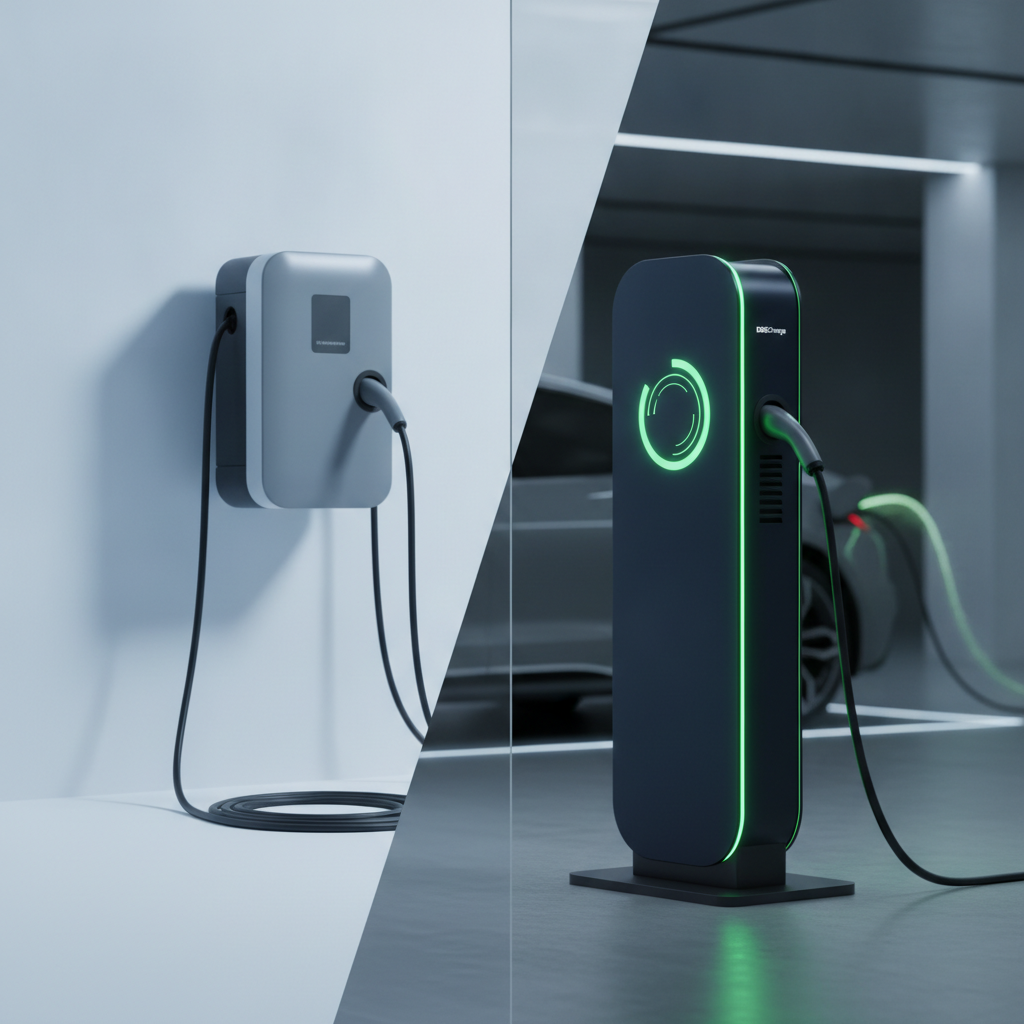
The car importer's charging station: what they don't tell you when you buy a new electric car
In short: A charging station from the car importer is convenient – it comes together with the vehicle. But before you agree, it's worth checking three things: that the station suits your home's electrical connection (single-phase or three-phase), who installs it and provides service after installation, and what the total price of the station and installation is compared with buying fromCharging station importer.
Updated: October 2026
You're at the car dealership, almost holding the key. You've chosen a model, a color, a trim level, maybe you've even closed the financing. And then, almost on the way out, the sales rep asks: “Shall we add a charging station too?” At that moment, the offer sounds logical and convenient. Close everything in one place, without more phone calls and comparisons. The problem is that this very decision, which seems the simplest, can be the one that creates the most problems later on.
because A charging station from the importer isn't necessarily a bad choice. Sometimes it can be a good fit. But it's also not necessarily the right solution for your building, your electrical infrastructure, your usage habits or your next vehicle. And when it comes toElectric car, the difference between “buying a charging station” and “tailoring a charging solution” isn't semantics. It's the difference between an installation that works for you and an installation you'll have to work around.
The hidden price of convenience
The reason many people choose a station that comes through the car deal is simple: it's convenient. It feels organized, and there's a sense that the importer already knows what suits the vehicle. If you're buying new anyway, why spread responsibility among several parties?
That convenience is real, but the problem starts when it replaces a professional assessment of the site. In most cases, the importer sells cars. It doesn't necessarily go into the details of the place where the charging station installation will be carried out, and in most cases it only sells you a charging station. If it does offer installation as well – has it checked:
- Where is your electrical panel? Is it close to the parking space or 30 meters away?
- What is the condition of the infrastructure? Is it single-phase or three-phase, and can it support a powerful station?
- Is it a private house or an apartment building? In a building, installation requires completely different planning, sometimes with a need forLoad management.
- What about the future? Will the solution also suit a second electric vehicle a year from now?
This is where many customers discover too late that the product was fine, but the context wasn't checked. Someone who lives in a private house with an assigned parking space and a nearby electrical panel may manage with a standard solution. But someone who lives in an old building, with a distant parking space, enters a different world of planning, chiseling, conduits and sometimes also dedicated infrastructure that will need to serve additional residents in the future. In both cases the importer sells a “station,” but only a tailored solution truly solves the whole picture.
Not just “which station,” but “which charging solution”
This is where the essential difference lies. When you're sold a charging station as part of a car deal, the conversation focuses on the product: model, power (kW), and maybe an app. But on the ground, what determines whether Home charging station will be efficient and convenient isn't just the model on the wall, but the whole system around it.
An excellent station installed without matching it to the infrastructure can cause problems: a circuit breaker that trips when the air conditioner, oven and charger run together; a distant parking space that makes the installation tens of percent more expensive and complicated; or a station that doesn't allow flexibility if you switch to a model with a larger battery.
That's exactly why a company that specializes in this, like DSG Charging Solutions, examines not only “what the vehicle needs,” but also “what the property can support” and “what this need will look like in two years.”
A critical point is Load management. It sounds technical, but it's one of the most practical things there is. A smart load management system can regulate the charging speed dynamically. In simple terms: if you've turned on the water heater and the air conditioner, the station will slow down charging to prevent the power from tripping. When the household load drops, it will automatically return to fast charging. In apartment buildings this is no longer a “nice to have,” but an essential component that allows several residents to charge at the same time without knocking out the power for the whole building.
A proper match starts with questions, not with the sticker on the box. Sometimes the right solution isn't the most powerful station, but a smarter station that knows how to work with the existing infrastructure.
The difference lies in the questions and the answers that come after
A car importer sees the car. A specialist company sees the meeting point between the car, the building and the user. It sounds like a small difference, but in practice it's the whole picture.
A company that specializes in this will usually offer a wider range of solutions, not just one product tied to the car deal. This can include EV charging stations of different types (smart, managed, fast), dedicated solutions for buildings, stations for businesses, and also matching complementary equipment such as Charging cables in different lengths.
Beyond the installation itself, it's important to think about “the day after.” When the station is just a line on the vehicle delivery form, it isn't always clear whom to contact if you have a question, want to add a user, switch to a vehicle with a different connector, or have a fault. In contrast, a company that lives the charging field day to day is used to accompanying its customers as part of the service.
This is especially critical for building committees, property managers and businesses. Anyone setting up a charging solution for a building or a parking facility isn't just looking for installation; they need operational peace of mind, the ability to grow in an orderly way, and sometimes also a system for billing users. In such cases, partnering with a specialist company is essential.
If you want to understand the range of options, you can browse theCharging stations and accessories store and see the differences between the various solutions.
Before you say “yes” to the importer: questions you must ask
There's no need to turn every purchase of a Charging station into a complex project. But it is worth stopping and asking a few key questions before closing a deal. These questions can save you a lot of money and frustration later on:
- Does the offer include a professional inspection of the electrical infrastructure in the home/building? Or is it based on a “standard installation” that may not suit you?
- What happens if the parking space is far from the electrical panel? Who plans the cable route, and what is the additional cost involved?
- Does the solution include load management? This is critical if you have heavy electrical appliances at home or if you live in an apartment building.
- What happens if I want to add a second electric vehicle in the future? Do the infrastructure and the station support easy expansion?
- Whom do you contact after installation? Who provides service and technical support if there's a question or a fault?
These aren't “expert” questions, but questions for anyone who wants to buy once and buy right. If the party in front of you answers them clearly and doesn't try to cut the discussion short with “it'll be fine,” you're in a better place.
Bottom line: a charging station from the importer can be convenient, but convenience isn't always a good fit. When you look at the whole picture – the type of property, the infrastructure, the distance, everyday use, the future and service – very often the right and most cost-effective choice is to talk to someone for whom this is their full specialty.
If you're about to buy or install, or simply want to understand what really suits your home, building or business, we invite you to contact us for advice and a tailored charging solution. One conversation can make all the difference.
What happens with service six months after installation?
Many consumer decisions are judged at the moment of purchase. A charging solution, however, is usually judged two months later. Or six months later. That's when you see whether it's convenient to use, whether the app is really helpful, whether the cable is the right length, whether the installation was done cleanly and safely, and whether there's someone to contact when you have a question.
This is especially true when it's not a simple private house. In an apartment building, for example, the problem isn't only that of the first resident who wants to charge. The question is how to prevent a mess two years from now, when several more neighbors will want Charging stations. In a business it's even more pronounced: a charging station for employees or customers isn't a “box on the wall,” but part of the site's day-to-day operations.
So when comparing a solution from the importer with a specialist company, it's worth checking the questions that are less exciting on the day but much more important later on:
- Who checks that the infrastructure is suitable before installation?
- Who is responsible for planning if the distance from the panel is large or if the parking facility is complex?
- What do support and warranty look like after installation?
- Can you expand in the future without starting everything from scratch?
- Is there also a solution for complementary accessories such as Charging cables or adapters?
And this may be the most important part: don't confuse “sold together with the vehicle” with “checked and suited to the need.” These are two different things.
There are cases where the importer's package will do a good job. But there are also quite a few cases where the smartest decision is to stop, check, and get advice before closing. Especially if you live in an apartment building, if the infrastructure is unclear, if you're thinking about a second vehicle, or if it's important to you to buy right once instead of improvising later.
Of course, all electrical work and charging station installation must be carried out by a certified electrician in accordance with the requirements of the law and the standard. The information here is general only and doesn't replace a professional on-site inspection.
A station from the car importer or from a charging station importer: what's the difference?
| A station in the car importer's package | A station from a charging station importer | |
|---|---|---|
| Fit for the home | Usually one model for all customers | Chosen according to the electrical connection, number of vehicles and need for management |
| Installation | Through a subcontractor | The company's own installation and service teams |
| Warranty and service | Through the car importer | Directly from the importer, which holds stock and spare parts |
| An additional vehicle in the future | Not always taken into account | A dual charging station or load management already in the planning |
DSGCharge is the importer of its charging stations – the brand is DSGCharge's own. The company has been active since 2021, about 20,000 chargers and charging stations sold and installed, and its installation and service teams operate nationwide. To choose a station for your home, see Recommended home charging station and all the models inEV charging stations; for installation – EV charging station installation andinstallation cost calculator.
Questions worth asking before you decide
What happens in an apartment building if more neighbors want to install charging stations?
That's exactly why it's important to plan ahead. A managed solution installed by a specialist company includes backbone infrastructure (Busbar) and a load management system. The system lets every resident connect easily in the future, distributes the available power smartly among the chargers, and prevents overloading the building's infrastructure.
Will the importer's charging station also suit the next vehicle I buy?
In most cases yes, since most vehicles in Israel use a standard Type 2 connector. However, the more important question is whether the station's power and the infrastructure will suit the next vehicle, which may come with a larger battery that requires faster charging. Proper planning also takes this flexibility into account.
Is a complex installation (distant parking space) always more expensive?
A complex installation requires more work and materials, so it will usually be more expensive than a basic installation. However, a specialist company can plan the most efficient route, choose the right cables, and sometimes find creative solutions that save unnecessary costs. A transparent, detailed quote after a site visit is the best way to avoid surprises.
Is a charging station from the importer necessarily more or less expensive?
Not necessarily. The cost depends not only on the station itself but also on the infrastructure, the distance from the panel, the power and the complexity of the installation. So it's important to compare the cost of the complete solution (station + tailored installation), and not just the initial price of the station.
I live in an apartment building – is the importer's package right for me?
Sometimes yes, but in apartment buildings it's especially important to check the shared electrical infrastructure, the installation route, the division of consumption and the possibility of future expansion to additional residents. In such cases, a broader view than selling a single station is usually required, so it's recommended to consult a company that specializes in building solutions.
What's the difference between an 11kW and a 22kW station, and do I need the most powerful one?
A 22kW station can charge faster, but it requires a strong three-phase electrical connection. Most homes in Israel are limited in this capacity, and many vehicles also can't accept AC charging at that power. An 11kW station is usually the perfect balance for fast, efficient home charging. A professional company will know how to match the right power to your infrastructure and vehicle.
What matters more: the type of station or the quality of the installation?
Both are important, but in many cases the installation and matching to the infrastructure are what will determine whether the solution really works safely and efficiently over time. An excellent station on unsuitable infrastructure or with a faulty installation isn't a good solution, and can even be dangerous. For advice and a tailored charging solution, visit the charging stations and accessories store