
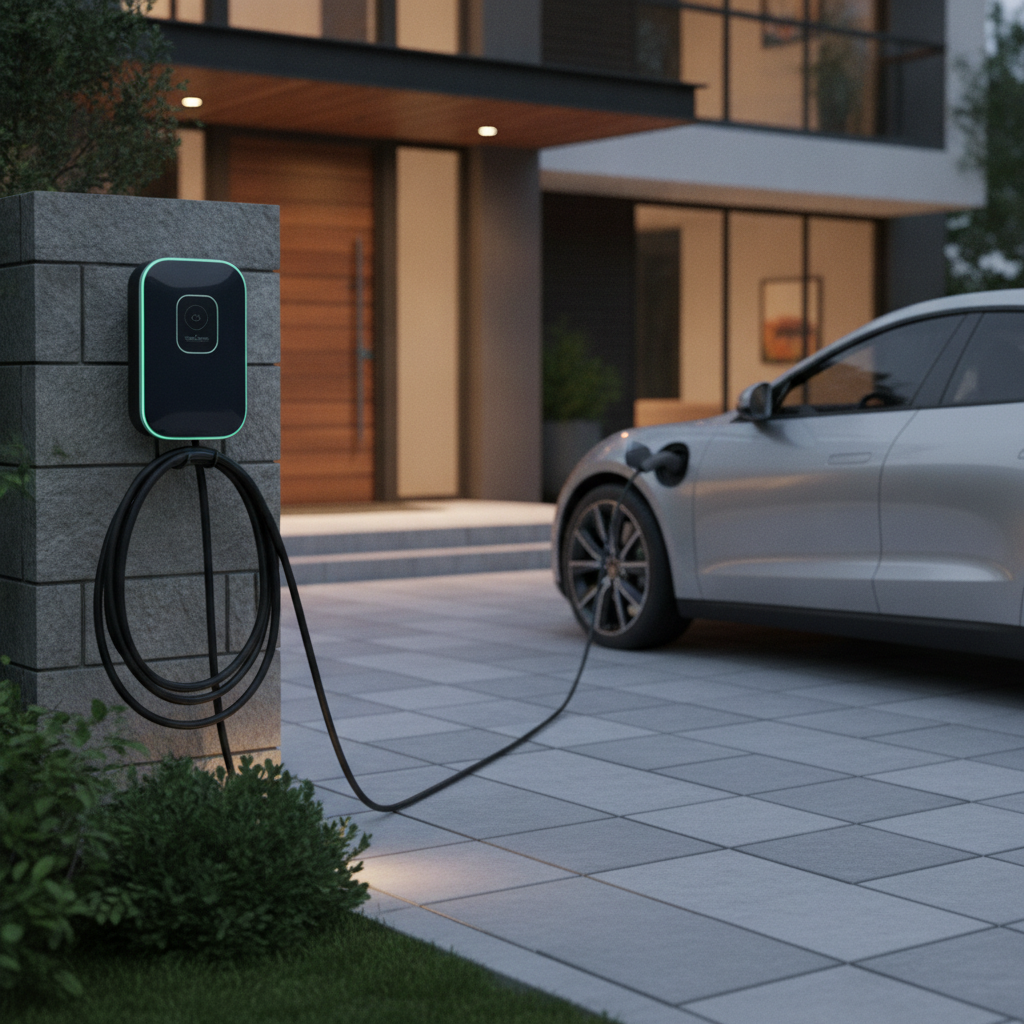
Have you bought a BYD DOLPHIN, or are you about to get one soon, and you're looking for an EV charging station for a BYD? The good news: a city car like the Dolphin doesn't need the most powerful station on the market. In this guide you'll find which power rating suits the Dolphin, how long charging at home takes, which station to choose according to your type of electricity supply, how much it costs including installation, and what to do in an apartment building.
In short: The BYD DOLPHIN is suited to a home AC charging station with a Type 2 connector. In a three-phase home – an 11kW smart charging station (for example DSG-1061, ₪1,590) fully charges the battery in one night. In a single-phase home – a station of up to 7.4kW is enough for city use. If there are two vehicles in the household – a dual charging station. In an apartment building – a DSG-6012 managed charging station (₪3,290). The Dolphin doesn't need a DC station at home.
You can compare DSGCharge's 11kW and 22kW home charging stations on the Home charging stations in the store.
Which charging station suits the BYD DOLPHIN?
The BYD DOLPHIN charges at home with alternating current (AC) through a Type 2 inlet – the standard connector on new vehicles in Israel. Charging speed at home is determined by the lowest of three: the power of the vehicle's onboard charger, the station's power and the type of electrical connection in the home. In the different versions of the Dolphin, the onboard charger is 7kW or 11kW, depending on the version and model year – it's worth checking this figure in the owner's manual or the vehicle registration before choosing a station.
The practical meaning: a 22kW station won't charge a Dolphin faster than an 11kW station, because the vehicle itself limits the rate. Even so, some people choose 22kW as preparation for their next vehicle – and that's a legitimate decision if the home connection is three-phase. A full comparison of power ratings: 11kW or 22kW charging station.
How long does it take to charge a BYD DOLPHIN at home?
The Dolphin comes with battery versions of about 45 kWh and about 60 kWh. The calculation is simple: battery capacity divided by the actual charging power, plus about 10% losses. The table shows an estimate for charging from 10% to 100%:
| Charging method | Actual power | About 45 kWh battery | About 60 kWh battery |
|---|---|---|---|
| Granny cable in a household outlet (DSG-350) | Up to about 2.3kW (10A) | About 19-20 hours | About 26 hours |
| Single-phase station | Up to about 7kW | About 6.5 hours | About 8.5 hours |
| Three-phase 11kW station (in a vehicle with an 11kW charger) | About 11kW | About 4 hours | About 5.5 hours |
Estimate only; the actual charging time depends on the vehicle version, the temperature and the battery's condition.
In an urban routine, most drivers don't charge from zero. Someone who drives 40-60 km a day needs to put roughly 7-10 kWh back into the battery overnight – less than two hours at a 7kW station. So for a city car, the main thing is a reliable station that suits your infrastructure, not the highest power rating. More on charging times: How long does it take to charge an electric car.
Everyday city use – why does it change the choice?
In a vehicle that drives long distances, fast charging on the road is at the heart of its use. A city car like the BYD DOLPHIN “comes home” every day, and the home station has a whole night to work. When the car is parked for 8-10 hours, the highest power rating becomes less critical, and what really matters is that the station suits your home's electricity supply and works every day consistently and safely. With a city car, all the thinking shifts to the home – because that's where most of the charging happens.
Single-phase or three-phase station for the Dolphin?
This is the first thing to check. On a single-phase connection, the practical power of a station is up to about 7.4kW, and that's enough for an urban routine. On a three-phase connection, you can have an 11kW station and use the full charger capacity of the versions that support it. How to tell which connection you have and what the difference is – Single-phase or three-phase charging station.
Which DSGCharge stations suit a BYD?
| Status | Recommended station | Store price |
|---|---|---|
| Private home, three-phase, one vehicle | Smart charging station 11kW DSG-1061 | ₪1,590 |
| Private home, preparation for a future vehicle | Smart charging station 22kW DSG-1062 / DSG-1072 | ₪1,790 / ₪2,390 |
| Two electric vehicles at home | Dual station 11kW DSG-3011 / DSG-3012 | ₪5,990 / ₪6,490 |
| Apartment building, parking facility, business | Managed charging station 22kW DSG-6012 (OCPP) | ₪3,290 |
| Backup, trips, occasional charging | Granny cable DSG-350 – a standard household plug, adjustable amperage and power | ₪699 |
Prices from the website store, incl. VAT and excluding installation, as of October 2026.
Smart charging stations let you schedule charging from the app – especially useful for anyone switching to the TOU tariff, where peak hours are only on Sunday-Thursday (17:00-22:00 in winter and the transition seasons, 17:00-23:00 in summer) and weekends are off-peak in all seasons. What else a smart charging station gives you: Smart charging station. A general guide to choosing a home charging station: Recommended home charging station.
What do you check in the infrastructure and parking space before installation?
- The type of connection in the home (single-phase or three-phase) and the capacity of the electrical panel.
- The distance between the electrical panel and where the vehicle is parked.
- Whether the parking space is private and attached to the home, or common parking in a building.
- Whether conduits, chiseling or digging are needed to run the cable safely and in compliance with standards.
- Whether there is or will be another electric vehicle – this affects the total power and the need forLoad management.
DSGCharge carries out an infrastructure check before installation and recommends a station that suits your usage routine, not “the most powerful station in the store”. Installation is carried out according to the Electricity Administration's guidelines. Details about the process: EV charging station installation.
How much does a charging station for a BYD cost, including installation?
The cost is made up of the station price (₪1,590–₪2,390 for a smart home charging station) and the installation cost, which mainly depends on the distance from the electrical panel, the type of connection and the need for additional work or a connection upgrade. To get an estimate for your home, use theCharging station installation cost calculator, and to calculate your monthly charging cost based on your mileage – theCharging cost calculator. Full price list: How much does an EV charging station cost.
Live in an apartment building? Here's how to install a station for the Dolphin
In an apartment building, a managed solution is preferable: stations connected to a cloud management system via the OCPP protocol, with load management between residents and metering and billing of each resident according to their consumption. DSGCharge sets up and manages such systems, reads the meter and sends a billing report to the building committee. The service fee for a managed charging station: ₪35 per month + 20 agorot per kWh. All the details on the page Managed charging stations in apartment buildings.
How much electricity does the Dolphin use per month, and how do you save?
A compact electric vehicle like the Dolphin uses roughly 14-17 kWh per 100 km in city driving (depending on driving style, air conditioning and season). Someone who drives 1,500 km a month will therefore use about 210-255 kWh per month. The actual cost depends on your electricity rate and charging hours – enter your mileage into thecharging cost calculator and get an accurate calculation.
Three simple ways to cut costs:
- Off-peak scheduling – with a smart charging station, you set in the app that charging will start after peak hours. On the TOU tariff, charging on the weekend is always off-peak.
- Partial, frequent charging – there's no need to wait for the battery to run down. A short daily top-up is good for your routine and doesn't overload your home's electricity supply.
- Current limiting – when the washing machine, air conditioners and oven run at the same time, a station with current limiting or load management prevents the power from tripping.
Common mistakes when choosing a station for a BYD
- Buying according to the highest power rating – paying for 22kW when the vehicle accepts 7kW or 11kW, and sometimes also needing an unnecessary connection upgrade.
- Ignoring the type of connection in the home – a three-phase station won't work at full power in a single-phase home.
- Using a granny cable regularly – convenient as a backup, but very slow for everyday use.
- Wrong location in the parking space – a station far from the vehicle's charging port requires a long, cumbersome cable. Check where the charging port is on your vehicle and plan the station's location according to how you actually park.
- Installation without an infrastructure check – an early check saves surprises in cost and time.
What does the process look like with DSGCharge?
- A short consultation call: the vehicle model, your driving routine and the type of parking.
- Infrastructure check: the type of connection, the electrical panel and the distance to the parking space.
- A station recommendation and an all-inclusive quote – station and installation.
- Professional installation according to the Electricity Administration's guidelines, app setup and training.
- Service and warranty throughout the station's life.
What about other BYD models?
The same logic applies to the ATTO 3 and SEAL: check the onboard charger power of the version, the type of connection in the home and your driving routine. A dedicated comparison: Charging station for the BYD SEAL vs. ATTO 3.
Why DSGCharge?
DSGCharge is one of Israel's leading companies in EV charging solutions. DSGCharge is the importer of its charging stations – the brand is DSGCharge's own. The company has been active since 2021, about 20,000 chargers and charging stations sold and installed, and its products have Standards Institution of Israel (SII) approvals. Installation and service nationwide. For all stations and accessories: EV charging stations.
Frequently asked questions about a charging station for the BYD DOLPHIN
What connector does the BYD DOLPHIN have?
For AC charging – Type 2, the standard connector in Israel and Europe. For fast charging on the road – CCS2. All DSGCharge home AC stations come with Type 2.
Will a 22kW station charge the Dolphin faster?
No. The vehicle charges at the maximum rate of its onboard charger (7kW or 11kW depending on the version). A 22kW station makes sense only as preparation for a future vehicle.
Can you make do with a granny cable?
For occasional charging, yes – the DSG-350 granny cable plugs into a standard household outlet with adjustable amperage and power. For everyday use, this kind of charging is very slow (about 20 hours or more for a full battery), so a fixed station is recommended.
How long does it take to charge a Dolphin at a home charging station?
At a 7kW station – about 6.5-8.5 hours from 10% to 100%, depending on the battery size. At a three-phase 11kW station, with a version that supports it – about 4-5.5 hours.
Do you need a DC station at home for a BYD?
No. For a city car, overnight AC charging is enough. A home DC station is relevant for special cases, such as a pickup with a very large battery.
Can you install a station for the Dolphin in an apartment building parking lot?
Yes. The recommended solution is a managed charging station (such as DSG-6012) connected to a management system with load management and billing by consumption. DSGCharge sets up and manages the system for the building.
Want a charging station for your BYD that fits your home exactly? Leave your details in thethe contact page Or call 077-9920350 for an infrastructure check and a quote.