
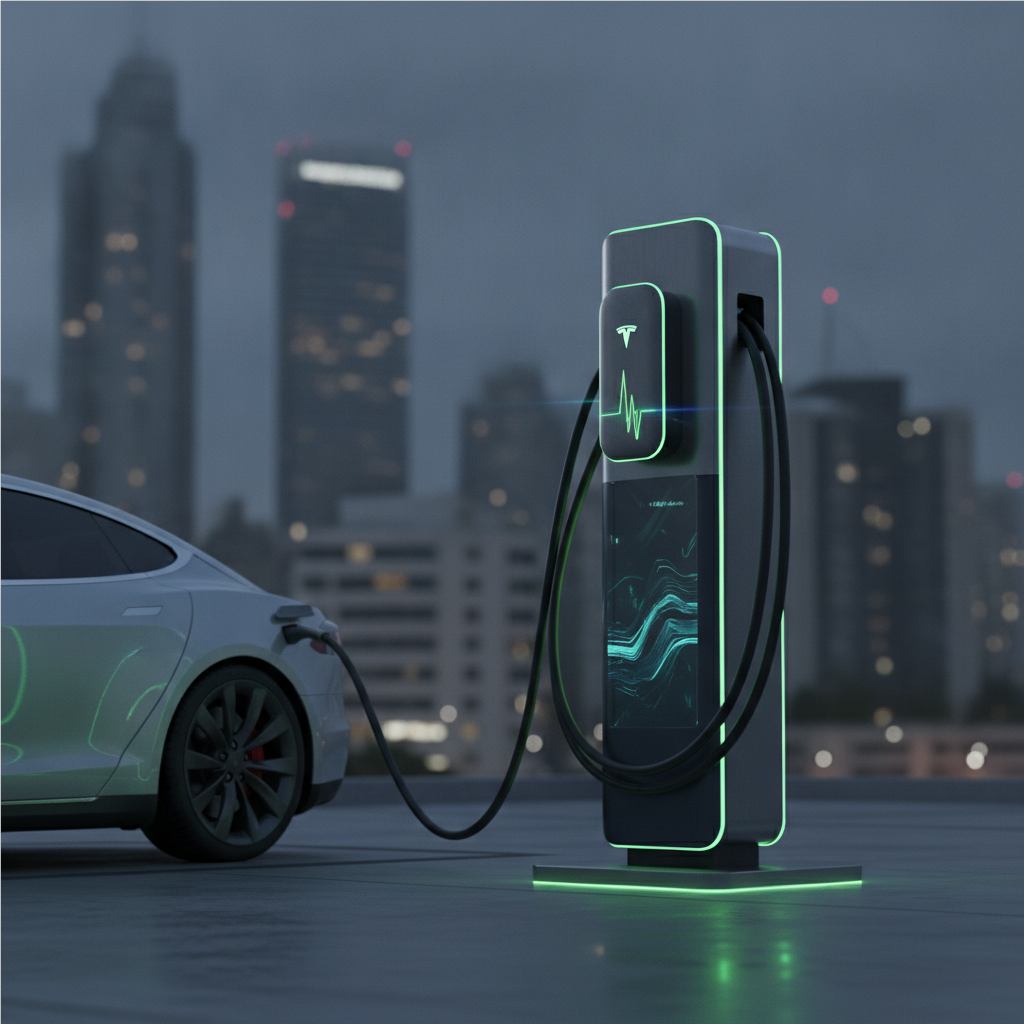
How to choose a charging station for a Tesla in Israel? A professional guide from DSGCharge
Updated: November 2026
In short: Any home charging station with a Type 2 connector is suitable for a Tesla in Israel. In most Tesla models, the onboard charger accepts up to 11kW on AC charging, so an 11kW station (on a three-phase connection) is usually the right choice. In the DSGCharge store, an 11kW smart charging station costs ₪1,590 and a 22kW station costs ₪1,790 (as of November 2026), plus installation.
Bought a Tesla in Israel or planning to? The next question is: how do you choose a charging station that suits your car, your home and your daily routine exactly? Choosing the right charging station for your Tesla ensures convenient, safe and efficient charging – and prevents unnecessary faults.
DSGCharge is one of Israel's leading companies in EV charging solutions and has been active since 2021. DSGCharge is the importer of its charging stations – the brand is DSGCharge's own. About 20,000 chargers and charging stations have been sold and installed, and the installation and service teams work across the country – in private homes, apartment buildings, parking facilities and businesses.
You can compare the 11kW and 22kW models on the Home charging stations in the DSGCharge store.
Is every charging station suitable for a Tesla in Israel?
Yes. Tesla models sold in Israel come with a Type 2 socket (the European standard) for AC charging and a CCS2 socket for DC fast charging. So any home charging station with a Type 2 connector will charge a Tesla, without an adapter.
What determines the actual charging speed is the combination of three things: the station's power, the home's electrical connection (single-phase or three-phase), and the vehicle's onboard charger (OBC – the component in the car that converts alternating current to the direct current that goes into the battery). An unsuitable installation can cause slow charging, disconnections or faults, so it's worth checking the electrical infrastructure before buying.
What power does a Tesla need: 7.4kW, 11kW or 22kW?
In most Tesla models, the onboard charger is limited to 11kW on AC charging (check your car's specifications). This means an 11kW station uses the car's full capability, and a 22kW station won't charge it any faster. A 22kW station can be useful if there's another EV in the household that supports 22kW, or if you want a station that will also suit your next car.
| Station power | Required electrical connection | Actual charging power in a Tesla (11kW charger) | Estimated time to add 60 kWh |
|---|---|---|---|
| Granny cable in a household outlet (up to 10A) | Regular socket | About 2.3kW | About 26 hours (for occasional charging only) |
| 7.4kW | Single-phase, 32A | 7.4kW | About 8 hours |
| 11kW | Three-phase, 16A per phase | 11kW | About 5.5 hours |
| 22kW | Three-phase, 32A per phase | 11kW (limited by the car) | About 5.5 hours |
Approximate calculation, without charging losses. As of November 2026.
A detailed explanation of the differences: 11kW or 22kW charging station, and on charging times by battery: How long does it take to charge an electric car. If your home has only a single-phase connection, a 7.4kW station will charge most of the battery during a normal night.
Which charging station should you buy for a Tesla?
For most Tesla owners in a private home, a smart charging station is the right fit – a station with an app, charge scheduling and consumption tracking. In an apartment building, parking facility or business, a managed charging station is the right fit; it connects to a cloud management system via the OCPP protocol (an open language in which charging stations talk to the management system) and enables load management, access permissions and billing for each user.
| Model | Type | Power | Suitable for | Store price |
|---|---|---|---|---|
| DSG-1061 | Smart station | 11kW | Private home, Tesla with an 11kW charger | ₪1,590 |
| DSG-1062 | Smart station | 22kW | A home with another car that supports 22kW | ₪1,790 |
| DSG-6012 | Managed station (OCPP) | 22kW | Apartment building, parking facility, business | ₪3,290 |
| DSG-3012 | Dual station | 2 × 22kW | Home with two cars | ₪6,490 |
| DSG-350 | Granny cable (portable charger) | Up to 3.7kW, adjustable amperage | Backup and occasional charging from a regular household outlet | ₪699 |
Store prices, as of November 2026. Installation is separate.
For all the models, accessories and cables: EV charging stations. The products have Standards Institution of Israel (SII) approvals.
AC or DC: do you need a fast charging station for your Tesla at home?
For most Tesla owners, a home AC station is enough: overnight charging fills the battery for a full day of driving. A DC station (direct current, which charges the battery directly without going through the onboard charger) is needed at home only in special cases – for example, when you drive very long distances every day, when there are several EVs, or for cars with an especially large battery. A DC station requires a larger electrical connection and a higher investment. Details: Home DC charging station.
What should you check in the electrical infrastructure before installing a Tesla charging station?
Before ordering a charging station, you must check the electrical infrastructure in the home or building: a code-compliant electrical panel, a dedicated line for the station, a suitable RCD, proper earthing and spare capacity on the connection. An 11kW or 22kW station requires a three-phase connection; in many apartments, we check whether a 16A or 32A per phase line can be added without overloading the rest of the home, and if not, we add load management or increase the connection size.
At DSGCharge, we carry out a site survey, examine all the components (distance from the panel, cable routing, panel limitations) and install according to the Electricity Administration guidelines. Prices, steps and requirements: EV charging station installation. For an estimated cost: Charging station installation cost calculator. A focused installation guide for Model Y owners: Installing a charging station for a Tesla Model Y.
A charging station with a fixed cable or a socket: which is better for a Tesla?
For most Tesla owners, a station with a fixed cable is more convenient: park, plug in and drive, without taking a cable out of the trunk. A station with a socket suits those who have several cars with different connectors, or those who want a clean station without a hanging cable.
- Fixed cable (Tethered): maximum convenience, safety, less flexibility.
- Socket (Socketed): flexibility, suits several cars, requires keeping a cable in the car.
- Adapters: usually not needed for an Israeli Tesla, except in special cases.
How to choose the right cable: Type 2 charging cable.
How do you install a Tesla charging station in an apartment building?
In an apartment building, we recommend choosing a managed charging station with load management (smart distribution of electrical power among the stations so as not to exceed the building's connection). This way, several residents can charge simultaneously without increasing the connection size, and each resident is billed according to their consumption. DSGCharge builds and operates managed charging systems for buildings: the DSG-6012 station (₪3,290), a service fee of ₪35 per month + 20 agorot per kWh, and billing each resident by consumption. Details: charging stations in apartment buildings.
How much does a Tesla charging station cost, including installation?
The total cost consists of the station and the installation. In the DSGCharge store, an 11kW smart charging station costs ₪1,590 and a 22kW station costs ₪1,790. Standard installation up to 20 meters from the panel (DSG-9903) costs ₪2,590, and up to 30 meters (DSG-9904) ₪2,990 (as of November 2026). In other words, an 11kW station with installation up to 20 meters costs about ₪4,180. A greater distance, trenching, a cabinet or increasing the connection size adds to the cost. Full price list: How much does a charging station cost.
Do you need insurance for a Tesla charging station?
A home charging station is part of the structure, so it's worth confirming with your insurance company that it is covered under your building insurance and third-party liability insurance. What to check and which documents to prepare: EV charging station insurance.
When is it cheapest to charge a Tesla at home?
On the TOU (time-of-use) tariff, electricity is expensive only during peak hours Sunday–Thursday: 17:00-22:00 in winter and the transition seasons, and 17:00-23:00 in summer. On weekends, the whole day is off-peak, in all seasons, and prices vary by season. A smart charging station with scheduling lets you charge your Tesla only during off-peak hours. What it actually costs: How much does it cost to charge an EV at home, and a calculation based on your data: Charging cost calculator.
In summary: For a Tesla in a private home, an 11kW smart charging station on a three-phase connection is usually the right fit; in an apartment building – a managed charging station with load management and billing by consumption. Want a professional charging solution for your Tesla? To the charging stations store, or Leave your details and we'll get back to you. Phone: 077-9920350.
Frequently asked questions about Tesla charging stations in Israel
Is every charging station suitable for a Tesla?
Yes. Teslas in Israel come with a Type 2 socket, and any home charging station with a Type 2 connector will charge them without an adapter.
Is there any point in a 22kW charging station for a Tesla?
In most Tesla models, the onboard charger is limited to 11kW, so a 22kW station won't charge faster. It's worthwhile if there's another car that supports 22kW or with your next car in mind. More information: 22kW charging station.
How much does a Tesla charging station cost?
In the DSGCharge store, an 11kW smart charging station costs ₪1,590 and a 22kW station costs ₪1,790, and installation up to 20 meters costs ₪2,590 (as of November 2026).
Can a Tesla charging station be installed in any apartment?
Not always. You need to check the electrical infrastructure, space in the panel and spare capacity. In an apartment building, a managed charging station with load management is usually installed.
How long does it take to charge a Tesla at home?
With an 11kW station, you add about 60 kWh in about 5.5 hours, and with a 7.4kW station in about 8 hours. With a granny cable in a household outlet, charging is very slow and suitable for occasional charging only.
Do you need a DC station for a Tesla at home?
Usually not. An 11kW AC station is enough for overnight charging. A home DC station is suitable for special cases, such as very long drives every day or several EVs.