
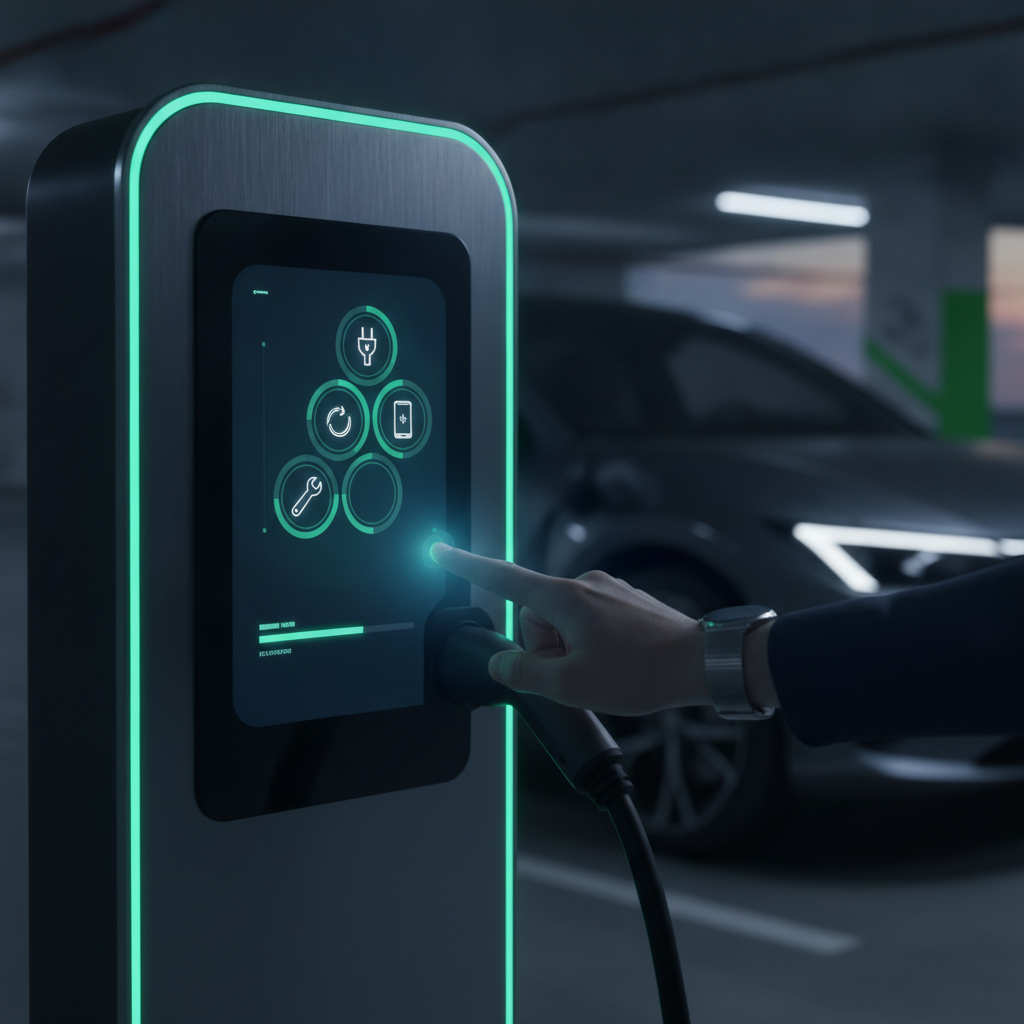
Charging station not responding? 5 simple checks before you call a technician
In short: Charging station not working? In most cases the problem is in one of three places: the station (indicator lights, error code, cable), the home's electrical infrastructure (a tripping circuit breaker or RCD, overload) or the vehicle (charging settings, charging port door, scheduling). Check in the order shown in the table, and if a circuit breaker trips again and again – stop and call an electrician.
Updated: October 2026
If your home charging station is old and you decide to replace it, you can compare the 11kW and 22kW models on the page Home charging stations in the DSGCharge store.
Charging station not working: where is the problem, by symptom?
| Symptom | Likely direction | What to do |
|---|---|---|
| No indicator light on the station | Power supply / circuit breaker in the panel | Check the dedicated circuit breaker in the panel; if it trips again – call an electrician |
| Red light or error code | Fault in the station or the cable | Unplug and reconnect, record the code and contact the station supplier |
| Circuit breaker or RCD trips when charging starts | Electrical infrastructure / overload | Don't reset it again and again – call an electrician |
| Charging starts and then slows down midway | Household load or load management | Check for heavy appliances running at the same time, and check the settings The load management |
| The station works but the vehicle doesn't charge | The vehicle or authorization | Check charge scheduling in the vehicle, the charging port lock, the app/RFID |
| The vehicle charges at a public charging station but not at home | The home charging station or the infrastructure | Inspection of the station and the supply line |
You come home, park, plug in the charging cable like every day — and nothing happens. No charging, no response; sometimes the indicator light shows an unfamiliar color, and sometimes everything looks normal but the vehicle simply doesn't charge. At that moment it's easy to jump to the conclusion that the charging station is faulty. In practice, in many cases the problem is somewhere else entirely — in the cable, the connection, authorization, the vehicle itself or even a small setting in the app.
The good news is that not every charging stop means a broken station, and not every fault requires calling a technician. That said, it's important to stress: never start “playing” with electricity, opening connections or trying to improvise solutions. The goal of this guide is simple: to understand what you can check yourself, safely and sensibly, before turning to professional service.
This article focuses on the most common situation among owners of a Electric car: Home charging station or a station in a private parking space that won't start charging. If you're at the stage of considering buying or upgrading a EV charging stations, it's worth reading to the end — because many faults start with an imprecise match between the vehicle, the cable, the electrical infrastructure and the station.
Step 1: Is the problem even in the station? Basic checks of the cable and the vehicle
The most common mistake is to immediately assume the station is the source of the problem. A charging system consists of three main components: the vehicle, the charging cable and the charging station. If one of them isn't “talking” properly with the others — charging won't start.
The first check is the simplest: disconnect everything, wait a few seconds, and reconnect carefully. Sometimes a loose connection that isn't fully inserted or a lock that hasn't engaged can prevent charging from starting, even if everything appears to be properly connected.
What should you check at this stage?
- Physical connection: Make sure the cable is seated firmly on both the vehicle side and the station side, until you hear the locking “click.”
- Clean connectors: Check that there is no dirt, dust, moisture or other foreign object inside the cable connectors or in the vehicle's charging port.
- Error messages in the vehicle: Look at the dashboard or the vehicle manufacturer's app. Sometimes the vehicle itself displays an error message that explains the problem.
- Scheduled charging: Make sure you haven't accidentally activated scheduled charging through the vehicle's system (for example, charging that starts only at night according to a reduced tariff). In that case, the station is working and is waiting for approval from the vehicle.
If your station uses a separate cable (not a cable permanently attached to it), the problem may be in the cable itself. A cable that has been pulled hard, bent aggressively or has suffered natural wear can develop an internal break, even if it looks fine from the outside. If possible, try using a different cable to rule out this possibility.
Step 2: What are the indicator lights trying to tell you?
One of the common causes of stress is that the station “looks different.” Instead of the steady green or blue color you're used to, there's flashing, a red color, or a state where there's light but no charging. It's important to understand: there is no uniform color standard for all manufacturers of The charging stations, so it's impossible to say across the board what each color means.
What can you understand? That the indicator light is usually not the fault itself, but rather A signal. It signals the current status of the station:
- Waiting for connection: Usually a steady color (blue or green).
- Vehicle connected, waiting for approval: Sometimes slow flashing. This can happen when the station is waiting for approval from the app or the vehicle.
- Charging in progress: Usually flashing or a “breathing light.”
- Fault or protective stop: Usually red, steady or flashing.
If you see an unusual change in the light, don't try to guess. Look for the station's instruction manual or check its app. In most cases, the app will provide a clearer explanation, such as “communication lost” or “authentication required.”
Note the difference between two situations:
- The station turns on but doesn't charge: Usually indicates a communication, authorization or settings problem, or a problem with the cable/vehicle.
- The station doesn't turn on at all (dark): This may point to an electrical problem. Check whether the circuit breaker dedicated to the station has tripped in the electrical panel. If so, and it trips again immediately after you reset it, contact a certified electrician.
In an apartment building, the situation can be more complex. The station may be working, but charging stopped because of a Load management system that was activated to prevent overloading the building's infrastructure. In this case, it isn't a fault but normal operation of the system.
Step 3: When the station works, but the app or authorization stops the charging
This is one of the most frustrating situations, because physically everything looks perfectly fine. The cable is connected, the vehicle is ready, there's power – but charging doesn't start. With smart charging stations, the cause is usually software rather than hardware.
If you have a smart charging station managed through an app, check the following points:
- Station status in the app: Does it appear as “available” or “disconnected” (Offline)? If it's disconnected, there may be a communication problem (Wi-Fi or cellular) in the parking area.
- User permissions: Is your user authorized to operate the station? This is relevant mainly in shared parking facilities or workplaces.
- Charge scheduling: Check the app settings to see whether you accidentally set limited charging hours.
Sometimes the problem stems from a settings reset, a phone replacement or a software update. In that case, the station is simply waiting for a command from the app or for user authentication (for example, with an RFID chip).
This is exactly the difference between buying a “box” and getting a complete charging solution. AtDSGCharge, we specialize in building a complete solution – from matching the station, through professional Charging station installation to advanced management systems. We understand how the system should behave in everyday use, especially in complex systems with load management or user billing.
How do you know the problem is in the home's electrical infrastructure?
Not every charging fault originates in the station. Often the problem is further back – in the home's electrical panel or in the line that supplies the station. If the protective RCD or a dedicated fuse in the electrical panel has tripped, that's usually the first sign that something in the infrastructure can't cope with the load that charging requires. Note: if the circuit breaker “trips” again several times in a row, don't try to “reset” it again and again – this is exactly the moment to stop and call a certified electrician, rather than trying to fix it yourself.
Another sign of an infrastructure problem: charging that starts normally but “weakens” midway, as if the station is “holding itself back.” This can happen when there's a high load in the home at that moment (air conditioner, oven, washing machine at the same time) and the infrastructure wasn't designed to handle both charging and the other appliances. This isn't necessarily a fault in the station – it's a question of load planning that should have been examined already at the installation stage.
When is the problem in the vehicle and not in the charging station?
There are cases where all the checks of the station and the home come out fine, but charging still doesn't progress. In that case, it's worth checking the vehicle itself: is there a charging-related error message in the vehicle's computer, is the charging port door locked properly, and is the vehicle “ready” to charge (some vehicles require the car to be in a certain state to accept charging – for example, not in the middle of a scheduled charging timer that the driver set in the past and that remained active without their knowledge).
If the vehicle refuses to charge at another public charging station as well, that's a strong sign that the problem is in the vehicle and not in the home charging station – and then the place to go is an authorized garage of the vehicle manufacturer, not an electrician or a charging station technician. Making this distinction can save time and money, because it points you to the right party from the start.
Why document the fault before calling a technician?
When you seek an inspection of the fault – whether from an electrician, a charging station technician or whoever installed the station – accurate documentation saves valuable time. It's worth writing down exactly when the fault occurred (at what time, after how long of charging), whether the circuit breaker tripped and how many times, what color the light on the station was, and whether the problem also occurred at another public charging station. Details like these help the professional arrive at your home with the right direction, instead of starting the inspection from scratch.
At DSGCharge, a significant share of the inquiries received through customer service start with exactly this description – “the station stopped working” – and only in the initial diagnostic call does it become clear whether it's a fault in the station, a problem with the home's electrical infrastructure, or an issue related to the vehicle itself. The company handles installation, infrastructure inspection and maintenance of home charging stations, so part of the routine work is precisely identifying the source of the fault before recommending the next step – whether that's a spot repair, replacing a part, or a professional inspection of the electrical panel that supplies the station.
Who handles a fault in a DSGCharge charging station?
DSGCharge is the importer of its charging stations– the brand is DSGCharge's own. The company has been active since 2021, about 20,000 chargers and charging stations sold and installed, and its installation and service teams operate nationwide. DSGCharge home charging stations come with a 24-month warranty, which can be extended with a warranty extension. For a fault that isn't covered by the warranty, you can order a Technician service call, and when you need to replace a station or relocate it – EV charging station installation and all the models inEV charging stations. For questions: Contact us or 077-9920350.
Red line: when do you stop checking and call a professional?
There is a clear difference between a basic, safe check and dangerous tampering with electricity. As soon as there are signs indicating a physical or electrical problem, you must stop immediately and not try to fix it yourself. Don't open covers, don't touch internal connections and don't make changes to the electrical panel.
These situations require immediate contact with a certified professional:
- A burning smell, smoke, unusual heat to the touch, or signs of melting on the station, the cable or the socket.
- A circuit breaker in the electrical panel that trips again and again as soon as you try to charge.
- Significant moisture around the station, the connector or exposed wiring.
- Physical breaks or cracks in the station housing, the socket or the cable head.
- Unusual behavior of the station after electrical work, renovation or a change in the building's infrastructure.
It's important to stress: general information on the internet can point you in the right direction, but it doesn't replace a professional on-site inspection. Any installation, maintenance or repair of Charging stations must be carried out by a certified electrician, in accordance with the requirements of the law and the standards in Israel.
Recurring fault? Maybe the problem isn't the station but the solution as a whole
If this is the first time the station hasn't responded, it may be a one-off. But if the fault keeps recurring – one week charging stops, another time the app doesn't recognize it – it's worth asking a different question: not “how do I get charging started now?” but “why does this keep happening?”
Recurring faults often indicate a systemic problem: electrical infrastructure running at its limit, an imprecise choice of station type, an unsuitable cable, unstable communication, or planning that didn't take future growth into account (for example, another electric vehicle in the family).
So the right solution isn't always a “repair,” but rather a fresh diagnosis of the entire system. Is this the right station for your needs? Does the infrastructure support the required power? Do you need a solution with dynamic Load management ? A good charging system should work in a predictable, reliable and convenient way. If you find yourself struggling with it again and again, it's probably time to check not only the fault but the solution as a whole.
If your station isn't responding, charging stops for no reason, or you simply want to make sure your solution is stable over time, the DSGCharge team of experts is here to help. We'll help diagnose the problem and tailor a reliable charging solution you can count on, from the infrastructure to day-to-day management.
Frequently asked questions about charging station faults
The circuit breaker in the electrical panel trips every time charging starts – is it dangerous?
If a dedicated circuit breaker trips again and again during charging, it's not something you should “reset” without an inspection. It may indicate an unsuitable load, a fault in the station or a problem in the supply line, and you should call a certified electrician to check the cause before trying to return to regular charging.
If the station works but charging is very slow, is that a fault?
Not necessarily. Charging speed can vary depending on the station's power, the type of connection in the home (single-phase or three-phase) and limits set by the vehicle itself. If there's a sudden, clear change in speed compared with what you're used to, it's worth checking – but a slight difference can be normal and stem from factors outside the station.
When should you call an electrician and when should you contact the station supplier?
If the problem shows up as tripping circuit breakers, concern about the condition of the electrical panel or the supply line – the place to go is a certified electrician. If the problem shows up in the station itself – indicator lights, error codes, communication with the vehicle – the place to go is whoever installed it or the station supplier, who can assess whether service, repair or further inspection is needed.
Does every fault in a charging station mean it needs to be replaced?
Not at all. In most cases, the problem isn't in the station itself but in an external factor such as the charging cable, the vehicle settings, app authorization or a communication problem. Before rushing to replace it, it's important to carry out a professional diagnosis to understand the source of the fault.
If the vehicle charges at a public charging station but not at home, what does that mean?
It's a strong sign that the problem is in the home system. It may be related to the charging station, the specific cable you're using, the electrical infrastructure, the building's load management settings or the station's internet connection. It usually rules out a problem in the vehicle's internal charging system.
Am I allowed to open the station cover or check the electrical panel myself?
Absolutely not. Any handling of electrical components, opening covers or changes to wiring must be carried out only by a certified electrician. Self-checks should be limited to a visual inspection of the cables, resetting the system and using the app, without any physical contact with electrical components.