
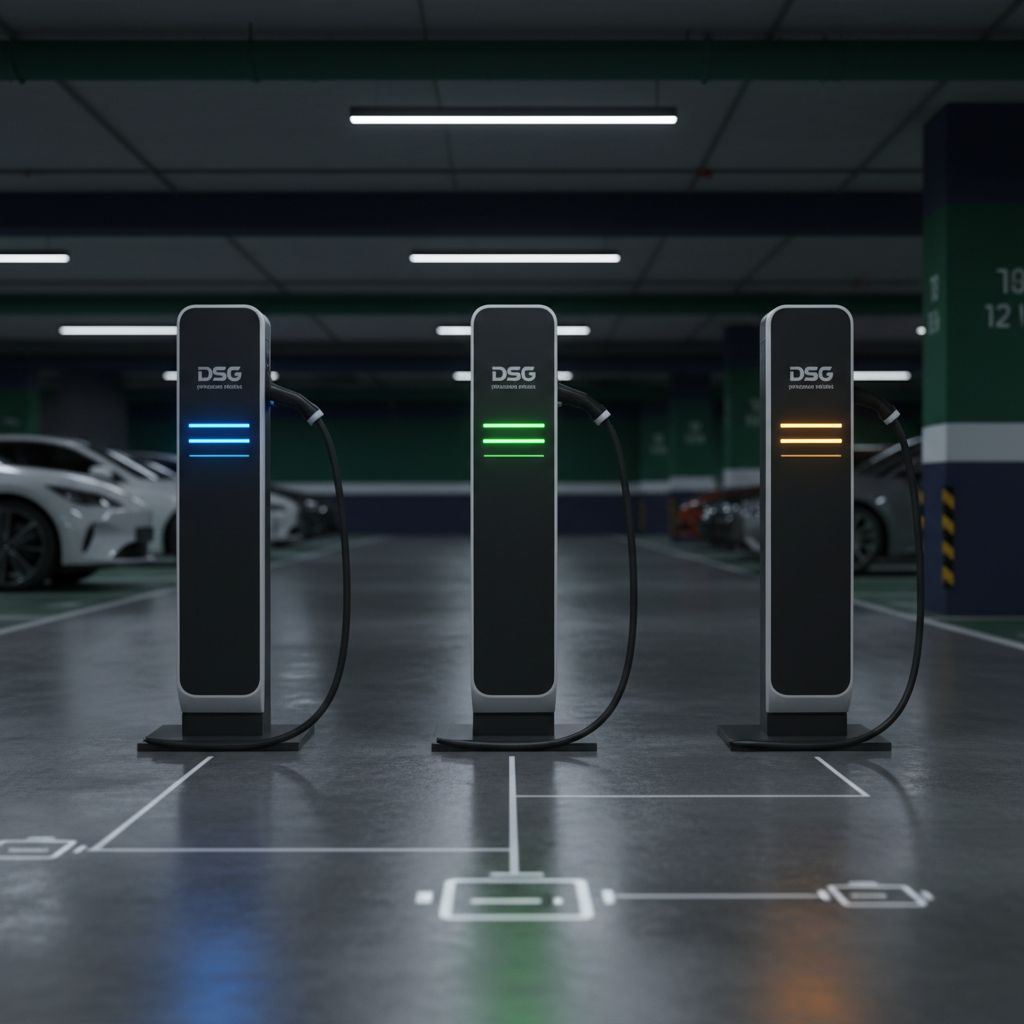
Comparing EV charging stations: 11kW, 7kW and 22kW – which DSGCharge station is right for you?
In short: A 7kW station suits a single-phase connection and fully charges a battery in about 10-11 hours. An 11kW station requires a three-phase connection (16A per phase) and charges in about 4-6 hours, and a 22kW station requires a 32A three-phase connection and charges in about 2-4 hours, only in a car that supports 22kW AC. For most private users, an 11kW station is the balanced choice.
DSGCharge (DSG Charging Solutions) is one of Israel's leading companies in EV charging solutions: active since 2021, with about 20,000 of its chargers and charging stations sold and installed, and it provides installation and service nationwide.
Have you joined the electric vehicle era? Congratulations! More and more drivers in Israel are choosing green, economical and quiet driving. But the switch also brings new questions, first and foremost – how do we ensure charging that is efficient, safe, fast and suited to our vehicle and our needs? The world of EV charging stations, whether home or public, can seem complex at first glance, with terms like single-phase, three-phase, different power ratings (7kW, 11kW, 22kW) and installation considerations. We atDSGCharge understand this confusion and your concerns about making the wrong choice or getting an unprofessional installation.
We don't just sell charging stations – we build a complete, personalized charging solution for you that includes the right station, professional installation nationwide and reliable long-term service. This guide is designed to sort things out for you. We'll dive deep into the differences between 11kW, 7kW and 22kW charging stations, examine the pros and cons of each, and help you understand which station is best suited to your electric vehicle, to the electrical infrastructure in your home or business, and to your unique needs. Our goal is for you to come away with a clear understanding so you can make an informed decision that gives you peace of mind and an optimal charging experience.
You can compare the 11kW and 22kW home models on the Home charging stations in the DSGCharge store.
Why is understanding the differences between charging stations critical for you?
Choosing Home charging station for an electric vehicle is a significant decision that affects ease of use, charging speed, installation costs and even your electricity bill. Many of our customers come to us confused about the different types of stations, worried about making the wrong choice or about anCharging station installation that isn't professional. A thorough understanding of the differences between 11kW, 7kW and 22kW stations will allow you to:
- Save on costs: Buying a station that is too powerful for your existing infrastructure or vehicle is an unnecessary expense. Buying a station that is too weak can lead to frustration and an expensive upgrade in the future. We at DSG Charging Solutions will match you with the right station at the best price for you.
- Ensure optimal charging: A well-matched station will deliver the best charging rate for your vehicle without overloading your electrical infrastructure.
- Stay safe: Correctly matching the station to the electrical infrastructure, and professional installation by a certified electrician, are critical for your safety and the safety of your home or business. We emphasize that a charging station must be installed by a qualified professional and in accordance with the relevant legal and standards requirements in Israel.
- Plan for the future: Understanding the capabilities and limitations of each station will help you choose a solution that also fits future needs, such as buying another electric vehicle or upgrading your infrastructure.
We at DSG Charging Solutions offer end-to-end solutions, from professional consulting and personalized matching, through the supply of quality charging stations, to nationwide installation and support service. Our goal is to put your concerns to rest and give you the most accurate solution. About 20,000 chargers have already been sold and installed.
7kW charging station: the efficient solution for a single-phase private home
A 7-kilowatt (kW) charging station is the choice that suits owners of Electric car whose electricity supply is single-phase. Most electric vehicles charge with three-phase charging, so connecting a single-phase charging station will slow the charging rate relative to the vehicle's capabilities, unless it is aPlug-in hybrid that can charge on single-phase.
11kW charging station: the perfect balance for faster three-phase charging
An 11-kilowatt (kW) charging station offers a significant leap in charging speed compared to a 7kW station, and is an excellent solution for homes and businesses with three-phase electrical infrastructure. It is also an AC station, but it uses the capabilities of a three-phase connection for faster charging.
Advantages of an 11kW station:
- Faster charging: An 11kW station can charge the vehicle almost twice as fast as a 7kW station. This means a large battery can be fully charged within 4-6 hours, or gain significant driving range in a shorter time.
- Making use of three-phase infrastructure: If your home or business has a three-phase electrical connection (25A or more), an 11kW station lets you use the full potential of the existing infrastructure without an expensive upgrade.
- A balanced solution: It offers an excellent balance between a charging speed that is high enough for most needs and more reasonable installation and operating costs compared to 22kW stations.
- “Future-proofing”: As the electric vehicle market develops and batteries get larger, an 11kW station provides a solution that will stay relevant in the future as well.
Who is an 11kW station right for?
An 11kW station is ideal for electric vehicle owners with three-phase infrastructure who want faster-than-standard charging, whether because of frequent long trips or the need for faster charging during the day. It also suits small and medium-sized businesses, and apartment buildings that want to provide residents with an efficient charging solution. Charging stations at this power rating are very popular among DSG Charging Solutions customers.
22kW charging station: fast charging for special needs
A 22-kilowatt (kW) charging station is the fastest option among home/business AC stations and is designed for those who need fast charging. It also runs on a three-phase connection, but requires stronger, more suitable electrical infrastructure (usually 32A and up). For a charging station to charge at 22 kilowatts (kW), two conditions must both be met:
- The vehicle can charge at 22 kilowatts (kW).
- The home electrical infrastructure can supply 32 amps three-phase.
Advantages of a 22kW station:
- Fast charging: A 22kW station can charge an electric vehicle twice as fast as an 11-kilowatt AC charging station.
- Ideal for specific uses: Excellent for businesses, public parking lots, electric vehicle fleet management, or for vehicle owners with especially high mileage who need maximum flexibility and minimal downtime.
- Maximum use of strong infrastructure: If strong three-phase electrical infrastructure is available, this station makes the best possible use of it.
Disadvantages and considerations for a 22kW station:
- High infrastructure requirements: This station requires strong three-phase electrical infrastructure (usually 32A and up). In many private homes, upgrading to such infrastructure can be expensive and complex.
- Higher cost: Both the station price and the installation costs are significantly higher compared to 7kW and 11kW stations.
- Not every vehicle supports it: It's important to remember that not every electric vehicle can use the full 22kW AC charging power. Many vehicles are limited to 11kW even if the station is more powerful.
Who is a 22kW station right for?
A 22kW station mainly suits businesses, public parking lots, car washes, shopping centers, companies with an electric vehicle fleet, and a few private customers with especially strong three-phase infrastructure and a real, urgent need for the fastest possible charging. For most private users, an 11kW station will usually be the more balanced and cost-effective solution. We at DSG Charging Solutions will check your infrastructure and make sure it is fully compatible before recommending such a station.
Full comparison: 7kW vs. 11kW vs. 22kW – everything you need to know
To sum up the differences, we've gathered the key points of comparison between the different charging stations:
Power and charging speed:
- 7kW: Standard power, suitable for overnight charging (about 10-11 hours for a full charge).
- 11kW: Medium-high power, 1.5-2 times faster than a 7kW station (about 4-6 hours for a full charge).
- 22kW: Very high power, 2-3 times faster than a 7kW station (about 2-4 hours for a full charge).
Electrical infrastructure requirements:
- 7kW: Single-phase (32A), suitable for most private homes in Israel.
- 11kW: Three-phase (16A), requires existing three-phase infrastructure.
- 22kW: Strong three-phase (32A), requires especially strong three-phase infrastructure.
Costs (station and installation):
- 7kW: The lowest of the three, both to buy and to install. Hardly sold anymore.
- 11kW: Medium – more expensive than 7kW but usually more cost-effective than 22kW.
- 22kW: The highest, especially if a significant infrastructure upgrade is needed.
Vehicle compatibility:
- 7kW: Suitable for any electric vehicle that supports AC charging.
- 11kW: Suitable for most electric vehicles that support three-phase charging.
- 22kW: Suitable only for vehicles that support high-power three-phase charging (not all vehicles).
Recommended use:
- 7kW: Private home/apartment building, daily overnight charging.
- 11kW: Private home/apartment building, small business, faster-than-standard charging.
- 22kW: Public parking lots, large businesses, vehicle fleets, charging hubs, a need for ultra-fast charging.
Keep in mind that the price varies depending on the type of station, the power rating, the existing electrical infrastructure and the complexity of the installation. We at DSG Charging Solutions will be happy to give you an accurate quote after a needs assessment and a professional infrastructure check.
How do you choose the charging station that best suits you and your vehicle?
Choosing the right charging station is critical to your experience with an electric vehicle. We at DSG Charging Solutions offer a comprehensive consulting process that takes all the important parameters into account, to ensure you get a reliable, personalized solution:
1. Checking the existing electrical infrastructure:
This is the first and most important step. A certified electrician on our behalf will thoroughly inspect the existing electrical panel in your home or business. He will check whether the infrastructure is single-phase or three-phase, what the connection size (amperage) is, and what the existing load on the system is. Only after this check can we determine the maximum power that can be installed without an expensive infrastructure upgrade, or recommend a necessary upgrade.
- Good to know: Many homes in Israel have single-phase electrical infrastructure. In that case, a 7kW station is usually the preferred option, unless you choose to upgrade to three-phase (which requires approval from the Israel Electric Corporation (IEC) and significant electrical work). If you have three-phase, the options are broader.
2. Matching your type of electric vehicle:
Every electric vehicle has an onboard charger that limits the maximum AC charging rate. For example, many vehicles support charging of up to 7kW or 11kW, even if you connect them to a 22kW station. It's important to check the maximum charging rate your vehicle can accept, so you don't pay for a station that is more powerful than your vehicle can use.
- A tip from the DSGCharge experts: Check your vehicle's specifications or consult with us. We know all types of vehicles and will match you with the exact station and the the charging cable that suits you.
3. Your driving and charging habits:
- Daily mileage: How many kilometers do you drive on an average day? If you drive little, a 7kW station will probably be enough. If you drive long distances every day, you may need a faster station.
- Available parking times: Does the vehicle stay parked at home for long hours (for example, all night)? In that case, even a relatively slow station will deliver a full charge. If parking times are shorter, a faster station will be preferable.
- Availability of public charging stations: Do you also rely on fast charging stations on the road or in public places? If so, a slower home station may be enough.
4. Planning for the future:
Are you planning to buy another electric vehicle in the future? Do you expect your needs to change? Choosing a station with a higher power rating (such as 11kW instead of 7kW, if the infrastructure allows) can be a smart long-term investment that will save you upgrade costs in the future.
We at DSG Charging Solutions specialize in matching charging solutions to the private, business and public sectors alike. With extensive experience, professional installation teams nationwide, and the ability to handle projects ranging from a private home to residential buildings, parking facilities and vehicle fleets, we are your address for a complete, reliable and advanced charging solution.
DSGCharge: your experts in matching and professional installation
atDSGCharge We believe a charging station is not just a product but part of a complete electric driving experience. That's why we focus on providing end-to-end charging solutions, personalized for every customer – private, business or institutional.
- Expert consulting: Our professional team has an in-depth understanding of the world of electric vehicles and electrical infrastructure. We will accompany you from the initial needs assessment, through the infrastructure check, to choosing the station that best suits your needs, while answering all your questions and concerns (such as the differences between an AC and a DC station, Load management in apartment buildings and more).
- Safe, professional installation: We employ certified, experienced installation teams nationwide. Every installation is carried out according to the strictest standards, with careful attention to safety, aesthetics and functionality. We handle every aspect, including planning the power line, matching the electrical load and electrician approval.
- A range of solutions: We offer a wide range of Charging stations quality, from home AC stations (7kW, 11kW, 22kW) to DC fast and ultra-fast stations (up to 480kW) for public and business use. In addition, we supply a selection of cables, adapters and accessories, to ensure you get a complete solution.
- Smart management systems: For apartment buildings, parking facilities and vehicle fleets, we develop and install managed charging systems that include Smart load management, payment processing, billing, and real-time monitoring and control. These solutions allow full control over the charging process, user billing and more efficient electricity consumption.
- Service and warranty: About 20,000 chargers have already been sold and installed. We provide a long warranty on our products and an available support service, because we know peace of mind is an integral part of the customer experience.
Choosing EV charging station is a long-term investment, and we're here to make sure you make the right choice. Don't compromise on quality, safety and professionalism. Contact us today and get personalized advice from the DSG Charging Solutions experts.
For advice and a personalized charging solution for your electric vehicle – Contact DSG Charging Solutions now!
Frequently asked questions about EV charging stations
How much does a home charging station cost?
The cost of a home charging station varies depending on several factors, including the type of station (7kW, 11kW, 22kW), the complexity of the installation, the length of infrastructure required and the need for electrical upgrades. We at DSG Charging Solutions provide an accurate quote after a needs assessment and an infrastructure check by a certified electrician on our behalf.
How much does EV charging station installation cost?
The installation price depends on the length of infrastructure that needs to be run, the type of electricity supply (single-phase/three-phase), the location of the electrical panel relative to the station, chiseling work and additional components. To get an accurate estimate, we recommend a professional on-site inspection by a certified electrician on our behalf. Contact us for advice and an inspection.
What is the difference between an 11kW, 7kW and 22kW charging station?
The main difference is the charging power (charging rate). 7kW suits single-phase homes and offers standard overnight charging. 11kW requires three-phase infrastructure and offers faster charging. 22kW is the fastest AC station, requires strong three-phase infrastructure and suits those who need ultra-fast charging. Keep in mind that not all vehicles support 22kW AC charging. The DSG Charging Solutions experts will help you choose the right station for your vehicle and your existing infrastructure.
Can you charge an electric vehicle at home with single-phase electricity?
Yes, absolutely. It will fully charge the vehicle overnight for most electric vehicles. We at DSG Charging Solutions will check your infrastructure and install the station safely and professionally.
Do you need three-phase for a charging station?
It's not a must, but faster charging stations (11kW and 22kW) require three-phase infrastructure. If you have single-phase electricity, you can install a 7kW station. If you want a faster station, an infrastructure upgrade to three-phase may be required, subject to the IEC's approval and a check by a certified electrician. DSG Charging Solutions will accompany you throughout the process.
What is a smart charging station?
A smart charging station is a station that allows advanced management and control of the charging process. It can include capabilities such as adjusting the charging current (which can prevent the power from tripping), charging scheduling, consumption tracking, user billing via an app or RFID, and real-time updates. These stations are especially important for apartment buildings, businesses and vehicle fleets, and DSG Charging Solutions specializes in supplying and installing them.
What is load management in a building?
Load management is a smart system that divides the total electrical power available in a building among several charging stations without exceeding the building's infrastructure capacity. The system detects the overall load and directs power to the charging stations according to availability, ensuring every vehicle gets charged with maximum safety. It is an essential solution for apartment buildings that want to install several charging stations, and DSG Charging Solutions offers advanced solutions in this field.
How do you install a charging station in an apartment building?
Installing a charging station in an apartment building requires careful planning, usually in cooperation with the building committee and a certified electrician. You need to check the building's electrical infrastructure, obtain the appropriate approvals, and choose a solution that allows load management and fair billing of users. DSG Charging Solutions specializes in providing personalized solutions for apartment buildings, including advanced management systems, and accompanies you through every stage of the project.
What is the difference between an AC charging station and a DC charging station?
AC (alternating current) stations are the common stations for home and public use, and charge the vehicle at up to 22kW. The vehicle itself converts the current to DC. DC (direct current) stations are fast and ultra-fast charging stations (from 30kW up to 480kW) that convert the current outside the vehicle and charge the battery directly. They are more expensive, require very strong infrastructure, and mainly suit public and business charging hubs. DSG Charging Solutions supplies both types of stations.
What should you check before buying a charging station?
Before buying, it's important to check: the electrical infrastructure in your home (single-phase/three-phase, connection size), the maximum charging rate your vehicle supports, your driving habits, and the installation requirements. It's recommended to consult with experts like DSG Charging Solutions, who will carry out a professional inspection and help you choose the most suitable station, with warranty and service included.
Which charging cable is right for my vehicle?
Most electric vehicles in Europe and Israel use a Type 2 charging cable for AC charging. It's important to check the connector type your vehicle requires (Type 1 or Type 2, although Type 1 is disappearing) and the cable length you want. We offer a range of Cables, adapters and accessories in our store, and we'll make sure to match you with the right cable.
Are there public charging stations with payment processing?
Yes, absolutely. Many public and business charging stations, including those DSG Charging Solutions installs, integrate advanced payment processing and billing systems. These systems let users pay for charging via an app, an RFID card or a credit card, and let the station owner manage charges and revenue transparently and efficiently.
How do you manage charging for an electric vehicle fleet?
Electric vehicle fleet management requires a comprehensive managed charging system. These systems include real-time monitoring of each vehicle's charging status, user management, tracking of electricity consumption, billing and detailed reports. DSG Charging Solutions provides advanced Fleet management solutions that allow full control and more efficient charging processes for companies and organizations.