
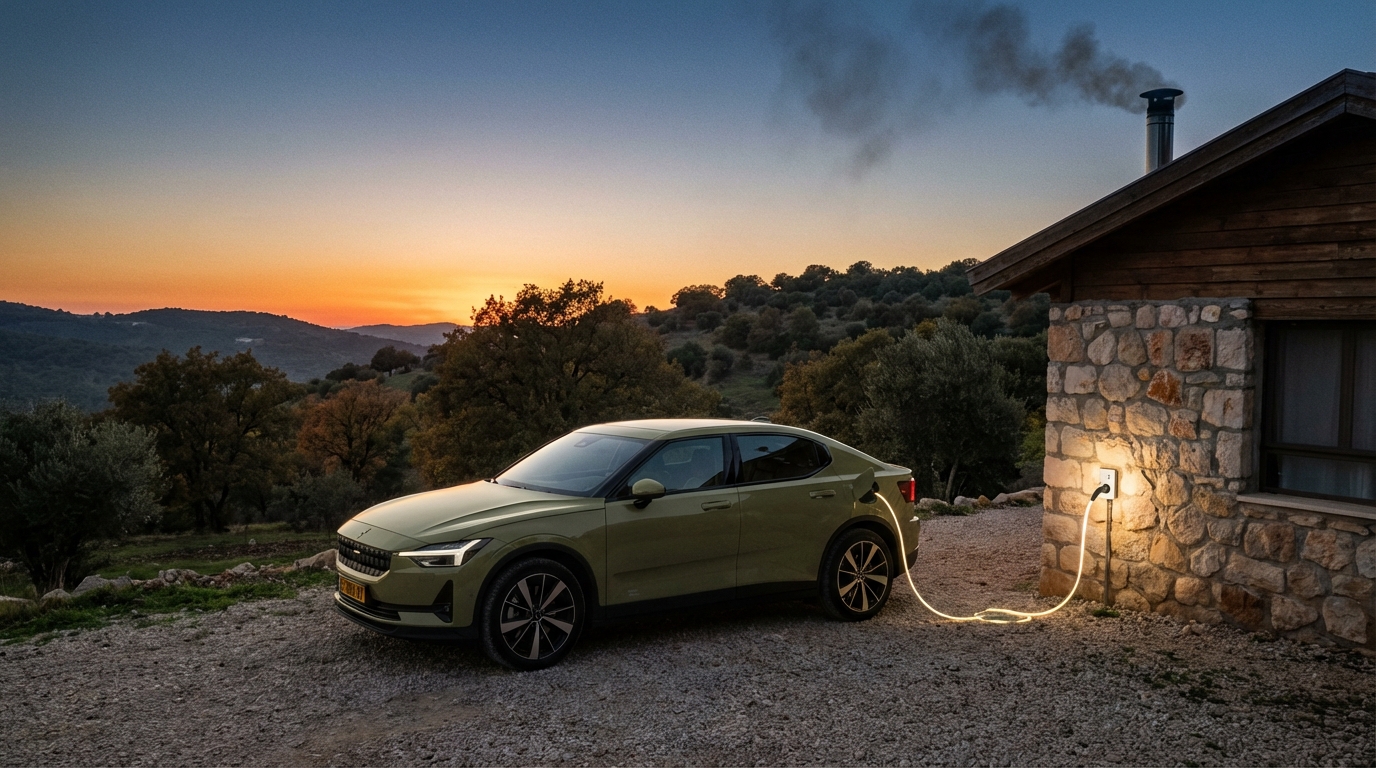
Portable EV charger (“granny cable”): when does it really save the day?
In short: A portable EV charger (“granny cable”) adds about 10–15 km of range for every hour of charging from a regular household socket, so fully charging an empty battery can take 12 to 24 hours. It doesn't replace a fixed home charging station, which adds about 50–100 km per hour, but it's the perfect backup for visits, vacations and emergencies.
DSGCharge (DSG Charging Solutions) is one of Israel's leading companies in EV charging solutions: active since 2021, with about 20,000 of its chargers and charging stations sold and installed, and it provides installation and service nationwide.
To charge from a charging station you need a suitable cable: you can compare cables of different power ratings and lengths on the page EV charging cables in the DSGCharge store.
Introduction: the fear that's always there – getting stuck with 0% battery
Picture the situation: you're on your way home after a long weekend up north, the sun is starting to set, and the kids in the back are already getting restless. A quick glance at the dashboard reveals what you were hoping to ignore – you have only 15% battery left. A slight feeling of stress starts to spread. “Range anxiety” isn't just a buzzword; it's a real feeling every EV owner knows. You open the app, find a fast charging station ten minutes away, and get there only to discover it's occupied by another car that will probably be there for at least half an hour. The second station, it turns out, isn't working at all. The slight stress turns into real worry. What now? It's exactly at moments like these, when advanced technology lets you down, that the quiet, unglamorous hero of the EV world steps in: The portable charger, or as we all like to call it, the “granny cable”. It isn't fast and it isn't impressive, but it's the simplest and most reliable solution that can rescue you from an unpleasant situation and give you back your peace of mind.
So what exactly is a “granny cable”, and why is it so useful?
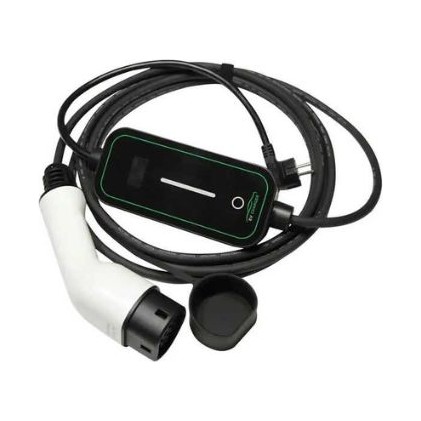
The endearing nickname “granny cable” stuck to the portable charger because, in theory, it lets you drive to Grandma's on Friday, plug the car into the regular socket in her driveway, and wake up Saturday morning to a full battery. Simply put, it's a portable charging cable with a plug on one end that connects to your electric vehicle, and a standard power plug on the other end that fits ordinary household sockets (an industrial “power” socket or a regular socket, depending on the charger model). Unlike a fixed charging station, which requires professional installation, a portable charger works on a “plug and play” basis (Plug & Play), which makes it the ultimate accessory for flexibility and peace of mind.
Technically, most portable chargers are basic Level 1 or Level 2 chargers. Level 1 chargers plug into a regular household outlet (single-phase) and provide relatively slow charging, while Level 2 chargers plug into a power outlet (three-phase) and allow faster charging. So the main advantage of a granny cable is not speed but availability. It lets you turn almost any power point into a potential charging station. It removes total dependence on dedicated public charging infrastructure and gives you the ability to “refuel” anywhere – at a friend's house, at the office, at a vacation cabin or even camping with a power point. And if there's no power point at all, in a vehicle that supports V2L you can power devices from the car's battery with a V2L adapter. It's always recommended to know the different charging standards to understand the differences between the various charging levels and how they affect the time it takes to fill your battery.
When is a portable charger not a luxury but a real necessity?
While a home charging station is the most convenient solution for everyday use, there are many scenarios in which a portable charger goes from a “nice to have” tool to an essential, indispensable one. These are the moments when you'll be glad you invested in this simple accessory resting quietly in your trunk:
- Visiting friends or family: You drove to your parents' place in a remote town for the weekend, or dropped in on friends in another city. Chances are they don't have a dedicated charging station in their parking space. Instead of looking for a public station and leaving the car there in the middle of the night, you simply pull out the granny cable, plug it into a socket in the driveway or garden, and go to sleep with peace of mind. In the morning, the car will be charged and ready for the trip home.
- A vacation at a guesthouse or an off-road trip: Planned a romantic getaway at a secluded guesthouse in the Galilee or a family trip down south? Remote areas don't always offer extensive charging infrastructure. A portable charger means you don't have to plan your whole route around the locations of charging stations. As long as you have access to a standard power socket, you're set and can enjoy the true freedom an electric vehicle offers.
- Emergencies and breakdowns: You arrived at a public charging station that the app shows as working, but in reality it's broken. Or maybe you reached a fast charging station and found a long line of cars ahead of you. In situations like these, a portable charger is the perfect backup plan. It lets you find a nearby café, ask permission to plug into a socket, and add a few vital kilometers that will get you to your next destination without calling a tow truck.
- A smart temporary solution: If you live in a rented apartment, or in an apartment building where the approval process for installing a fixed station is long and cumbersome, a portable charger is the perfect solution. It bridges the gap and lets you drive an electric vehicle from day one, without waiting for approvals or investing in an installation at a place that isn't permanent.
Portable charger vs. fixed charging station: head to head
One of the most common questions is whether a portable charger can replace a fixed charging station. The short answer is – not exactly. Each is designed for a different purpose, and they actually complement each other. A fixed station (wallbox) is the ideal solution for convenient everyday use at home, while a portable charger is your ‘insurance policy’ for trips, emergencies and unexpected situations. At DSG Charging Solutions, we always say every EV driver should have two charging solutions: one for everyday use and one for everything else. The following table summarizes the main differences:
| Feature | Portable EV charger (granny cable) | Fixed charging station (wallbox) |
|---|---|---|
| Charging speed | Relatively slow (about 10-15 km per hour of charging) | Fast (about 50-100 km per hour of charging) |
| Cost | Relatively low | Higher, requires installation |
| Installation | No installation needed (Plug & Play) | Requires a certified electrician |
| Portability and flexibility | Maximum, always in the car | Fixed in one location |
As you can see, while a fixed station offers speed and convenience for home use, a portable charger wins hands down when it comes to portability, flexibility and upfront cost. It's the combination of the two that gives EV owners complete freedom and real peace of mind.

Safety first: is it safe to use a granny cable?
The concern about plugging a car – a device that draws a lot of electrical power – into a regular household socket is understandable, but it's important to separate myths from reality. Using ahigh-quality, standard-compliant portable charger is completely safe. Problems start when people use cheap, unapproved products from unknown sources. So the most important rule of thumb is to buy a charger that meets strict standards, such as the range of high-quality portable chargers that DSG Charging Solutions offers. These products include built-in protection mechanisms against overheating, short circuits and voltage drops, which ensure that charging stops automatically in the event of a fault.
In addition to choosing a quality product, there are a few important safety rules worth adopting:
- Check the socket: Before plugging in, make sure the socket you're connecting to looks sound and isn't broken or scorched. An old or damaged socket can overheat.
- Avoid basic extension cords: Thin extension cords designed for small appliances are not suitable for charging a car. They can overheat and pose a safety hazard. If you must use an extension cord, choose a thick, high-quality cord designed for high loads.
- Protection from water: Although most high-quality portable chargers are water-resistant, it's best not to leave the control unit (the “box” on the cable) in a puddle or exposed to heavy rain. Place it in as sheltered a spot as possible.
- Follow the manufacturer's instructions: Be sure to read the charger's user instructions and act in accordance with theMinistry of Energy guidelines and the accepted standards in Israel.
Frequently asked questions (that everyone asks about granny cables)
How long does it really take to charge the car with a portable charger?
Charging time depends on two main factors: your car's battery capacity and the charger's power. As a rule of thumb, a portable charger plugged into a regular socket (Level 1) will add about 10-15 kilometers of range for every hour of charging. That means fully charging an empty battery can take between 12 and 24 hours, or even more. That may sound like a lot, but keep in mind that the cable's main purpose is overnight charging or ‘top-up’ charging in an emergency, not replacing fast charging.
Can you leave the charger plugged in in the rain?
Most high-quality portable chargers come with a water and dust resistance rating, usually IP55 or IP65. This rating means they're protected against water splashes and rain. Still, it's always best to take extra care: place the control unit somewhere that isn't exposed to direct rain or standing water, and make sure the connection to the power socket is protected and dry. Safety comes first.
Can slow charging damage the car's battery?
Quite the opposite! Contrary to popular belief, slow charging is considered healthier for a lithium-ion battery in the long run. The reason is that slow charging generates less heat, and heat is one of the main causes of battery wear over time. The car's battery management system (BMS) supervises the charging process in any case and ensures it's carried out safely and efficiently, so there's no reason to worry about slow charging.
For more information, you're always welcome to browse ourmore frequently asked questions our
In summary: your peace of mind is in the trunk
Bottom line, a portable EV charger isn't the fastest or most sophisticated charging solution out there. It won't replace your efficient fixed charging station at home. But it's undoubtedly one of the most important and essential accessories every EV owner should have. It's an inexpensive, effective ‘insurance policy’ against range anxiety, breakdowns and unexpected scenarios. It gives you real freedom of movement and lets you go anywhere with peace of mind, knowing you always have a way to ‘refuel’ and keep driving.
If you'd also like to enjoy the freedom and security a high-quality portable charger can provide, or if you're still unsure which charging solution is right for you, we invite you to get in touch. Contact the DSG Charging Solutions experts Charging Solutions, and our team will be happy to assist you, understand your needs and match you with the exact product to ensure electric, quiet and worry-free driving.