
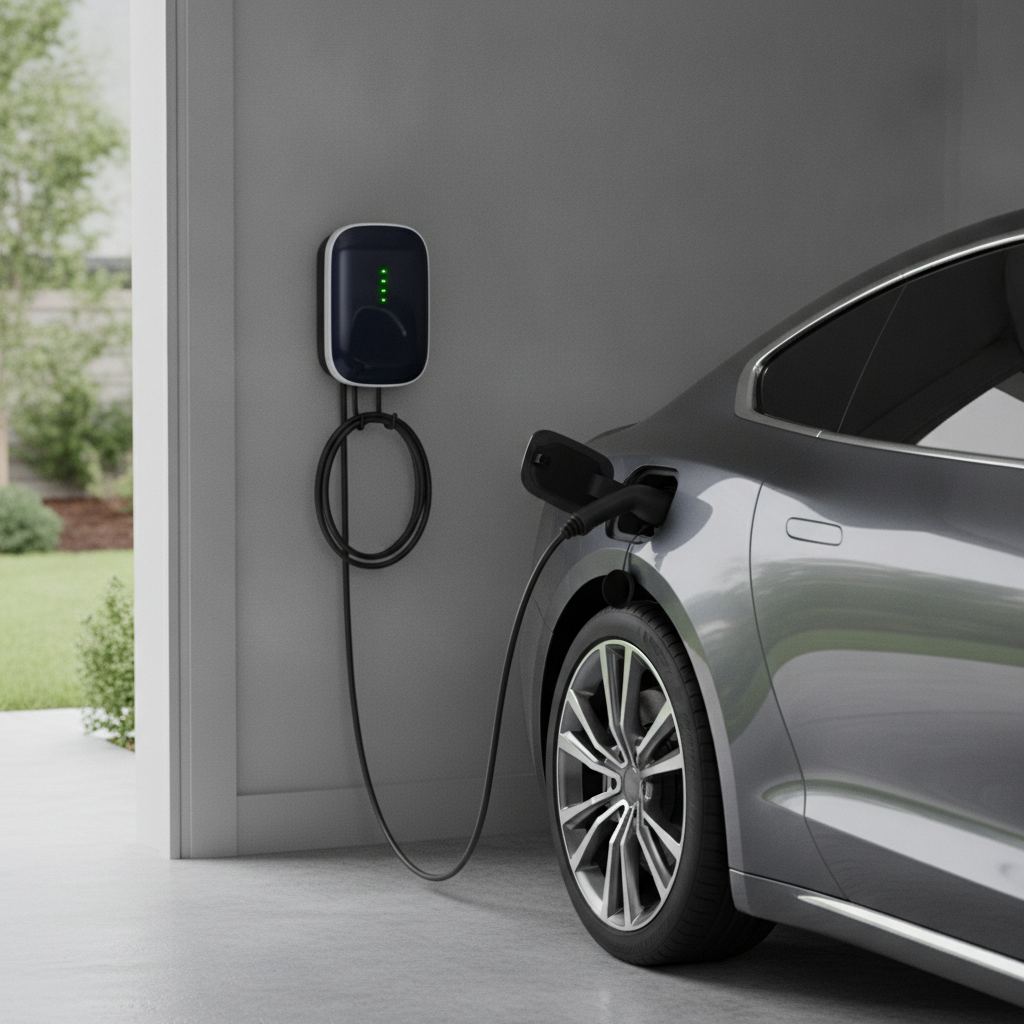
In short: If your vehicle charges slowly from an 11kW or 22kW home charging station, there is usually nothing wrong with the charging station. The actual rate is set by the weakest link: the vehicle's on-board charger (On-Board Charger) and the type of electrical connection in the home. If either of them is single-phase, that is the ceiling. So first check the vehicle's specs and the connection type in the panel, and only then choose the charging station's power.
DSGCharge (DSG Charging Solutions) is one of Israel's leading companies in EV charging solutions: active since 2021, with about 20,000 of its chargers and charging stations sold and installed, and it provides installation and service nationwide.
You bought a home charging station, expected it to “get” the maximum out of your vehicle – and then discovered that charging is much slower than you imagined. Many electric vehicle owners reach this point feeling disappointed, and sometimes also suspecting that something is wrong with the charging station. But before jumping to conclusions about a fault or a “bad” charging station, it's worth understanding a point that confuses a lot of people: the power written on the charging station is not necessarily the power your vehicle can actually accept.
This is not a problem of a “broken” vehicle or a “faulty” charging station. It's a matter of matching two different components in the system: the charging station's power on one side, and the vehicle's charging capability on the other. When they don't match, you get slow charging – even if everything is technically fine.
You can compare DSGCharge home charging stations, with the power of each model, on the Home charging stations.
The difference between the charging station's power and the power the vehicle actually receives
A home charging station, like the common AC charging stations installed in private homes and apartment buildings, can be rated at 7kW, 11kW or 22kW. This number describes what the charging station is capable of supplying – assuming there is suitable electrical infrastructure behind it, and that the vehicle is able to “accept” that power.
And this is exactly the point many people miss: every electric vehicle has an on-board charger (On-Board Charger) that determines how much electricity it can accept from an AC charging station, regardless of the power the charging station itself offers. If your vehicle is equipped with a single-phase on-board charger, it simply won't be able to use higher three-phase power – even if the charging station at home is rated at 11kW or 22kW. In such a case the vehicle will “choose” to charge at the lower rate it supports, and this has nothing to do with the quality of the installation or how the charging station works. This is exactly the difference between buying the “most powerful possible” charging station and buying a charging station that suits the vehicle and the infrastructure you actually have.
What exactly is single-phase, and why does it matter so much?
Household electricity in Israel can come in two main forms: single-phase or three-phase. This difference doesn't concern only the charging station – it also concerns the vehicle itself, which is why it is so significant for the question of charging speed. A single-phase connection is limited in the maximum power it can deliver, while a three-phase connection allows higher power to be delivered at the same time. If both the home and the vehicle support three-phase, you can definitely take advantage of higher charging power. But if one of the two is limited to single-phase – the home, the vehicle, or both – then that is the factor that sets the actual ceiling, not the charging station. The practical meaning: even if you install a powerful charging station at home, if your vehicle is limited to single-phase charging, the actual charging rate will match that vehicle limitation – and not the maximum power the charging station can offer. This is not a fault, it's the expected behavior of the system when there is a gap between the components.
Why you should check the infrastructure and the vehicle before blaming the charging station
When someone reaches out feeling that the charging station “isn't working properly”, it is usually one of three scenarios: a single-phase limitation in the vehicle, home electrical infrastructure that wasn't designed to support high power, or simply a mismatch between expectations and what the vehicle can actually accept. Before ordering an inspection or service, it's worth checking a few basic points:
- Does your vehicle support single-phase or three-phase AC charging – information you can find in the official vehicle specs or from the importer.
- What type of electrical connection does the home have – single-phase or three-phase, and what condition is the existing electrical panel in?
- What power is written on the charging station you bought or are considering buying, and how does it fit with the data above?
- Is there a difference between the charging station's “theoretical” power and the power you will actually get, given the vehicle and the infrastructure?
This is exactly why an infrastructure check before installation is not an unnecessary formality, but the way to avoid disappointment after the charging station is already installed. At DSGCharge, part of the process of matching a charging station includes checking the type of connection in the home – single-phase or three-phase – along with checking the condition of the electrical panel and its distance from the intended installation point, in order to understand in advance what power can actually be delivered in practice, not just on paper.
How to check in advance what suits your vehicle and your home
The first step is not to choose a charging station based on the highest power that sounds good, but to check what your vehicle can actually use. If you have a vehicle with a single-phase on-board charger, there is no point paying for a more complex three-phase charging station if it won't change the actual charging rate. On the other hand, if the vehicle supports three-phase but your home infrastructure is single-phase, that's a different question – here you need to check whether upgrading the infrastructure is technically feasible, and what it involves in terms of electrical work, distance from the electrical panel, and the condition of the existing panel. This is the kind of question that requires a professional on-site inspection and not guesswork from the internet. The simplest example to illustrate: two vehicle owners can buy exactly the same charging station and get two completely different charging experiences – one will enjoy relatively high power because both their vehicle and their home are three-phase, and the other will see a lower charging rate because their vehicle is limited to single-phase. This is not a Station fault with either of them – it's simply a different match between the components.
What to actually do with this information
If you are just in the process of choosing a charging station, the main lesson is not to rely only on the kW number written on the product, but to look at the full picture: the vehicle's charging capability, the type of home infrastructure, and the location of the electrical panel relative to the planned installation point. The match between all of these is what ultimately determines the everyday charging experience. This is exactly why choosing a charging station shouldn't be a “buy and forget” process, but a process that starts with a check. At DSGCharge the process is built so that installation comes only after a stage of infrastructure checking and actual matching, including examining the existing connection type, the distance from the electrical panel and the home's electricity needs – so that the charging station purchased and installed is the one that truly makes use of what the vehicle can accept, and not just the “nicest” power on paper.
If you're wondering why charging at your home is slower than you expected, or if you're just planning a charging station installation and want to make sure it will suit both the vehicle and the existing infrastructure – you can check the range of EV charging stations and contactDSGCharge for a professional infrastructure check and a charging solution that also takes your vehicle's capabilities into account.
Frequently asked questions
If I buy a three-phase charging station, will it improve the charging rate even if my vehicle is single-phase?
Not necessarily. If the vehicle's on-board charger is limited to single-phase charging, the vehicle will charge at the rate it supports even if the charging station can supply higher power. That's why it's important to check the vehicle's specs before choosing a charging station, and not rely only on the power written on the product.
How do I know whether my home has a single-phase or a three-phase connection?
This is a detail related to the electrical panel and the home's electrical connection, so it's recommended to check it with a certified professional as part of an infrastructure check before installation, rather than relying on an assumption or a guess.
Can a home be upgraded from single-phase to three-phase to take advantage of higher charging power?
In some cases yes, but it depends on the condition of the existing infrastructure and the electrical work required, so it's a question that requires an individual on-site check and not a blanket answer.