
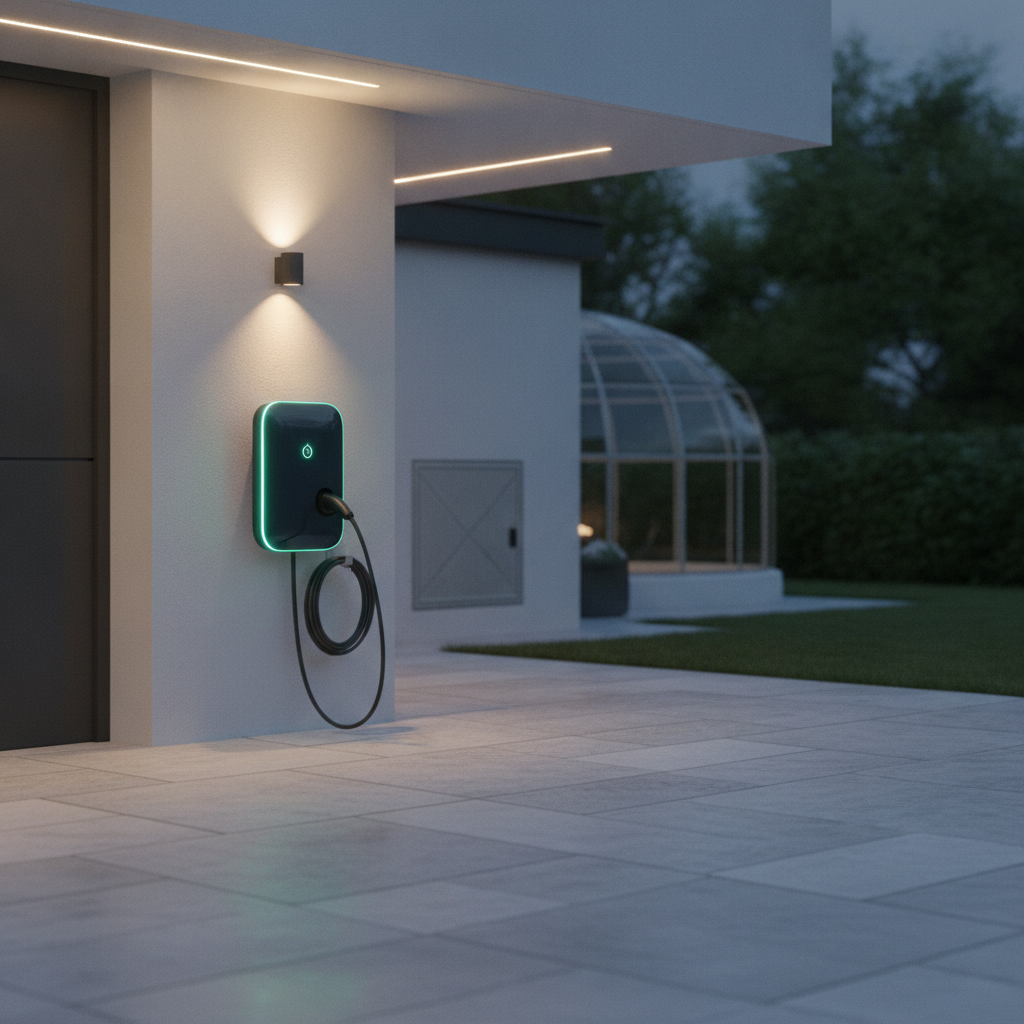
A situation that comes up much more often than you'd think: a family installs a EV charging station for its first car, and after a year or two replaces it with a different car – a different manufacturer, a different model, and sometimes a different charging provider too. Then comes the question that bothers quite a few people: does the installation I did suit only the car I had, or will it also serve me with the next car?
It's a legitimate question, and especially relevant for anyone at the decision stage – about to install a home charging station, and wanting to know they aren't “locking” themselves into one car. The short answer: in most cases, a properly installed charging station doesn't depend on a specific car, but on the home's infrastructure and the accepted charging standard. But there are a few points worth understanding before deciding.
What's fixed in a charging station, and what changes from car to car
A home charging station (AC) is based on a plug and a connection to the home's electrical grid – not on a protocol unique to a particular car manufacturer. In other words, a station that is properly connected to the electrical infrastructure and designed with the right power can, in principle, serve different electric cars, as long as it's standard AC charging. What really determines compatibility between the station and the car isn't the manufacturer's name, but a few technical parameters:
- The type of connector/charging cable required (and here there are differences between models and model years)
- The power the car can actually accept (different cars support different charging power levels)
- Whether it's a single-phase or three-phase connection, which affects the actual charging rate
Why worrying about an investment becoming obsolete is a good sign, not an exaggerated concern
People who plan to change cars in two or three years, and still stop to ask this question before installing a charging station, are actually taking the right step. The common mistake is the opposite: installing quickly, “just to have it”, without checking what does and doesn't depend on the current car. In such cases, when a new car arrives, it turns out that the power chosen was lower than what the new car can use, or that the cable chosen doesn't suit the required connection, or that the station's physical location isn't convenient for a car with a different charging layout.
The right logic is the opposite: plan the installation around the home and the infrastructure, not just around the current car. A charging station is an investment in fixed infrastructure in the home – a power line, a location, spare capacity from the panel – while the car is the variable that can change again and again. Once the installation is built around what the home allows and not around a specific technical detail of one car, the chance that it will also serve the next car increases significantly.
What you actually need to check before installation when you know you'll change cars in the future
If you know that your current car won't necessarily be the only car you'll own, there are a few questions worth raising at the planning stage, not just “afterwards”:
- How much spare electrical capacity is in the home's panel – this determines whether there's room for higher power in the future, even if you don't use all of it right now
- Whether the installation is single-phase or three-phase – a three-phase connection, when the infrastructure allows it, gives greater flexibility for future power levels
- The cable length and the station's actual location – the right placement relative to the parking space, the driveway and the connection angle depends less on a specific model and more on the geometry of the site
- Whether the station itself supports the common connector type – and not a proprietary connector relevant to only one manufacturer
Combining these checks gives a clear picture: if the infrastructure was planned with a little “breathing room” – power that can also support a car that needs more, and a connection that allows flexibility – the installation will remain relevant even when the car in the parking space changes.
Where DSGCharge comes into the picture
This is exactly the point where proper planning from the start makes the difference between an investment that stays relevant and an investment that needs to be “fixed” after a year or two. AtDSGCharge , an essential part of the work is checking the infrastructure before installation – not just to see what suits the car you have today, but to understand what the home's panel, meter and connection allow, and to design the station accordingly. This includes addressing the question of single-phase vs. three-phase, choosing a suitable power level, and choosing a cable and equipment that aren't “locked” to a single car model.
Working with private customers who install a home charging station starts exactly at this stage – understanding the infrastructure and needs, not just a one-off match to the car they currently own. That's the difference between an installation that looks at the current car and planning that looks at the home as a long-term asset.
What actually happens when you change cars after the station is already installed
Suppose the installation was done correctly – reasonable power, three-phase if the infrastructure supported it, a standard cable and connection. In that case, switching to another car generally doesn't require any change to the station itself. What may change is mainly an accessory – for example, a charging cable or adapter, if the new car requires a different connection from the one that suited the previous car. This is a small adjustment, not a reinstallation project.
On the other hand, if the installation was done on a minimal basis – for example, power that was too low, chosen “to save money”, or a single-phase connection where three-phase would have been possible and suitable – a change of car may reveal that the initial investment wasn't flexible enough. That's why an early check, before installation, is worth more than any fix after the fact.
A short checklist before installing, when you know there will be a next car
- Check the spare capacity in the electrical panel, not just the immediate need
- Ask whether a three-phase connection is possible, if the infrastructure allows it
- Choose a station with a common standard connector, not one dedicated to a single manufacturer
- Document the location, cable length and distance from the panel – for future planning
- Ask which part of the installation will stay the same and which (for example, the cable) may need adjustment
If you go through this list before scheduling an installation, you're effectively ensuring that your investment in the charging station stays “open” to the future, rather than closing around one car.
About price and installation planning
The price of installing a home charging station varies according to several factors: the type of station and the power chosen, the station's distance from the electrical panel, whether it's a single-phase or three-phase connection, the need for conduits, excavation or chiseling, the required cable length, and the actual complexity of the installation in the specific home. There's no way to give an exact price without checking the actual infrastructure – which is why a preliminary check is an integral part of a proper process, not an unnecessary step.
It's also important to remember that an electrical installation of this kind must be carried out by a qualified professional, in accordance with the requirements of the law and the standard – this isn't work suitable for DIY.
How to move from the question stage to the decision stage
If you're at exactly this point – you have an electric car, you intend to install a home charging station, and you know the car itself may still change – the next step isn't to choose a station “according to what's written on the current car”, but to check the home's infrastructure and plan accordingly. At DSGCharge you can get advice that starts precisely from this point: what's in the home, what's possible in terms of power and connection, and which station will serve you even when the next car arrives in the parking space. You can browse theEV charging stations available in the store, and if needed also thecharging cables and accessories, and contact us for a compatibility check before deciding.
Frequently asked questions
If I change cars, will I need to install a new charging station?
Not necessarily. If the existing station was designed with power and a connection suited to the home's infrastructure, it will usually continue to serve a new car as well. In some cases, a different cable or adapter may be needed, depending on the new car's connector type.
What's the difference between single-phase and three-phase, and why does it matter for a future car?
A three-phase connection usually allows greater flexibility in charging power levels, so if the home's infrastructure allows it, it provides a better planning margin even if the next car requires higher power than the current one.
How do I know if my installation is “open” enough for the next car?
A check that addresses the spare capacity in the electrical panel, the connection type (single-phase/three-phase) and the connector type on the station gives a clear answer. It's a check that's recommended before installation, not after.