
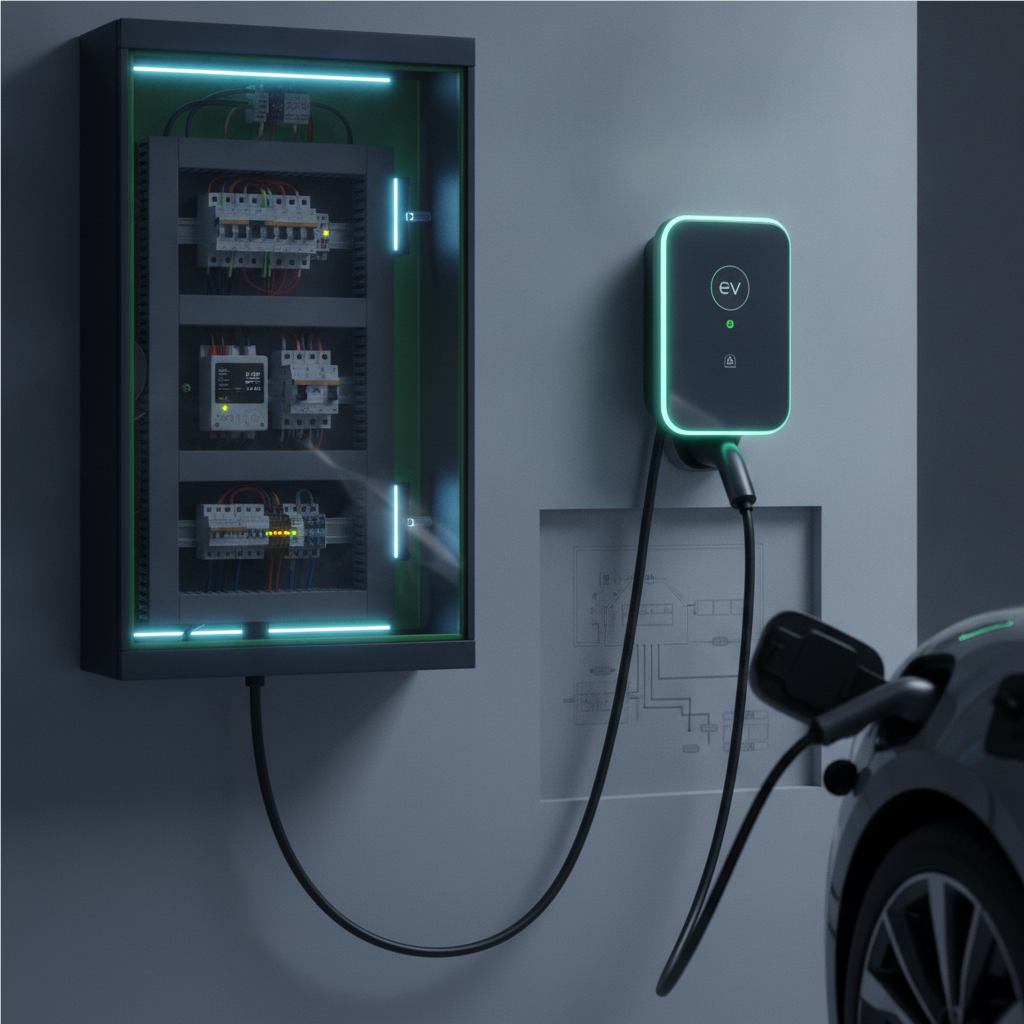
Buying an electric car? What you must check in your home's electrical infrastructure before closing the deal
The excitement is understandable: you're almost ready to close on Electric car that's new, comparing driving range, checking colors and reviewing financing plans. Then, just before signing, the question many people push aside comes up: “Wait, how are we actually going to charge it at home?”. Suddenly, the conversation shifts from the shine of the new car to the reality of the electrical panel in the parking area.
This is the critical point many people miss in the process of EV readiness. The assumption that “we'll sort it out later” can lead to unpleasant surprises: discovering that the installation is more complex and expensive than expected, that the infrastructure doesn't support fast charging, or that the station you wanted doesn't suit your home at all. The goal isn't to scare you, but to help you make an informed decision before you commit to the deal, not after it.
atDSG Charging Solutions, we know that a successful charging solution isn't just EV charging station of high quality, but a complete system tailored to your car, your home and your daily routine. That's why the preliminary check is the most important stage. The information here will help you understand what to check, but it's important to emphasize: Charging station installation is a job for a certified electrician only, and must be carried out in accordance with the law and the standards.
After the infrastructure check, you can compare the 11kW and 22kW models on the Home charging stations in the DSGCharge store.
Single-phase or three-phase: what does it mean for your charging speed?
One of the first questions that comes up is whether the home's electrical connection is single-phase or three-phase. Most of us don't deal with this day to day, but when it comes to charging a car, this difference directly affects the charging rate you'll get.
Simply put:
- Single-phase connection: common in apartments and older houses. It usually allows charging at up to 7.4kW. This is quite enough for most drivers, who will charge the car overnight and have a full battery in the morning.
- Three-phase connection: standard in new construction and many private houses. It allows the installation of Charging stations that are more powerful, at 11kW or 22kW, which significantly shorten charging time.
The common mistake is thinking you must have three-phase. The truth is that the choice depends on your needs. If you drive short to medium distances day to day, a single-phase connection will be entirely enough for you. If you drive long distances, come home with an almost empty battery and need maximum flexibility, a three-phase connection will give you peace of mind. This check is critical for choosing a station that suits your infrastructure, and not just the figures you saw in the car's brochure.
Connection size (amps): will your home handle the load?
Once we understand the type of connection, the next question is the size of your connection (measured in amps – A). Think of it like a water pipe: the wider the pipe (more amps), the more “water” (electricity) it can carry at once. Your home electrical panel already serves “heavy” consumers such as the air conditioner, water heater, oven and electric cooktop. A charging station is another heavy consumer.
If your connection size is 25A (common in a single-phase connection), installing a station that requires 32A is simply not possible without upgrading the infrastructure with the Israel Electric Corporation (IEC). Even if the connection is enough “on paper”, running the air conditioner and water heater while the car is charging can trip the main breaker.
This is where a solution of Load management that is dynamic comes into the picture. It's a smart component that monitors the total electricity consumption in the home and automatically regulates the car's charging rate. When the air conditioner turns on, the station slows down charging. When the home is “quiet”, it returns to full power. This way, you enjoy efficient charging without worrying about tripped breakers and without needing an expensive connection upgrade.
Parking location and distance from the electrical panel: the factor that affects installation cost
In some homes the electrical panel is right next to the parking space, and installation is simple and direct. In other cases, the panel is on another floor, on the other side of the house, or you need to cross a garden or common area to reach the parking space. The distance and route between the panel and the station location are the main factors affecting the complexity and cost of Charging station installation.
The greater the distance, the longer and more expensive the power cable needed. In addition, a complex installation may include:
- Drilling through concrete walls.
- Running the cable in dedicated trays to maintain aesthetics and safety.
- Digging and preparing underground infrastructure.
- Dealing with obstacles along the way.
That's why it's impossible to give a serious installation quote over the phone. Two homes can buy exactly the same station, but the installation costs will be completely different. A preliminary on-site inspection by a professional will let you understand the complexity of the work, get an accurate quote and avoid surprises.
Live in an apartment building? Here the rules change
If you live in a private house, the checks focus on your property. In a residential apartment building, the picture is more complex. Here it's not just about your private parking space, but about shared infrastructure, a public electrical panel and sometimes also the need for the building committee's approval.
The common mistake in buildings is “patchwork” solutions: every resident who buys an electric car “pulls” a cable from their apartment or from the public panel independently. In the short term this may seem simple, but in the long term it creates a parking garage full of cables, an uncontrolled load on the building's infrastructure and real difficulty adding more stations in the future.
The right approach in an apartment building is planning a central infrastructure with a managed charging system. Such a system allows:
- Smart load management: The system distributes the available electricity between the active stations and prevents overloading the building's infrastructure.
- Accurate billing: Each resident pays exactly for the electricity they consumed, usually via Separate meter or a dedicated app.
- Future-ready infrastructure: It's easier and cheaper to add new stations as more residents switch to electric cars.
If you live in a building, it's important to check the matter with the building committee and understand what the best solution is for the whole building, not just for you. You can find more information about such solutions on theEV charging blog our
In summary: an early check is an investment, not an expense
Switching to an electric car is an exciting step, and home charging is one of its biggest advantages. To make sure the experience is smooth, convenient and safe, don't skip your homework. Checking your electrical infrastructure before the purchase will give you a full picture, prevent surprises and ensure you choose the right charging solution for you.
Instead of guessing, it's worth getting professional answers. If you're unsure and want to understand the options in your private house, apartment or apartment building, we're here to help. Contact us for advice and a suitability check, and we'll make sure your home is ready for your new car.
Questions worth asking before moving forward
Can you manage without a home charging station?
Technically, yes, by relying on public stations. However, the convenience of “refueling” the car at home overnight is one of the main advantages of an electric car. For most people, a routine without a home station will be less convenient and efficient.
If I have a single-phase connection, does that mean an electric car isn't right for me?
Not at all. It only means the charging rate will be more moderate (usually up to 7.4kW). For most drivers who cover average distances day to day, such charging overnight is entirely enough to have a full battery in the morning. The choice depends on your driving habits.
When is the right time to check the infrastructure — before or after ordering the car?
Definitely before. An early check, while you're still deciding, will give you a full picture of the expected installation costs, help you choose the right charging station, and prevent unpleasant surprises after you've already committed to the car.