
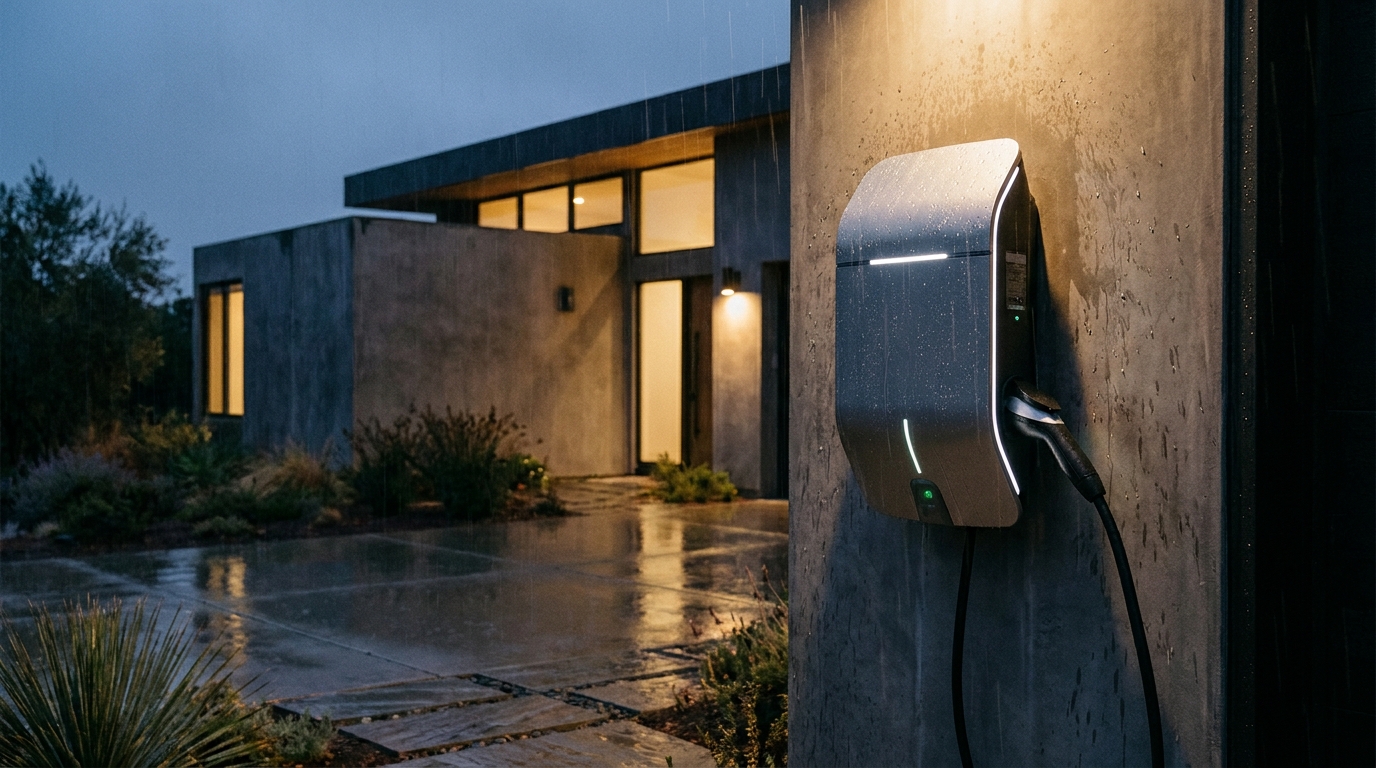
IP ratings for charging stations: the complete guide to a safe choice for your EV
In short: For a charging station installed outdoors in Israel, an IP55 rating or higher is recommended: the first digit (5) protects against dust, and the second (5) against rain and low-pressure water jets. IP54 is suitable only for fully indoor installation, such as an enclosed underground parking garage, and IP65 is recommended for especially exposed areas, such as beachfront locations.
DSGCharge (DSG Charging Solutions) is one of Israel's leading companies in EV charging solutions: active since 2021, with about 20,000 of its chargers and charging stations sold and installed, and it provides installation and service nationwide.
Why your charging station's IP rating is a matter of safety, not a recommendation
In the EV era, the convenience of home charging is a true revolution. But with convenience comes great responsibility, especially when it comes to combining an advanced electrical system with outdoor conditions. Whether your parking space is partially covered or fully exposed to the weather, understanding the IP rating of a charging station is not a luxury but a critical necessity. It is the first and most important line of defense separating quiet, worry-free charging from a real risk to the vehicle, property and even human life. High-voltage electricity and water are a recipe for disaster, and the IP (Ingress Protection) rating is exactly the measure that determines how well your charging station is protected against the ingress of foreign matter such as dust, dirt and, above all, water. Ignoring this standard is like installing an alarm system without batteries; it may look good, but it won't provide real protection when it counts.
Cracking the code: what do the digits in an IP rating really mean?
Many people come across the combination of letters and numbers ‘IP55’ or ‘IP67’ but don't understand the deeper meaning behind it. The IP rating, or by its full name Ingress Protection, is an international measure defined by the international standard IEC 60529. It provides a precise and unambiguous definition of the sealing level of enclosures and electrical devices against the ingress of solid objects (such as dust and fingers) and liquids (such as water and rain). The rating consists of two digits, each with a well-defined role:
The first digit: protection against solids and dust
This digit, ranging from 0 to 6, defines the enclosure's level of protection against the ingress of solid objects. The higher the number, the better the protection. For example, a rating of ‘2’ protects against fingers, while a rating of ‘5’ or higher is essential for preventing damage to sensitive electronic components caused by small dust particles that can accumulate and cause short circuits or overheating.
The second digit: protection against liquids and water
The second digit, ranging from 0 to 8 (and sometimes 9K), is the most important for outdoor charging stations. It indicates the level of protection against the ingress of moisture and water. A rating of ‘4’ provides basic protection against water splashes but not enough protection against direct rain or cleaning with a garden hose. In contrast, a rating of ‘5’ or higher ensures protection against water jets, making it the minimum accepted standard for safe outdoor installation. When choosing an outdoor charging station, this is the digit you should pay special attention to.
| The first digit (protection against solids) | The second digit (protection against liquids) |
|---|---|
| 5 = Dust-protected (limited ingress, does not interfere with proper operation). | 4 = Protected against water splashes from any direction. Suitable for covered parking only. |
| 6 = Completely dust-tight. Provides maximum protection for internal components. | 5 = Protected against low-pressure water jets from any direction. The recommended standard for outdoor installation. |
| 6 = Protected against high-pressure water jets. Suitable for especially exposed areas or pressure washing. | |
| 7 = Protected against temporary immersion in water (up to a depth of 1 meter for 30 minutes). |

IP54 vs. IP55 vs. IP67: which rating suits your charging station?
Now that we understand what the numbers mean, it's time to turn the technical information into a practical decision. In the charging station market, you will mainly find three common ratings, each with a different purpose. The right choice depends directly on the exact location where your station will be installed.
IP54: the solution for protected locations
A charging station rated IP54 offers good protection against dust (level 5) and protection against water splashes from any direction (level 4). Simply put, it will cope with humidity and occasional splashes, but it is not designed to withstand direct rain or washing with a hose. Therefore, this rating is suitable only for fully indoor installations such as an enclosed underground parking garage or a sealed private garage. Installing such a station in a partially covered parking space (under a pergola, for example) still exposes it to the risk of slanting rain and is not recommended.
IP55: the balanced, safe standard in Israel
This is the most common and recommended rating for the vast majority of home installations in Israel. An IP55 rating combines protection against dust (level 5) with resistance to rain and low-pressure water jets from any direction (level 5). This means the station is built to withstand typical Israeli rain, even when accompanied by wind, and you can wash the car and the area around it with a garden hose without worry. When choosing a charging station for a private home with an open or partially covered parking space, IP55 is the safe and responsible starting point. You can find this strict standard in most Our range of home charging stations.
IP67: protection in the most extreme conditions
An IP67 rating takes sealing to the next level. It offers complete dust-tightness (level 6) and the ability to withstand temporary immersion in water at a depth of up to one meter for half an hour (level 7). Such stations are designed for especially harsh environmental conditions: flood-prone areas, open parking lots near the sea exposed to salt spray and extreme humidity, or industrial facilities that require high-pressure washing. For most home users, this level of protection is higher than necessary, but it provides ultimate peace of mind for those living in challenging areas.
Adapting to the Israeli climate: what is the recommended minimum standard for open-air parking?
Israel's climate poses a double challenge for outdoor electrical equipment. On the one hand, the long summer months bring haze, dust and sand that can penetrate sensitive electronic devices. Dust ingress over time can disrupt the contacts, damage the cooling system and cause failures. On the other hand, the Israeli winter, although relatively short, can feature intense rainstorms and strong winds that drive water from every possible angle. That's why, when choosing a charging station, we must take both of these challenges seriously.
Given these conditions, the unequivocal conclusion is that a rating of IP55 is the safe and right choice as the minimum standard for any open-air installation in Israel. The first ‘5’ digit ensures that the station's delicate electronic components are protected against harmful dust ingress, while the second ‘5’ digit ensures the station will stand up bravely to even the heaviest downpours, letting you sleep soundly at night knowing charging is completely safe. Compromising on a lower rating like IP54 is simply not worth the risk.
Beyond the IP rating: other safety factors you should know
A high IP rating is a necessary but not sufficient condition for full safety. A quality charging station is a complete system, and it is important to make sure it includes several additional protection mechanisms that work together to give you complete peace of mind. Don't settle for less than the best when it comes to electrical safety.
- Quality of materials and cables: A quality station, and especially a quality charging cable, will be made of durable materials such as TPU (thermoplastic polyurethane), known for its high resistance to abrasion, oils and extreme temperature changes. A thick, flexible cable will last for years of daily use.
- Built-in RCD (RCD Type B): This is a critical safety component. While a standard RCD (Type A) protects against alternating current (AC) leakage, the vehicle battery runs on direct current (DC). In the event of a fault, a DC leakage current may occur that a regular RCD won't detect. A built-in Type B RCD (or 6mA DC leakage protection) is designed specifically to detect such leakage and cut off the current immediately, preventing the risk of electric shock.
- Temperature sensors: Overheating is the enemy of electrical systems. Advanced charging stations include sensors that monitor the temperature in the station body and in the vehicle connector plug. If an abnormal temperature is detected, the system will automatically reduce the charging power or stop it completely until it cools down, preventing damage to the station, the cable or the vehicle's charging socket.
- Professional installation: Even the safest, most advanced charging station in the world can become dangerous if it is not installed properly. Installation must be carried out only by a certified electrician who knows how to match the wiring and protections in the electrical panel to the station's power, in accordance withElectricity Administration guidelines.
The strict DSG Charging Solutions standard: how we ensure your peace of mind
At DSG Charging Solutions, we believe safety is not an area for compromise. With a deep understanding of the risks and responsibility involved in installing charging systems, we have built a strict work standard designed to give you complete peace of mind. We carefully choose the manufacturers we work with and make sure every charging station in our catalog meets the strictest European and international standards (CE, TÜV). Every product we offer undergoes a careful review of its technical specifications, and we make sure its IP rating, along with the additional safety mechanisms, perfectly suits the climate and conditions in Israel.
What's more, we understand that the product is only half the solution. That's why we provide professional, safe installation by a certified electrician only. Our installers are experienced professionals who know the requirements of the law and the standard inside out, and they will make sure the connection to your electrical panel is made in the safest, most reliable way, with all the required protections. With us, you're not just buying a product but a complete, safe and reliable end-to-end charging solution.
Want to be sure you've made the right choice? Contact our experts at DSG Charging Solutions for advice and a personalized match of the safest charging station for you and your vehicle.
Frequently asked questions about IP ratings
Is a charging station rated IP54 enough for installation in a covered parking space?
Yes, in most cases an IP54 rating will provide sufficient protection in a covered parking space that is not exposed to direct rain. It protects against water splashes and dust, but not against direct water jets. Before choosing this rating, make sure the parking space is truly fully protected from rain, even in windy conditions.
What is the difference in durability between the charging cable and the station itself?
Both need to meet a high sealing standard. It is important to make sure that both the station body and the cable connectors (plugs) are rated at least IP55 for outdoor use, to ensure the whole system is fully sealed. There is no point in a sealed station if the cable connector is exposed to water ingress.
Do I need to cover my charging station when it rains heavily?
If you bought a quality station rated IP55 or higher that was properly installed by a certified electrician, there is no need for a cover at all. It was designed and engineered to withstand exactly these conditions. In fact, a cover may even do harm by trapping moisture and heat, which can cause the device to overheat.