
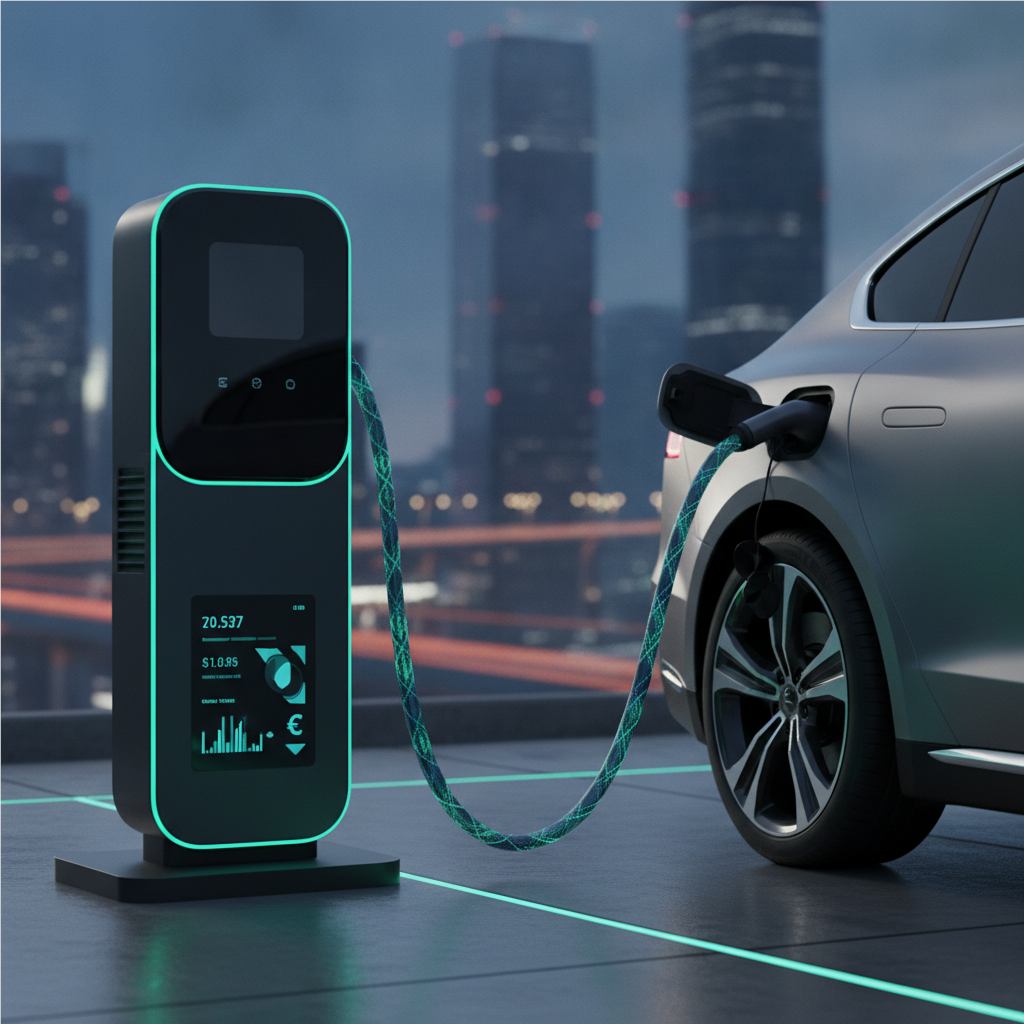
In short: Charging an electric car at home costs about₪10 per 100 km on the regular electricity tariff (63.52 agorot per kWh incl. VAT, as of July 1, 2026). A full charge of a 60 kWh battery costs about ₪38. When charging at night on a discounted plan from a private electricity supplier or on the TOU tariff, the price drops further, to about ₪7.5-₪8 per 100 km. At a public charging station the same drive costs up to 5 times as much, and in a gasoline car – about ₪65.
Updated: November 2026
This guide was written by DSGCharge, one of Israel's leading companies in EV charging solutions. DSGCharge is the importer of its charging stations – the brand is DSGCharge's own; it has been active since 2021, and about 20,000 chargers and charging stations have been sold and installed. This page explains what charging itself costs. What the station and installation cost – in the full price list: How much does a charging station cost. To calculate according to your car, mileage and tariff plan: Charging cost calculator.
📊 Guide highlights (updated October 2026)
- Home electricity price: 63.52 agorot per kWh incl. VAT (flat tariff).
- Night charging: a discount of 15%-21% from private suppliers between 23:00 and 07:00, or the TOU tariff during off-peak hours.
- Public charging station: about₪0.75-₪2 per kWh on AC, and about₪1.65-₪3.19 on DC fast charging.
- Annual savings compared with gasoline at 20,000 km: about₪11,000.
How do you calculate what charging costs?
The calculation is simple: Amount of energy going into the battery (in kWh) × price per kWh. An average electric car consumes about 15-18 kWh per 100 km – small cars less, large SUVs more. In addition, there's a small loss in the charging process itself (usually 5%-10%), so slightly more is drawn from the outlet than goes into the battery.
Example: A car that consumes 16 kWh per 100 km, at a tariff of 63.52 agorot: 16 × 0.6352 = about ₪10.2 per 100 km, meaning about 10 agorot per kilometer.
Cost table: home, night, public charging station and gasoline
| Where and how you charge | Price per kWh (incl. VAT) | Full charge – 60 kWh battery | Cost per 100 km* |
|---|---|---|---|
| At home – flat tariff | ₪0.64 | About ₪38 | About ₪10 |
| At home – private supplier night plan (20% discount) | About ₪0.51 | About ₪30 | About ₪8 |
| At home – TOU tariff, winter off-peak | ₪0.47 | About ₪28 | About ₪7.5 |
| Public AC charging station | About ₪0.75-₪2 | About ₪45-₪120 | About ₪12-₪32 |
| Public DC fast charging station | About ₪1.65-₪3.19 | About ₪100-₪190 | About ₪26-₪51 |
| Gasoline car (for comparison) | About ₪7.8 per liter | – | About ₪65 |
* Based on 16 kWh per 100 km for an electric car and 12 km per liter for a gasoline car. Full charge = from a completely empty battery; in practice most drivers charge from 20% to 80%, so each charge costs less. Public charging station prices vary between companies. A breakdown by network is in the guide How much does it cost to charge an electric vehicle at a public station.
How much does it come to per month and per year?
| Mileage | Charging at home (flat tariff) | Charging at home at night (20% discount) | Gasoline |
|---|---|---|---|
| 1,000 km per month | About ₪100 | About ₪80 | About ₪650 |
| 1,500 km per month | About ₪150 | About ₪120 | About ₪975 |
| 20,000 km per year | About ₪2,000 | About ₪1,600 | About ₪13,000 |
In other words, a driver who covers 20,000 km a year and charges at home saves about ₪11,000 a year on “fuel” alone – an amount that covers the price of the station and installation in the very first year. What the station itself costs: Charging station and installation price list 2026.
How to make home charging cheaper
1. Charge at night on a discounted plan
Most private electricity suppliers offer a night plan with a discount of 15%-21% between 23:00 and 07:00 (some only Sunday to Thursday). An electric car is the ideal consumer for such a plan, because charging can be scheduled for these hours. An important point: private suppliers' plans aren't always open to customers who have switched to the TOU tariff, so you need to choose one of the two.
2. TOU – a time-of-use tariff
On the TOU tariff, the off-peak price is significantly lower than the flat tariff (for example, 46.63 agorot in winter), but during peak hours – 17:00-22:00, and in summer until 23:00, Sunday to Thursday – it is much more expensive (up to about ₪1.72 per kWh in summer). The TOU tariff pays off mainly for those who shift a large part of their consumption to off-peak and avoid charging and running heavy air conditioning during peak hours.
3. A smart charging station with scheduling
A smart charging station with an app lets you set in advance when charging starts, so the car charges only during the cheap hours even if you plug it in at 18:00. It also shows how many kWh were charged – making it easy to check the bill. See the Home charging stations.
4. Don't charge on DC when you don't need to
Fast charging at a public charging station costs 2.5 to 5 times as much as charging at home. It's meant for long trips and emergencies – not for everyday use.
Charging in an apartment building: who pays and how?
In an apartment building, the cost of charging depends on how the station is connected:
- A station connected to the apartment's meter – the charging goes on the resident's electricity bill, at the same tariff as the home.
- Managed charging stations on common infrastructure – each resident is identified (via the app or an RFID card) and pays according to the kWh they charged, sometimes plus a fixed management fee. This way the building committee doesn't need to calculate manually, and there are no arguments between neighbors.
It's important to find out in advance what the price per kWh is and what the fixed fees are, in order to compare with charging in the apartment. More information: Billing and payment processing for charging stations in buildings.
How long does charging take – and how does it relate to the price?
Charging time depends on the station's power and on what the car can accept – not on the price. But it determines whether you can charge only during the cheap night hours. Here's what it looks like for charging about 40 kWh (for example, from 20% to 80% of a 65 kWh battery):
| Charging type | Power | Estimated time |
|---|---|---|
| Granny cable from a household outlet (occasional charging, 10A) | About 2.3kW | About 18 hours |
| Single-phase home charging station | Up to 7.4kW | About 5.5 hours |
| Three-phase home charging station | 11kW | About 4 hours |
| 22kW station (for a car that supports it) | 22kW | About 2 hours |
| Public DC fast charging station | 50-150kW | About 20-50 minutes |
An 11kW home charging station recharges most of a daily drive within an hour or two – well within the discounted night window. More details: How long does it take to charge an EV at home.
And what about a plug-in hybrid?
A plug-in hybrid has a small battery, usually 10-20 kWh, which is enough for 40-80 electric kilometers. A full charge at home costs about ₪6-₪13, and takes several hours even at a home charging station, because most plug-in hybrids charge on AC at low power (3.7-7.4kW). If most daily trips are short, charging at home every day saves most of the fuel. See: Charging station for a plug-in hybrid.
Frequently asked questions
How much does a full charge of an electric car cost at home?
On the flat tariff (63.52 agorot per kWh) – about ₪38 for a 60 kWh battery and about ₪48 for a 75 kWh battery, from empty to full. In practice you usually charge only part of the battery, so each charge costs less.
How much does it cost to drive 100 km in an electric car?
With home charging – about ₪10 (₪8 at night on a discounted plan). At a public charging station – about ₪12-₪51. In a gasoline car – about ₪65.
How much does it cost to charge an electric car at a public charging station?
At AC stations usually ₪0.75-₪2 per kWh, and at DC fast charging stations about ₪1.65-₪3.19 per kWh, depending on the network and the time. A fast charge of 40 kWh therefore costs about ₪66-₪128 – 2.5 to 5 times as much as the same amount at home.
Does the charging station itself consume electricity when it isn't charging?
The standby consumption of a home charging station is very small – just a few watts – and doesn't noticeably affect the bill.
Is charging with a granny cable more expensive?
The price per kWh is the same, but charging is much slower and the losses are slightly higher. According to the Electricity Administration guidelines, charging from a regular household outlet is intended for occasional use at a current of up to 10 amps – so a granny cable is suitable for backup and visits, and for everyday charging you need a permanent station.
How do you know how much the charging actually cost?
A smart charging station shows in the app how many kWh were charged in each session – multiply by your price per kWh. In a building with managed charging stations, the management system calculates each resident's bill automatically.
Sources: electricity and TOU tariffs – the Electricity Authority tariff book, in effect from July 1, 2026. Private suppliers' night plans – according to the suppliers' publications, September–October 2026. Gasoline price – October 2026 update. Public charging station prices – according to the companies' publications, varying between stations.