
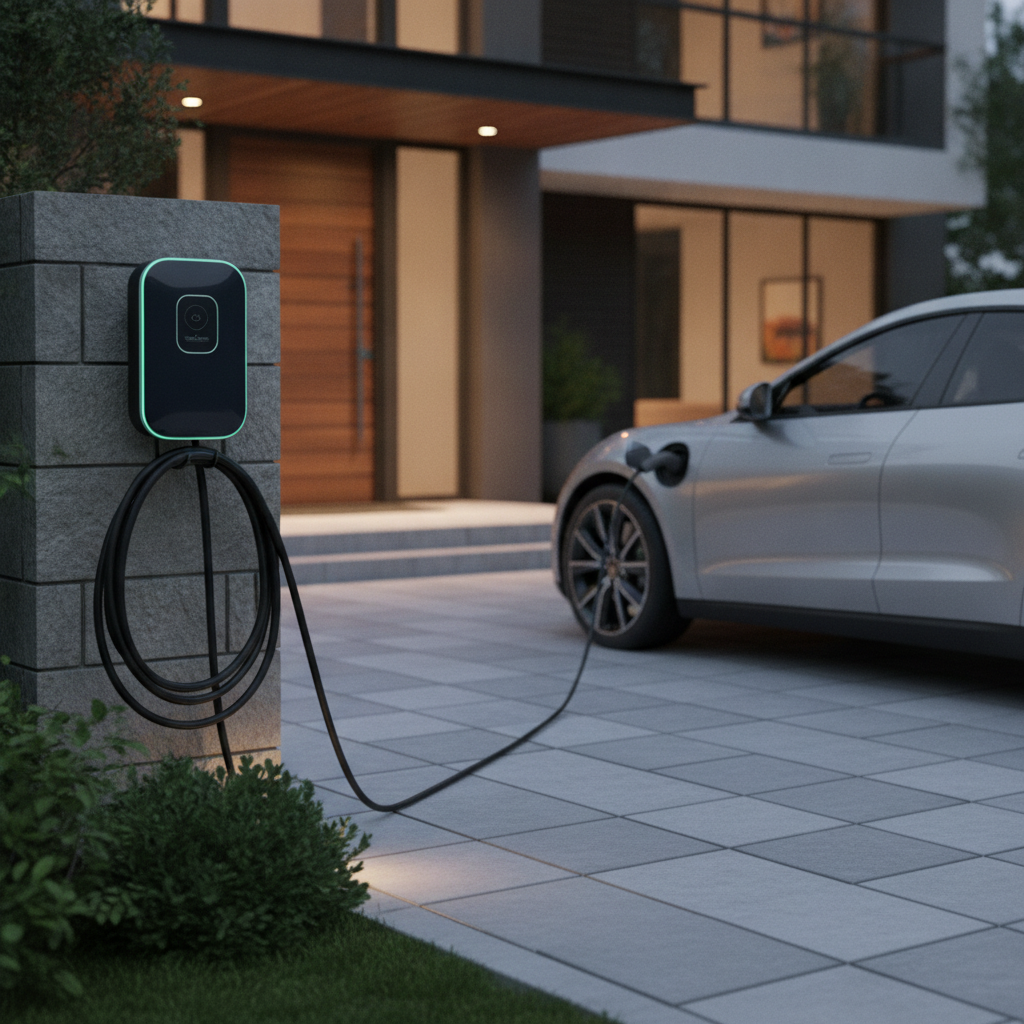
Someone from the company calls and says, “You have a new electric car – pick it up at the end of the month.” This happens far more often than you might think today – many employees receive an EV as a leased or company car without having gone through the process most articles online describe: comparing models, making a decision, and then planning a home charging station. When the car “comes ready” from the company, the first question at home is not “which station should I choose” but “who is even responsible for this, and how is my situation different from someone who bought an EV themselves?”
This difference is not just technical. It concerns who orders the installation, who pays for it, what happens at the end of the lease period, and how all of this affects the decision about which charging station to install at home in the first place. For someone who buys a private car with full ownership, home charging is a long-term investment in property that is theirs. For someone who receives a leased or company car, it is an investment in the home's infrastructure – which will keep serving them even after the current car is replaced with another, perhaps a completely different one.
If you're installing a station at home, for a company car or a private car, you can compare the 11kW and 22kW models on the Home charging stations in the DSGCharge store.
What actually differs between a charging station for a private car and one for a leased car
Electrically and technically, a home charging station doesn't “know” whether the car plugged into it is privately owned, under an operating lease, under a finance lease or a company car. The Type 2 CT36, the electrical panel, the RCD and the selected power – all of these relate to the car and the home's infrastructure, not to who holds the car. The difference is not in the equipment; it's in the decisions around it.
Someone who bought the car themselves knows almost for certain that this car will be with them for several years, so the investment in a charging station is suited to that specific car. An employee who received a leased car is in a different situation: today it's one model, in two or three years it could be a completely different model with different charging requirements. That doesn't mean you can't install a station, but it changes how you choose it – the installation should allow for future flexibility, not just the car parked in the driveway today.
For a business that manages several electric company cars, an explanation of charging, billing and reports for the whole fleet is on the EV fleet management from DSGCharge.
What people actually ask before installing a station for a company car
An employee who receives an EV from work runs into questions that someone who bought a private car deals with less:
- Who orders and pays for the installation – the employee, the company, or is it defined in the lease agreement?
- What happens at the end of the lease period – does the station stay at home and serve the next car?
- If the car model is replaced in the middle of the period, does anything need to change in the station itself?
- Is there an obligation toward the leasing company to document the installation or meet certain requirements?
The answers to these questions vary from company to company and from agreement to agreement – so it's a subject worth checking directly with your employer or the leasing company before moving forward. What stays constant, regardless of the type of arrangement for the car, is the home side: the home's electrical infrastructure, the distance from the panel, the cable type and the power the station can deliver. This is a part worth checking yourself, regardless of who financed the car.
The difference that really matters: a specific type of driving vs. a type of property – a private home
There is a difference between the charging habits of someone who drives a car they own for good and someone who knows the car will be replaced after a while. But this difference shouldn't affect the decision about where and how to install the charging station in a private home – because the home stays, even if the car changes. In a private home, the electrical panel, the distance from the connection point to the parking space and the type of cables already in the wall – all of these are fixed factors that don't depend on the car model or the type of arrangement.
This is the point employees who receive a leased car need to take to heart: the home installation is an investment in the home, not in the car. A properly installed charging station can also serve the next car, even if it's a different model, as long as the power and infrastructure are suitable. That's why an infrastructure check before installation is more important with a leased car, not less – because the decisions made today need to stay relevant even when the car in the parking space changes.
At DSGCharge, we often hear from employees who call at exactly this stage – they've been told the car is arriving in a few weeks and want to know what's possible and what to check at home before moving forward. Part of the process the company carries out is an actual infrastructure check: how far it is between the electrical panel and the parking space, whether single-phase or three-phase is needed, and what power the home can support without affecting the home's other electrical needs.
What happens when you replace or return the car
A recurring situation among employees with a leased car: at the end of the agreement period, the car is returned, and the next car is sometimes a different model, sometimes even a different manufacturer. The question that comes up then is whether the station installed at home is still suitable. In many cases, if the station was installed at a reasonable power and with a standard-compliant cable and connection (Type 2, which is used by most EVs sold today), it keeps serving the next car without any changes. In other cases, depending on the requirements of the specific car, an adjustment may be needed – but this is checked in practice, not something that can be determined in advance without knowing the details.
That's why, when an employee asks about a charging station for a leased car, it's worth looking at the subject from the perspective of “what's good for the home in the long run,” not just “what suits the car I have today.” This is the main difference between planning for a private car and planning for someone who knows the car itself is a variable.
A short checklist before you contact an installer
- Check with your employer or the leasing company who is responsible for financing the installation and what happens at the end of the agreement
- Check the connector type and charging power of the car you actually received
- Check the distance between the electrical panel and the parking spot at home – it affects the cable length and the complexity of the installation
- Check whether your home has a single-phase or three-phase connection, because it affects the possible power
- Ask whether the leasing company has a documentation requirement for the installation
All of these checks can be done as part of an infrastructure check carried out before installation – a step recommended for every homeowner who wants a charging station, whether the car is fully owned or a company car. DSGCharge specializes in infrastructure checks and professional installation planning for private homes, with the goal of matching the solution to the home and not just to the car currently in it – so that even if the car is replaced in two years, the station stays relevant.
What happens when the installation is needed quickly
Employees who are told about a leased car usually also get a timeline – the car will arrive in a few weeks, and they want to start charging at home from day one. This is real pressure, but it shouldn't lead to compromising on the infrastructure check. A station installed without a proper check may be unsafe or unsuitable for the actual power, and that's something to avoid even under time pressure.
The installation itself, like any electrical work, must be carried out by a qualified professional in accordance with the requirements of the law and the standard. The price varies depending on the station type, the selected power, the condition of the existing infrastructure, the required cable length, the distance from the electrical panel, whether the connection is single-phase or three-phase, the need for conduits, chiseling or drilling, and the overall complexity of the installation. It isn't right to promise a fixed price without actually checking the home.
The bottom line
An employee who receives an EV as a leased car starts from a different point than someone who bought an EV themselves – but investing in a home charging station is still relevant and worthwhile, because it serves the home and not just the current car. The right way to deal with this uncertainty is not to postpone the decision, but to carry out a proper infrastructure check that gives a clear answer about what can be installed at home, regardless of questions about the lease agreement itself. DSGCharge offers infrastructure checks and installation planning for private homes, including matching to the required power and the home's existing electrical connection, as a first step before any commitment. If you want to understand what's right for your home, you can browse theEV charging stations on the website, or contactDSGCharge directly for advice and a home charging solution tailored to you, regardless of who owns the car parked in your driveway today.
Who is responsible for financing the charging station when you get a leased car from work?
It varies from agreement to agreement and depends on the employer or the leasing company – some agreements address it explicitly and some don't. We recommend checking this directly with your employer before installation.
Will a charging station installed for one car also suit the next car replaced under the lease?
In most cases, if the station was installed with a standard-compliant connection and its power matches the general needs of common EVs, it can also serve a replacement car. Still, we recommend checking the exact details case by case.
Is an infrastructure check before installation more important with a company car?
An infrastructure check is important for every installation, but it has special significance with a car that may be replaced, because the investment is meant to serve the home for the long term and not just the current car.