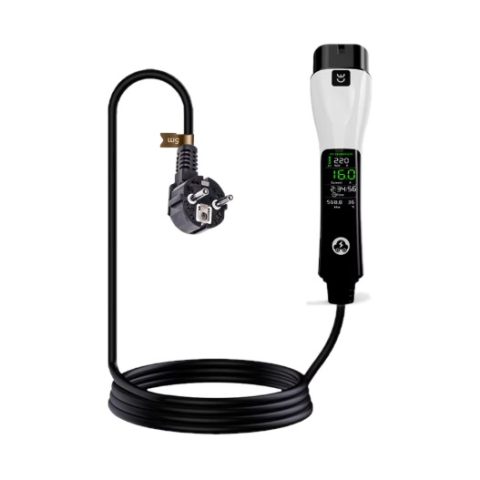
DSGCharge portable EV chargers: the DSG-350 granny cable with a standard household plug and current adjustment up to 3.7kW, and 7.4kW, 11kW and 22kW portable chargers with a display, which connect with an industrial plug (CEE) to a dedicated socket on a separate line from the electrical panel.
What's the difference and what suits you – in theguide to portable chargers and granny cables.
Showing all 4 results
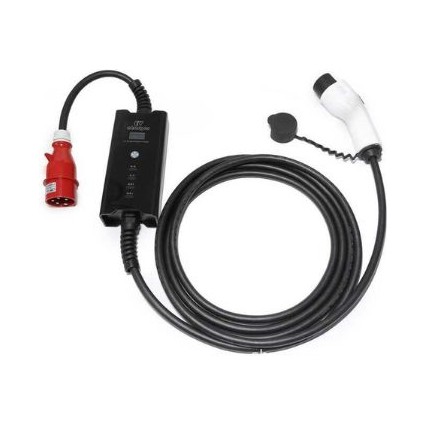
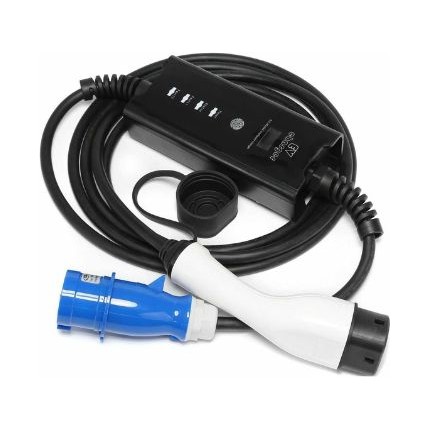
For renters, for those who charge in several places (home, work, holiday home), and for those who want a backup for their fixed station. For regular daily use it's more convenient to install one of theHome charging stations.
Can you charge an EV from a standard household socket? Yes, with a granny cable, at up to 3.7kW. This is slow charging suited to occasional use.
How long does charging with a granny cable take? A 60 kWh battery from empty to full: about 16 hours at 3.7kW. Day to day you only charge what you drove that day.
What's the difference between a portable charger and a fixed charging station? A portable charger connects to an existing socket and can be taken anywhere. A fixed station is mounted on the wall with a dedicated line and is more convenient for daily use.
Need help? No-obligation consultation with a charging expert, directly on WhatsApp.
💬 WhatsApp consultationLeave your mobile number and get a personal discount code of ₪50 to ₪250, depending on the product price. The code is active immediately and applied to the cart automatically.
On orders over ₪300 · valid for 72 hours · one code per number · one discount per order, based on the most expensive product in the cart. We will use the number only to contact you about the order. Privacy policy