
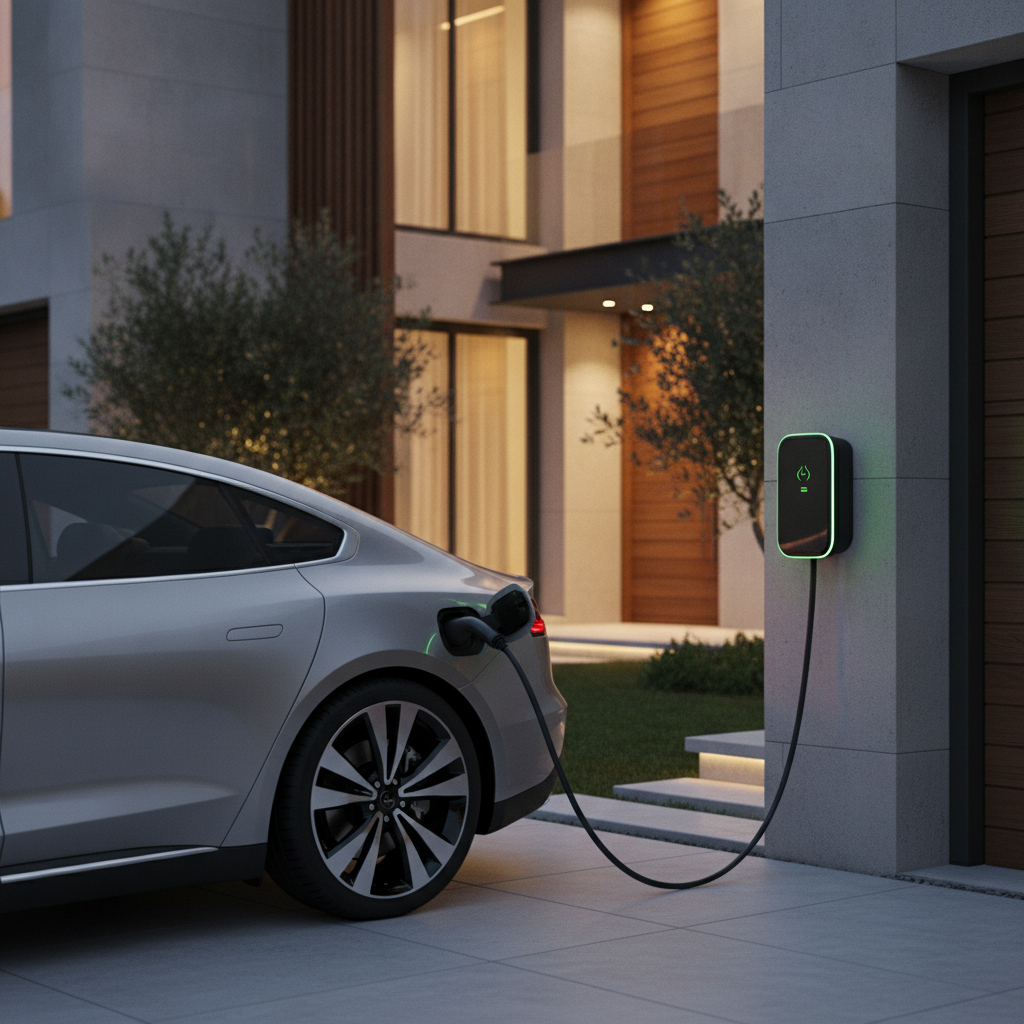
There's a strange moment that happens to most people in their first week with an electric vehicle: they stand next to the car in the evening, look at the range gauge, and feel an irrational urge to drive off “to refuel.” A habit of years – filling up when the tank runs low, or when it's convenient along the way – simply doesn't disappear in one day. The problem is that an electric vehicle doesn't work that way, and anyone who keeps thinking in terms of a “full tank” may find themselves frustrated, or worse – standing with a car whose range is lower than expected on the morning of an important trip.
This article isn't about types of charging stations or technical comparisons. It's about a much simpler, everyday question: what actually changes in your routine when you switch from a gas station to charging at home, and why it's worth understanding this before the new car arrives in your parking space.
The habit you need to break: not “filling the tank,” but “keeping the level up”
In the world of fuel, the logic is clear: when the gauge gets close to red, you drive to the station, fill up, and move on. It's a one-time action that happens once every few days, usually when convenient, and takes a few minutes.
In the world of electric vehicles, the logic is completely reversed. The idea isn't to “empty and then fill,” but to keep charging regularly – just like charging a smartphone at night without waiting for the battery to drop to 2%. Anyone who keeps driving according to the old habit, and waits for the car to “run empty” before thinking about charging, simply creates unnecessary stress for themselves and low-range situations exactly when they least want them.
This mental difference is really the basis of any proper charging routine in a private house: the car is plugged into the charging station when it gets home in the evening, charges slowly during the night, and in the morning it's simply ready – without you having to think about it at all.
What actually happens in a private house – a typical day with an electric vehicle
Try to imagine an ordinary day: you get home at 18:00, park the car, and plug the charging cable into the station installed in the parking space. That's it. No extra drive, no waiting in line, no stop in the middle of the day. The car simply “eats” electricity slowly throughout the night, and in the morning it's at the level you set in advance – whether that's 80% or 100%, depending on your preference and the length of your expected trips. The only action that requires anything of you is plugging in the cable. There's no need to stand next to the car, no need to monitor the process, and no need to remember to “unplug on time” – a properly managed home charging station simply stops charging when the car is full, according to the settings you've defined.
This difference between a deliberate, scheduled action (driving to a gas station) and a passive action built into your existing routine (plugging in a cable in the evening) is really the main reason most electric vehicle owners report that they hardly think about “charging” after the first few months – it simply becomes part of leaving and coming home, like locking the door.
Long trips: when you do need to plan ahead
The home routine covers most days, but not every scenario. A long trip – up north, down south, or just a busy day on the roads – is where the difference between fuel and electricity is most noticeable, and this is where planning that didn't exist before is truly required. In the world of fuel, refueling on the way is a matter of minutes and doesn't require advance thought. In the world of electric vehicles, a long trip requires you to know in advance roughly where you'll want to stop, how long the stop will take, and how much range you have when you set out. It isn't complicated, but it is different – and that's exactly why most of the confusion and frustration of new drivers comes from the unusual trips, not from regular everyday use. The practical conclusion: the more organized and reliable your home charging is, the more you start a long trip with a full range, ready to go, and you only need to plan the outside part of the journey – not the whole journey.
Why it's worth looking into home charging before the car arrives
Many people do it in reverse order: they buy or order an electric vehicle, and only then start thinking about exactly how they'll charge it at home. This creates unnecessary time pressure, and sometimes also temporary solutions that aren't enough for the real needs over time. The right approach is the opposite: check well in advance what condition the home's electrical panel is in, where it's best to place the charging station relative to the parking space, and what charging power suits your driving routine – before the car even arrives. That way, on the day the car enters the parking space, the charging station is already ready, inspected and working, and your first acquaintance with the car isn't mixed up with technical stress. Checking the infrastructure in advance isn't a formality – it's actually what determines whether the routine we described above (coming home, plugging in the cable, quiet charging overnight) will work smoothly, or will be accompanied by faults, waiting or a solution that doesn't suit your actual needs.
What's different about the routine in a private house specifically
It's important to clarify: what's written here refers to people who live in a private house with an assigned parking space, not an apartment building – where the process and considerations are completely different, including the need to coordinate with the building committee and load management between residents. In a private house the story is simpler: there's a permanent parking space, there's access to the home's electrical panel, and the charging station can be matched exactly to your needs without depending on other parties. This also means you have more flexibility in choosing the station's location, the type of installation and the charging power – but precisely because of this, the inspection and installation should be carried out by a certified professional who knows the legal requirements and the relevant standard, and not as an improvised solution. A charging station installed properly from the outset saves future problems of overload, recurring faults or the need for an earlier-than-expected upgrade.
What to check before scheduling the charging station installation
- What condition the existing electrical panel in the home is in, and whether it supports adding a charging station with the power that suits you
- The distance between the parking space and the electrical panel, because it affects the required cable length and the scope of the work
- Whether the home's connection is single-phase or three-phase, because it determines which charging power levels are relevant for you
- What your actual daily driving routine is – to match a charging power that covers your needs without overinvesting
- Whether related work is needed, such as conduits, excavation or chiseling, depending on the desired location
Questions like these are better clarified in advance with a professional who knows the subject, rather than guessing or relying on a general estimate. At DSGCharge, we carry out an infrastructure check and accompany the process from the initial inspection to the actual installation, so the chosen solution truly suits your home and your driving routine, and doesn't just “meet the basic need” at the moment of installation.
From fuel to electricity: not just a technical change, a change of habit
The main point to take from all this is that switching from a gasoline car to an electric vehicle is first and foremost a change of habit, and only then a technical change. Anyone who understands this in advance, and plans their home charging routine before the car arrives, enters the adjustment period without unnecessary surprises and without old habits getting in the way. A properly installed home charging station isn't just a technical accessory in the parking space – it's really the station that lets the new routine work quietly, without thinking about it too much, just as the old refueling was once a transparent part of the day.
If you're about to buy an electric vehicle and want to check in advance what's required in your home, you can browse theEV charging stations suitable for a private house, or contactDSGCharge for an infrastructure check and installation scheduling even before the car arrives in your parking space.
Frequently asked questions
How long does it take to get used to a home charging routine instead of refueling?
It varies from person to person, but in most cases it's a short adjustment period of a few weeks, in which you move from the habit of “filling up when it's empty” to the habit of plugging in the cable every evening, regardless of the current charge level.
Do you need to plug the car in to charge every evening even if there's still enough range?
Yes, that's exactly the recommended approach – regular charging rather than waiting for the battery to run down. That way the car is always ready in the morning, and this habit also reduces unnecessary wear compared with infrequent full charges from zero.
What happens if I bought an electric vehicle and haven't checked the infrastructure at home yet?
It's worth carrying out an infrastructure check as soon as possible, even if the car is already on its way to you. You can start charging with temporary means in the meantime, but it's recommended that the permanent installation be inspected and planned by a certified professional as soon as possible, so that your home routine settles according to your actual needs.