
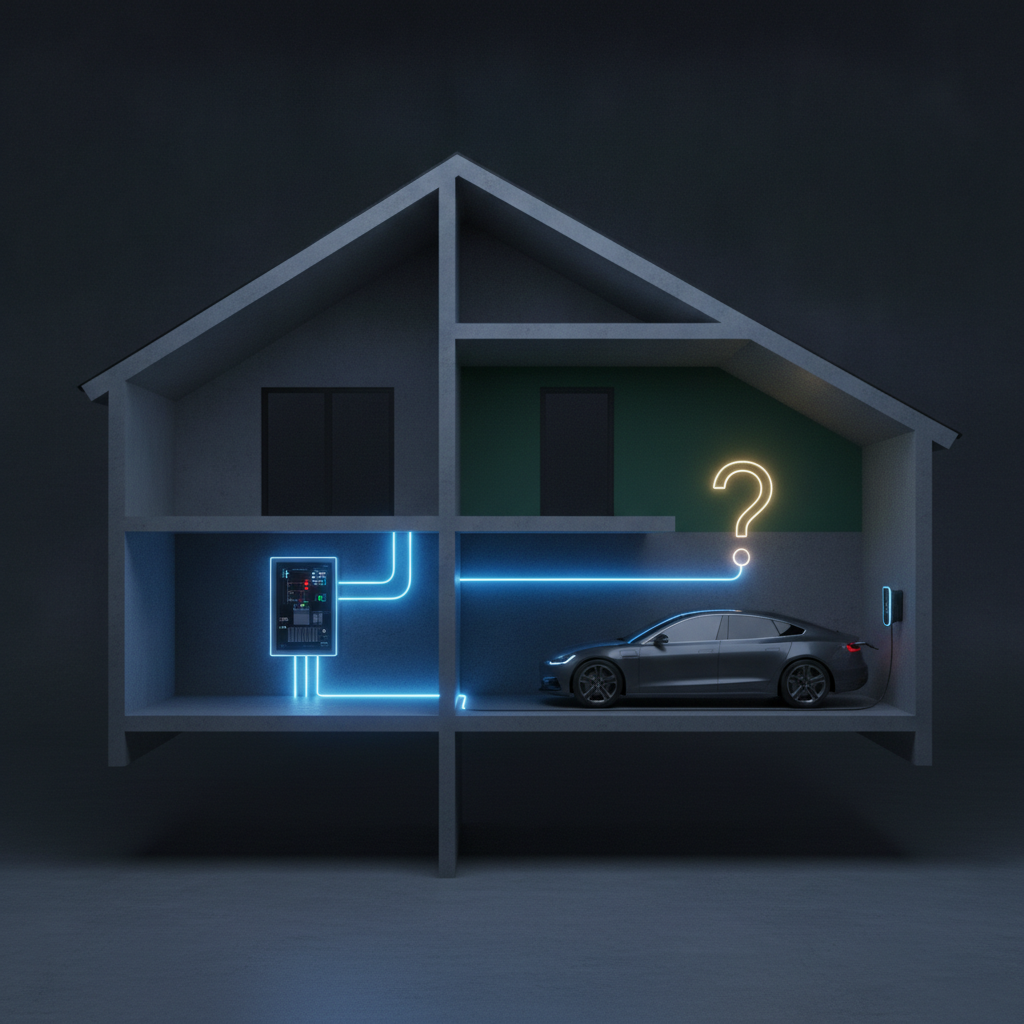
Most people who switch to an electric vehicle do it in the wrong order. They spend weeks comparing models, reading about range, checking financing options, and finally sign a deal – and only then, when the vehicle is already on its way, do they start asking “wait, how do I actually charge this at home?”
This isn't a minor technical question. It's a question that can determine whether your day-to-day life with the new vehicle will be convenient and calm, or an exhausting cycle of charging at public charging stations, searching for a suitable outlet, and calculating every morning what percentage of battery is left.
The main problem is simple: people check a vehicle model and don't check their home. And the exact opposite is what should happen – first check what the home allows, then understand what that means for the everyday charging experience, before signing anything.
What actually gets checked at home before you decide
When we talk about a “home check” before buying an electric vehicle, we mean a few clear parameters of the existing electrical infrastructure. These aren't things you can see with the naked eye, but they're the ones that determine whether home charging will be simple or complicated:
- Connection type in the electrical panel – whether the home has single-phase or three-phase electricity. This directly affects the maximum power you can get from a charging station.
- The distance between the parking space and the electrical panel – a greater distance means a longer cable, and sometimes also the need for conduits, digging or additional infrastructure work.
- The existing electrical load in the home – how much “room” is left in the electrical panel for a new charging station, without putting the home's other systems at risk.
- The physical condition of the parking space – whether it's open, covered, inside an underground parking garage, or part of an apartment building with a building committee.
Each of these parameters can significantly change what can be installed in the home, and how complex the installation will be. It's the difference between “a station can be installed within a few hours” and “this needs to be planned in advance because there's infrastructure work”.
How it affects the decision itself, not just the installation
It's tempting to look at this as two separate topics: “buying the vehicle” and ”installing the station”. In practice, it's one chain. If you don't check the infrastructure in advance, you may find yourself in a situation where the vehicle has already arrived, but the home installation is stuck because of additional work that wasn't taken into account, or it turns out that the power you can get at home is lower than expected.
That doesn't mean you need to cancel your purchase plan. It means the right order is: first understand what the home allows, and then decide accordingly when to close the deal on the vehicle and when to start the installation process – so that both come together around the same time, and the vehicle doesn't sit in the parking space without a convenient way to charge.
Many people choose a vehicle model and only afterward discover that their home isn't ready for it. That's exactly the point where it's worth stopping to check, instead of assuming everything will work out once the vehicle is already yours.
What happens when you combine it with the deal's timeline
A simple example: a family decides to switch to an electric vehicle and starts checking models, prices and financing terms. They're impressed by a particular model, close a deal, and a delivery date is scheduled for a few weeks later. Only at this stage do they start asking themselves how they'll actually charge the vehicle at home – and discover that their parking space is quite a distance from the electrical panel, and that they have a single-phase connection that limits the possible power. Now they need to squeeze in a planning process, equipment orders and approvals – under time pressure, because the vehicle is already on its way. If this check had been done two or three weeks before closing the deal, they could have planned the installation without pressure and synchronized it with the vehicle delivery date.
That's exactly why an early infrastructure check saves not only money, but also nerves. It gives a clear picture of what's possible and what isn't, before there's any financial commitment to the vehicle.
How to check it without delaying the purchase
An infrastructure check before installation isn't a long or cumbersome process, but it requires a qualified professional who understands both electric vehicles and the standards and legal requirements for electrical work. At DSGCharge, this is exactly one of the services that accompanies the customer already at the stage before the decision – a check that examines the panel's condition, the type of connection, the distance from the parking space and the existing load, and gives a clear answer: what can be installed, and how complex it will be.
A short checklist before closing a deal on a vehicle:
- Check whether the home has a single-phase or three-phase connection
- Measure (or ask for an estimate of) the distance between the parking space and the electrical panel
- Check whether there's free space in the electrical panel to add a charging station
- Check whether the parking space is private, common, or part of a parking facility with a building committee
- Get a general estimate of what the installation will involve – cables, conduits, digging if needed
Keep in mind that the final price of an installation varies greatly from home to home, depending on the type of station, the required power, the cable length, the distance from the electrical panel, the need for conduits or digging, and the type of connection in the home. There's no “uniform price” that suits every home, and that's another good reason to check in advance rather than assume.
If you're already at an advanced stage of choosing a vehicle, or you've closed a deal and want to know what to expect regarding the home installation, you can contactDSGCharge for an infrastructure check and a charging solution tailored to your home's specific situation – even before the vehicle arrives.
After checking the infrastructure and understanding what's possible, the next step is to choose the right type of station. You can explore the options in theEV charging stations, and also check what's needed in terms of EV charging cables that suit the distance and the type of connection in the home.
It's important to remember: every charging station installation must be carried out by a qualified professional, in accordance with the relevant legal and standards requirements for electrical work. A preliminary infrastructure check isn't a substitute for that, but the stage that makes sure the actual installation will be simple, safe and suited to your home.
The right order isn't “choose a vehicle and then see what happens”. It's: check what the home allows, understand the implications for the everyday charging experience, and then make a decision about the vehicle with the full picture. That's the difference between a purchase that's stressful at the start and a purchase that feels simple from day one.
If you're at the early checking stage, before closing a deal or right before receiving the vehicle, you can read more about About DSGCharge and about how a professional infrastructure check is carried out, or go directly to theCharging station and accessories store to explore the available options.
FAQ
What exactly do you need to check at home before closing a deal on an electric vehicle?
Mainly three things: the type of connection at the electrical panel (single-phase or three-phase), the distance between the parking space and the electrical panel, and the existing load on the electrical panel, which determines how much room is left for a new charging station. These parameters determine what can be installed and how complex it will be.
What is the difference between an 11kW and a 22kW charging station for my home?
The power you can get at home depends on the existing connection type – single-phase is limiting, compared to three-phase, which allows higher power ratings. So before choosing a power rating for the station, you need to check what the home's existing infrastructure allows in the first place.
Can you install a charging station in a home with single-phase power?
Yes, there are suitable solutions for homes with a single-phase connection too, but the maximum power you can get will be limited compared to a home with a three-phase connection. That's exactly why you should check the existing connection type before choosing the station.
What do you need to check before installing a charging station at home?
Beyond the type of connection, it's important to check the distance from the parking space to the electrical panel, whether conduits or digging are needed, the condition of the existing electrical panel, and the type of parking – private, common or in a parking facility. A professional infrastructure check gives an accurate answer on all of these.
How long before receiving the vehicle should you check your home?
It's best to check as early as possible – even at the stage of comparing models, and not after closing the deal. That way there's time to plan the installation without pressure and synchronize it with the actual vehicle delivery date.