
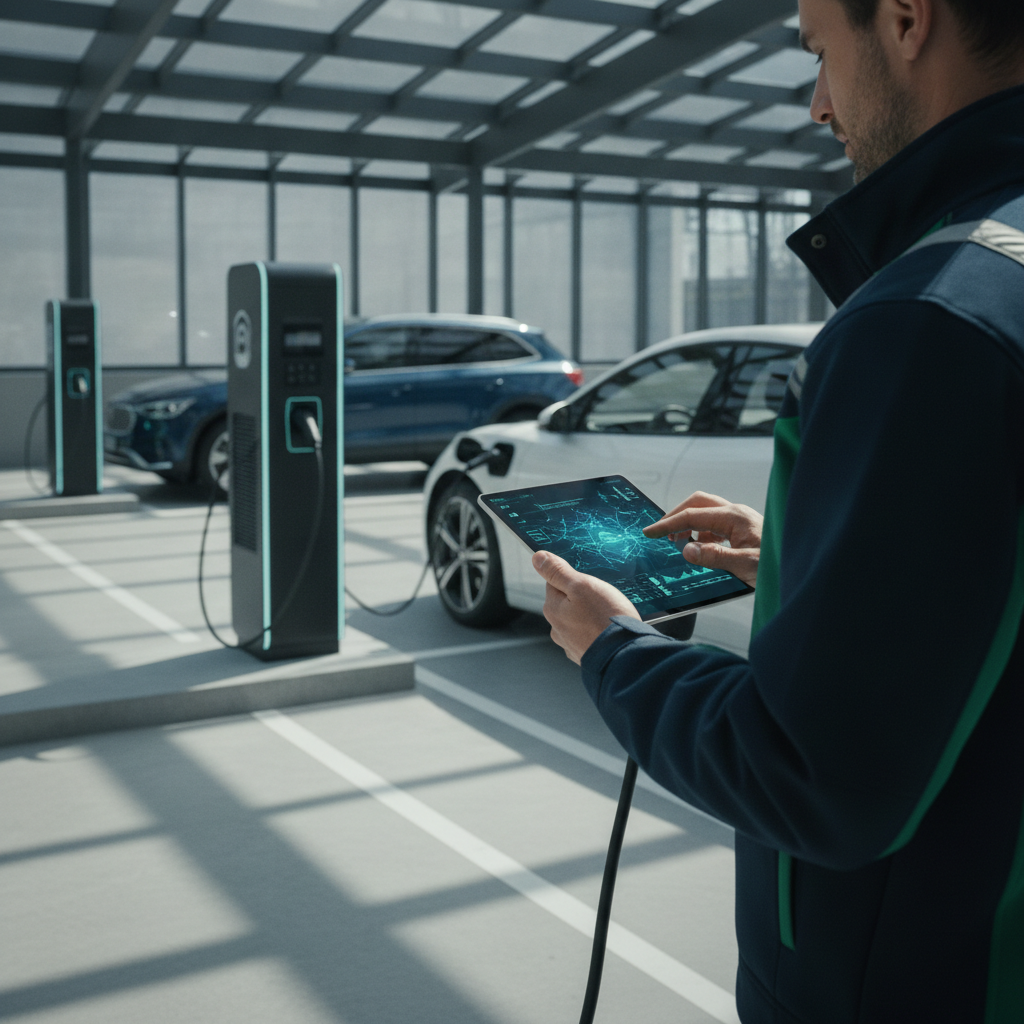
You've received three quotes for a home charging station, and the numbers differ from each other in a way that isn't clear to you. One quote is ₪1,800, the second ₪3,200, and the third somewhere in between. The same station, the same vehicle and the same home – so why is the difference so big?
The answer almost always lies not in the price itself but in what it includes. A home charging station isn't a uniform off-the-shelf product – it's the result of several decisions: the type of station, the cable length, the condition of the existing infrastructure, and the amount of work needed to connect everything properly. When you compare only the bottom line without understanding what makes it up, it's easy to choose the cheapest quote and find out later that it doesn't include part of the actual work.
In this article, we'll go over five concrete questions worth asking every supplier before you decide – not to turn you into electrical experts, but so you know how to compare apples to apples.
What exactly is included in the quote
The first and most important question: “Does the price include only the station, or the full installation too?” Some quotes cover only the product itself – the charging station – and leave aside everything related to the electrician's work: running a cable from the electrical panel, connection, an infrastructure check and final approval of the work.
It's worth asking for a breakdown that lists all of the following components separately:
- The price of the station itself (depending on the power – 7kW, 11kW or 22kW)
- The cost of the installation work and connection to the infrastructure
- The charging cable and its length
- Any related work such as conduits, chiseling or drilling, if required
- The cost of travel or a technician visit to check the infrastructure in advance
When the quote is itemized like this, it's much easier to understand why one price differs from another. A “cheap” quote may simply not include part of the work, and the difference will only show up on the final invoice.
How to know whether the proposed power suits your home
The second question worth asking: “Why did you choose to offer me this particular power?” Common home charging stations usually come in 7kW, 11kW and 22kW versions, and the difference between them isn't only price – it's also a question of what your home's electrical infrastructure can actually supply.
A home with a single-phase connection can't necessarily support a 22kW station, and a serious supplier should be able to explain why they recommend a particular power – not simply offer whatever is convenient for them to sell. If you received a recommendation for high power without any explanation of an existing infrastructure check, that's a sign to ask more questions.
It's also important to understand that higher power isn't always worth the price difference if your vehicle and your charging habits don't really need it. That's exactly why it's worth asking the supplier how they arrived at the specific recommendation for you, rather than just getting a number.
Critical questions about infrastructure and cable
The third question concerns something most people don't think about in advance: the condition of the electrical panel and the distance from it to the installation point. “Did you visit the home, or was the quote given only based on a phone description?” This question reveals a lot.
A quote given without an actual infrastructure check is really an estimate – and it doesn't always match reality. A long distance from the electrical panel to the parking spot, the need for chiseling, conduits or additional work – all of these can completely change the price picture once the technician is already on site.
Additional questions worth asking on this topic:
- What cable length is included in the quote, and what happens if a longer cable is needed
- Does the price assume standard work, or is it tailored to my specific infrastructure
- Does it address related construction work such as chiseling or laying conduits
A simple example: a homeowner whose electrical panel is in the basement and whose car parks in an open parking spot ten meters away will need a longer cable and sometimes conduit work too – a cost that won't appear in a general quote that doesn't include a preliminary visit.
Questions about warranty, service and support after installation
Many people focus only on the moment of installation and forget to ask what happens afterward. “If there's a fault a year from now, who do I contact?” is a question that must be asked at the decision stage, not after something goes wrong.
It's worth finding out whether the supplier offers service and support after installation too, not just a one-time sale. A company that accompanies the customer from the consultation stage through to after installation can respond faster, because it knows the system it installed itself.
In this context, DSGCharge takes a different approach from a supplier that only sells a station: the company provides an end-to-end solution that includes consultation, an infrastructure check, professional installation and a point of contact even after the station is already running at home – so the customer isn't left alone if a question or need for support comes up down the road.
How to check that the quote complies with standards and doesn't just sound good
The fifth question, and no less important: “Who will actually carry out the installation, and what are their qualifications?” In the electrical field, installation must be carried out by a certified professional and in accordance with the requirements of the law and the standard. A cheap quote that doesn't address this point may save money in the short term and cost much more in the long term, both in terms of safety and in terms of the quality of the work.
Don't hesitate to ask the supplier whether they work with professional installation teams, how the infrastructure check is carried out in advance, and what happens if the check reveals that additional work is needed beyond what was initially estimated. A supplier who answers clearly and without evasion gives a good indication of their level of professionalism.
If you're already at the stage of comparing quotes and want to know what really suits your home or vehicle, you can browse the range of available stations in theEV charging stations or also look into EV charging cables suitable for the length and type of connection required at your home.
The safest way to compare quotes is not to look only at the bottom-line number, but to ask every supplier to answer these five questions. At DSGCharge, it's standard practice to give a detailed answer already at the consultation stage – including an explanation of the suitable power, what the process includes, and what happens after installation – so the customer can truly compare rather than just guess.
If you want an accurate picture before you decide, you can contactDSGCharge for an initial suitability check, or go straight to theDSGCharge and ask for guidance that starts right from the stage of comparing quotes.
📊 In brief: key points of the article
What exactly is included in the quote
The first and most important question: "Does the price include only the station, or the full installation too?" Some quotes cover only the product itself – the charging station – and leave aside…
How to know whether the proposed power suits your home
The second question worth asking: "Why did you choose to offer me this particular power?" Common home charging stations usually come in 7kW, 11kW and 22kW versions, and the difference between th…
Critical questions about infrastructure and cable
The third question concerns something most people don't think about in advance: the condition of the electrical panel and the distance from it to the installation point. "Did you visit the home, or was the quote given only based on a phone desc…
Frequently asked questions
How do you know whether a charging station quote is realistic?
A realistic quote will be itemized: it will list separately the station price, the installation cost, the cable length and the related work. If the quote is a single number without any breakdown, it's worth asking for clarification before deciding.
What is the difference between an 11kW and a 22kW charging station in terms of my decision?
The main difference is the fit with your home's existing electrical infrastructure and the installation cost. A professional supplier should check your infrastructure before recommending a particular power, not simply offer the highest power.
Does the home need to be checked before receiving a quote?
A preliminary infrastructure check gives a much more accurate picture than a phone estimate, especially when it comes to the distance from the electrical panel, the connection type and a possible need for additional work such as conduits or chiseling.
What happens if an infrastructure problem is discovered only after installation has already started?
That's exactly why you should ask in advance how the supplier handles such a scenario. A professional supplier will be able to explain how the infrastructure check is carried out before installation to minimize surprises, and how the update process works if a need for additional work is nevertheless discovered.
Does every charging station installation require a certified electrician?
Yes, installing a charging station must be carried out by a certified professional and in accordance with the requirements of the law and the standard. This is an important question to ask every supplier before moving forward, regardless of the price offered.