
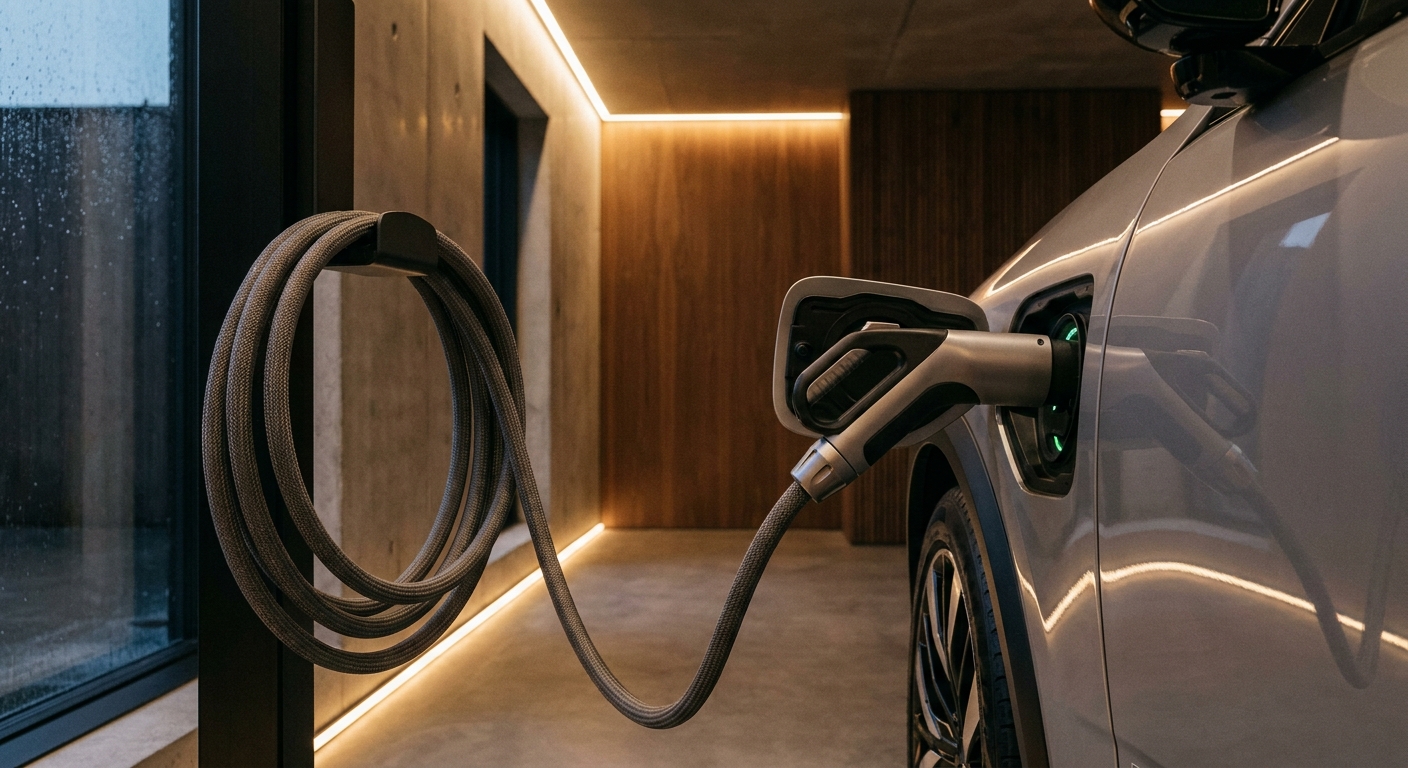
EV charging cable: three-phase or single-phase – the complete guide to the right choice
In short: A three-phase cable and station charge at 11kW or 22kW, and single-phase ones at 3.7 to 7.4kW. A battery of about 60 kWh charges in about 5-6 hours at 11kW three-phase, and in about 8-10 hours or more at 7.4kW single-phase. Three-phase pays off only when there is a three-phase connection in the electrical panel and the vehicle's on-board charger supports it.
DSGCharge (DSG Charging Solutions) is one of Israel's leading companies in EV charging solutions: active since 2021, with about 20,000 of its chargers and charging stations sold and installed, and it provides installation and service nationwide.
Introduction: the decision that will determine how fast and convenient charging your electric vehicle will be
Switching to an electric vehicle is an exciting step, but it comes with important technical decisions. One of the most central is choosing a suitable charging cable and charging station. The dilemma of a three-phase vs. single-phase charging cable isn't just a question of electrical terms, but a fundamental decision that will directly affect your everyday experience: how fast the vehicle will be ready to drive, how convenient your charging routine will be and how ready you'll be for the future of the automotive world. Whether you own a new electric vehicle or are considering buying one, understanding the differences is critical. At DSG Charging Solutions, we understand this complexity, so we've prepared the complete guide that will clarify the terms and give you all the tools to make an informed decision, tailored exactly to your vehicle, your home and your lifestyle.
What is the fundamental difference between single-phase and three-phase charging?
To understand the difference, imagine the electrical system as a highway carrying energy to your vehicle's battery. In this picture, Single-phase charging is like a road with a single traffic lane. The current travels in a single lane to the vehicle, which limits the amount of energy that can pass in a given time. In contrast, Three-phase charging is like a highway with three parallel lanes. It lets three times as much electricity through in the same time, which leads to significantly faster, more powerful charging. The number of available “lanes” is the main factor that determines your charging speed.
Single-phase charging: the common, basic solution
Single-phase charging is the standard and most common form of charging in most homes in Israel. It uses a regular electrical connection (230V) and provides charging power that typically ranges from 3.7kW (at 16 amps) up to 7.4kW (at 32 amps). For most electric vehicle owners, this solution is entirely sufficient. Plugging the vehicle into the charger at night lets you wake up in the morning with a full battery, ready for the day's driving. However, the main disadvantage is the relatively long charging time. A full charge of an average battery (about 60kWh) can take 8-10 hours or even more, depending on the exact power and the vehicle's capabilities. So if you come home with an almost empty battery and need the vehicle again shortly, single-phase charging may be limiting.
Three-phase charging: the fast, powerful solution
Three-phase charging is a significant leap forward in terms of speed and efficiency. By using three-phase electrical infrastructure, you can reach significantly higher charging power: 11kW (at 16 amps on three phases) or even 22kW (at 32 amps on three phases). This power dramatically shortens charging times. For example, charging the same 60kWh battery with an 11kW charger can be cut to only about 5-6 hours. This means more flexibility: you can complete a significant charge even during a short stop at home in the middle of the day, not only overnight. However, this solution requires an essential precondition: three-phase electrical infrastructure in the home electrical panel, run to the parking space. If such infrastructure exists, investing in a three-phase cable and station is a smart step that prepares you for the future.

Comparison table: single-phase vs. three-phase – data and performance
To simplify the decision, we've gathered the key data in a clear table comparing the two charging options. The data is based on common market averages and illustrates the differences in performance and requirements.
| Feature | Single-phase | Three-phase |
|---|---|---|
| Maximum charging power (AC) | Up to 3.7kW | 11kW to 22kW |
| Average charging time (60kWh battery) | About 18-20 hours | About 5-6 hours (at 11kW) |
| Infrastructure requirements | Standard electrical connection (with suitable preparation) | Three-phase connection in the electrical panel |
| Installation cost | Lower | Higher, may include an infrastructure upgrade |
| Recommended for | Overnight charging, vehicles with a single-phase on-board charger, drivers with low daily mileage | Shorter charging times, vehicles with a three-phase on-board charger, future-proofing |
How do you know what suits your vehicle and your home? (2 checking steps)
The right choice depends on two main factors: your vehicle's capabilities and the limits of your home's electrical infrastructure. Following these two checking steps will give you the full picture and let you make an accurate decision.
Step 1: What can your vehicle do? Check the on-board charger (On-Board Charger)
The most common mistake is thinking that a powerful charging station will always charge faster. In practice, the first limiting factor is The onboard charger of your vehicle. This component converts alternating current (AC) from the home grid into direct current (DC) that charges the battery. This charger has a maximum power it can accept. If your vehicle has a single-phase on-board charger that supports up to 3.7kW, even if you connect it to a 22kW three-phase station, the charging speed won't exceed 3.7kW. So the first step is to check the vehicle's specifications for the type of on-board charger and the maximum power it supports. In recent years, leading car manufacturers have been upgrading new models to three-phase on-board chargers (11kW) as standard, which makes choosing three-phase infrastructure more worthwhile in the long run.
Step 2: What can your home do? Check the electrical infrastructure at the parking space
Once you've verified what your vehicle can accept, the next step is to check what your home can supply. Open your electrical cabinet and check the main circuit breaker. If it's marked, for example, 25×1 amps, you have a single-phase connection. If it's marked 25×3 amps, you're in luck and have a three-phase connection. A three-phase connection in the main panel is a necessary but not sufficient condition; you need to make sure a dedicated line can be run from the panel to your parking space. We at DSG Charging Solutions emphasize: this step must be carried out only by a certified electrician. A professional will carry out an infrastructure survey, check the existing loads in the home and make sure the installation will be safe and comply with all standards. If you don't have a three-phase connection, an electrician can check the option and cost of upgrading the connection with the Israel Electric Corporation (IEC).
How much does it really cost to charge the vehicle with each method?
An important question that always comes up is cost. The good news is that in terms of the electricity price itself, there is no difference between single-phase and three-phase charging. In both cases, you pay according to kilowatt-hour (kWh) consumption. As of 2026, according to electricity tariffs in Israel, the cost for residential use is about 64 agorot per kWh. Let's do a simple calculation: a full charge of a 60 kWh battery will cost you: 60 kWh × 64 agorot = about ₪38.4. The difference in cost lies in the initial investment: buying the cable/station and the installation. A three-phase installation, especially if it requires an infrastructure upgrade, will be more expensive than a single-phase installation. What you get in return for this investment is significant savings in charging time and more flexibility in using the vehicle.
DSG Charging Solutions: our expertise, your peace of mind
The choice between single-phase and three-phase can feel complicated, and this is where our expertise comes into the picture. At DSG Charging Solutions, we don't just sell products – we provide a complete, personalized charging solution. We understand that every customer is a world unto themselves – with a different vehicle, unique home infrastructure and different driving habits. That's why we offer a comprehensive consulting process that starts with understanding your needs, continues with help checking the infrastructure by certified electricians and ends with a professional, safe and neat installation. We carry a wide range of charging cables and stations from the world's leading manufacturers, including advanced solutions such as the three-phase charging cable, model DSG-336, to make sure you get the most reliable and suitable product for you.
Still undecided? Our experts are here to help. Our goal is to make the switch to home charging a smooth, simple and safe experience. Contact us today for a no-obligation consultation, and together we'll find the perfect solution for you and your vehicle, one that will serve you faithfully for many years. With us you'll find a range of charging cables and adapters for all vehicle types and needs.
Frequently asked questions
Can you use a three-phase cable with a single-phase station?
Yes, absolutely. A three-phase cable is built so that it can also work on a single phase. It simply adapts to the station and carries electricity through one phase. This is completely safe, but of course the charging speed will be limited to the power of the single-phase station, and you won't make use of the cable's fast capabilities.
Can a vehicle that supports single-phase charging connect to a three-phase station?
Yes, here too the answer is positive. Charging systems are smart and know how to communicate with each other. When a vehicle with a single-phase on-board charger connects to a three-phase station, it simply “draws” electricity from only one of the three phases the station offers. The charging speed will be limited to the maximum capacity of the vehicle's on-board charger.
When is it necessary to upgrade to three-phase infrastructure?
There's no absolute requirement to upgrade, but it's highly recommended in certain cases. If you've bought a new electric vehicle with a three-phase on-board charger (for example, 11kW) and want to make full use of its fast charging potential, upgrading the infrastructure is the only way to do so. This is especially relevant if you drive long distances every day and need short charging times and maximum flexibility.
Does a longer charging cable charge more slowly?
In theory, every electrical cable has a slight “voltage drop” over distance, which can have a minor effect on charging efficiency. However, with high-quality, thick, standard-certified cables like those we at DSG Charging Solutions supply, the effect on charging time with standard-length cables (5-10 meters) is completely negligible and won't be noticed by the average user.